
Technology
Basis Platform
Advertising Operating System
Communication Portal
Intelligent Collaboration
All Channel Activation
Activate Media on Every Channel

Consulting
Resources
What do working out, putting money in a 401(k), and running an advertising campaign have in common?
They all require an investment—whether that be time, effort, or money (or all three!). And, like with any investment, people expect a return. Avid gym goers expect to get stronger. Folks investing through their 401(k) accounts expect those funds to grow. And brands spending money on advertising campaigns? They expect for that money to drive revenue.
Today, we’re digging into how marketing teams can maximize their return on ad spend (ROAS) by adjusting their target ROAS bidding strategy. We’ll explore what a target ROAS strategy is, when to use one, and how to fine-tune your target ROAS in different scenarios to maximize returns. Ready to become an ROAS rockstar? Read on!
Before we dive into what target ROAS is, let’s review the basics. ROAS is a metric that tells advertising teams how much revenue they are generating relative to their advertising spend.
How do advertisers calculate ROAS? Easy—they use the following formula:
ROAS = (Revenue ÷ Ad Spend) x 100
So, if you spend $100 on a campaign and it generates $200 in revenue, your ROAS = (200/100) x 100, or 200%.
Target ROAS is an automated bidding strategy offered by many programmatic advertising platforms. As the name suggests, it optimizes campaigns towards a “target” ROAS value, which is set by an advertising team based on historical conversion values.
For instance, if you are using a target ROAS strategy and set a target of 300%, machine learning will automatically optimize your bids towards the placements that are most likely to generate $3 of revenue for every $1 of ad spend. To be clear, this doesn’t mean the technology will only bid on placements that will generate $3 in revenue, but rather that $3 per every $1 of ad spend is the average revenue target it will optimize towards.
Target cost per action (otherwise known as cost per acquisition or CPA) is also an automated bidding strategy, but it optimizes bids towards a different goal than target ROAS. Target CPA takes the amount you’re willing to spend per a specific conversion or consumer action, and bids with the goal of achieving the highest number of conversions or consumer actions based on that amount. For example, you might set a target CPA of $20 per new customer. Machine learning will then automatically optimize bids towards gaining as many conversions as possible at or near that target cost.
Target CPA is often used in lead generation campaigns and is best suited for teams who want to acquire customers at a predetermined cost. Target ROAS, on the other hand, is best for those who want to generate the most revenue possible for a specific amount of ad spend, and it can provide more flexibility amidst market changes. For example, an e-commerce brand might benefit from using a target ROAS strategy to maximize their ROAS leading up to the holidays. A B2B startup, on the other hand, might benefit from using a target CPA strategy, to ensure they’re acquiring customers within their set budget.
Both target ROAS and target CPA strategies rely on conversion data, but they use it in different ways. With target CPA, machine learning optimizes towards a specific conversion value. With target ROAS, on the other hand, machine learning uses historical conversion values to try to achieve your target ROAS. For example, if your online store historically saw $6 worth of sales for every $1 of ad spend, you might use that information to set a target ROAS of 600% ($6 in sales ÷ $1 in ad spend x 100%) to continue to make the same return on ad investment.
Advertisers should use a target ROAS strategy when they have a specific ROI (return on investment) goal for their advertising efforts. It’s also important they have a clear understanding of the value associated with different conversions, so that the bidding strategy can use those values to optimize for desired returns.
Beyond having sufficient data to inform this strategy, there are specific scenarios when advertisers might benefit from using target ROAS:
To set up a target ROAS strategy, advertisers must first define their conversion values based on historical data. In other words: They need to have a clear understanding of how much revenue can be generated by different customer actions. Once those values are defined, advertisers can select a target ROAS bidding strategy based on existing data and set a target ROAS value based on their unique objectives.
This target ROAS value then guides the bidding system as it makes optimizations. But just like any strategy, it’s important to monitor and adjust based on performance metrics (more on this shortly!).
Often, teams will set an ROAS target based on a known value of doing business, likely due to an understanding of what margin of revenue is required on ad spend to ensure profit.
But remember that the goal of this bidding strategy is to maximize revenue—and simply setting a target ROAS and forgetting about it is not guaranteed to result in the best returns. In fact, with a bit of testing and optimization, teams can make adjustments that result in a greater ROAS.
So, how can advertising teams go about determining what ROAS target will result in the most profit? Even if a target ROAS metric is being met, that’s not a guarantee that you’re capturing the maximum amount of profit available. A higher ROAS target may result in similar revenue, with lower spend. A lower ROAS target may conversely result in increased revenue, with similar spend.
To determine if performance is short of what it could be, here are a few things to consider:
By observing the interactions between these components over time, teams can figure out whether their target ROAS is too low, too high, or just right. Let’s dig into a few scenarios to see what this looks like in action.
In this scenario, your target ROAS is likely too low. Though you’re getting closer to your target ROAS, you’re losing out on profits because you’re spending more on ads even though your revenue is the same.
Let’s dig into an example of what this might look like:
Imagine a team’s target ROAS is set to 200% (i.e., make $2 in revenue for every $1 of ad spend). In the past, they were spending $25 on ads and bringing in a revenue of $100, with an ROAS of 400%. But, since their target ROAS is 200%, their ad spend is being shifted in a way that spends more on ads without an increase in revenue. If they’re now generating a revenue of $100 at a cost of $40 in ad spend, they are technically getting closer to their target ROAS with their new ROAS of 250%. But, they’re spending more to do so! In other words, they’re getting less bang for their buck.
That’s why the recommendation here is to increase your ROAS target based on the higher historical ROAS your account had. In other words, if you were spending $25 on ads and generating $100 in revenue, set your target ROAS to 400% and monitor.
In this instance, your target ROAS is too high. The optimization strategy is reducing spend in an attempt to hit a potentially unattainable ROAS target at an “acceptable” revenue volume.
Here’s what this might look like and how a team could adjust their target ROAS in such a scenario:
Let’s say a team sets their target ROAS to 500%. In the past, they generated $100 in revenue at a cost of $50 in ad spending, meaning their past ROAS value was 200%. Now that their target is set to 500%, they are currently generating $75 in revenue at a cost of $25, putting their current ROAS at 300%.
Like scenario 1, this team’s ROAS is getting closer to the target ROAS, but they are missing out on revenue—only, this time, it’s because their target ROAS is too high, which means the platform is lowering spending in an attempt to hit a higher ROAS. In this scenario, the best thing the team could do would be to lower the target ROAS and monitor campaign performance.
This is a great situation to be in! In this instance, you’re spending a bit more, but making a bit more at the same time. Here’s an example of what this might look like:
Imagine your target ROAS is set to 200%. In the past, you generated $100 in revenue at an ad spend of $50, meaning you were hitting your target at an ROAS of 200%. Now, you’re generating $200 in revenue at a cost of $100 in ad spend. Your ROAS is the same—200%—but you’re generating more revenue than you were in the past.
Teams have a few options here, depending on what their business goals are:
This is another beneficial situation to be in! Your team is consistently hitting its target ROAS, but they might be able to increase profits and/or revenue—either by spending less for the same revenue, or by spending a bit more in advertising to generate additional revenue.
Here’s what this might look like:
Similar to the last example, let’s say the target ROAS is 200%. In the past, your team generated $100 in revenue at an ad spend of $50, making your ROAS 200%. Now, your team is still generating $100 in revenue at the same spend of $50, and your ROAS has stayed consistent at 200%. Since you’re hitting your target, this is good—but, it’s possible you could make slight adjustments to your target ROAS that would make your campaign even more profitable.
Teams in this situation have similar options to scenario 3, but with a slight twist: It’s difficult to know if you are hitting the limits of available revenue, or if there is more out there to obtain. As such, here are a few options to explore:
Fine-tuning your target ROAS is both an art and a science: It takes time and experimentation to figure out what the ideal ROAS target should be in any given scenario. In complementing that experimentation with the insights and advice outlined above, advertisers will be well on their way to making the most of target ROAS bidding strategies.
__
Interested in more expert insights on how to make the most of your campaigns? Connect with us and learn how our media strategy and activation services can help you further fine-tune your digital campaigns to meaningfully connect with audiences.
Stay ahead of the curve with these key trends set to shape the programmatic advertising landscape in 2024.
2024 is shaping up to be a dynamic year in programmatic advertising.
Signal loss is top of mind throughout the industry as third-party cookie deprecation in Google’s Chrome browser becomes a reality: Cookies will be disabled for 1% of users in Q1 of 2024, and the rest appear set to be disabled by year’s end.
Then, there are all the mixed economic indicators and similarly complex consumer behaviors. The US is not in a recession, despite several years of warnings that one was imminent, and unemployment remains low. Still, consumers’ sentiments about the economy and their own financial outlook are souring, federal student loan payments resumed in October, and consumer spending has begun to slow. It’s all increasing advertisers’ need to be more nimble, agile, and creative as they strive to reach consumers on the channels where they’re spending time—and to do so with messages that resonate within the larger economic context.
As if that wasn't enough, there’s also the fact that 2024 is a presidential election year in the US, with forecasts calling for record-setting political ad spend that will have significant impacts on programmatic inventory in the months ahead for political and non-political advertisers alike.
All this to say that 2024 will likely be a wild ride for digital advertisers. And though many things are uncertain in advertising, there’s one constant that has proven reliable year in and year out for the past decade: programmatic advertising. Programmatic digital display ad spending is forecast to grow by 15.9% YoY in 2024, and programmatic digital video by a whopping 20.9% (outpacing the projected 13.6% anticipated for digital ad spending overall).
To take advantage of this growth, especially in context of all the aforementioned complexity, digital advertisers will need to have a pulse on key trends within the programmatic landscape. To that end, we’re digging into how advertisers can make the most of seven key programmatic advertising trends to level up their campaigns in the year ahead.
For the last 20 years, much of programmatic advertising—specifically, cross-domain tracking, targeting, and attribution—has relied upon third-party cookies. But cookies are soon to be a relic of history: Browsers like Firefox and Safari have long since bid them adieu, and Google Chrome’s gradual phase-out has begun. Couple this with data privacy regulations such as CPRA, CCPA, and GDPR, Apple’s App Tracking Transparency on iPhone, and increased privacy demands from consumers, and it’s clear that adapting to signal loss and embracing privacy-friendly alternatives will be key for programmatic advertisers in 2024.
Unfortunately, as of mid-2023, most industries had not embraced cookieless alternatives for programmatic buying. As advertisers adapt to signal loss in 2024, they will have to implement and fine-tune privacy-friendly targeting and attribution strategies within their programmatic campaigns. These tactics could include leaning more heavily on first-party data, leveraging contextual targeting and geotargeting, bidding on premium inventory, using anonymized data sources, targeting using individual platforms’ proprietary data (ex. on social platforms like LinkedIn or through retail media networks), embracing alternative identifiers such as LiveRamp’s RampID, and using audience profiling to create lookalike audience segments.
Since its dramatic public debut in late 2022, generative AI has made waves in the world of digital advertising, and it will continue to shape the programmatic landscape in 2024. The emerging technology will all but certainly present new opportunities as well as pose key challenges—and advertisers will need to navigate its usage with care.
Generative AI could exacerbate problems like made-for-advertising sites (MFAs), since it allows users to produce content rapidly and with minimal human oversight. In other words: Generative AI could end up leading to a lot more low-quality ad inventory. To avoid bidding on this inventory in their campaigns, programmatic media buyers should seek out solutions that allow them to use dynamic MFA blocklists to avoid serving ads on those sites, thus ensuring ad spend isn’t being wasted on low-quality inventory.
GenAI will also continue to transform the paid search landscape, as more and more people turn to AI-powered search engines or simply chat with bots instead of searching at all. Though search ads will continue to be an effective way to connect with consumers in 2024, advertisers should keep an eye on audience behaviors to ensure they’re placing ads where people are searching for information and taking advantage of new opportunities that AI presents as it evolves.
Despite these challenges, advertisers also shouldn’t simply ignore generative AI or the ways it can simplify certain aspects of their programmatic campaigns. For instance, AI can help streamline parts of the content creation process, so long as a human is always reviewing for accuracy and brand voice alignment. In particular, it can help with generating variations of creative for specific audiences, to create more personalized advertising experiences.
We live in an age of instant gratification and sensory overload. Engaging content and entertainment live right at our fingertips, a single scroll or swipe away. And marketing teams? They’re all vying for that precious, and increasingly fleeting, attention.
To better capture attention in the year ahead, advertisers will benefit from focusing less on the quantity of people viewing their ads and instead selecting KPIs that gauge the quality of those views. By focusing on the quality of their ad impressions, teams can determine not only if their ads are being seen, but more importantly, if they’re garnering enough attention to be remembered.
Additionally, advertisers should take the time to prioritize crafting compelling creative and to focus on placing that creative in front of the right audiences to capture attention, build broad awareness, and drive action. By obsessively seeking their target audiences’ attention—rather than chasing cheap impressions that may or may not drive action—advertising teams can break through the noise and build successful campaigns that resonate in the year ahead.
Awareness-building and fundraising efforts for the 2024 election cycle are already underway. But as advertisers head into 2024, teams in all industries—political and non-political alike—should prepare to adapt to the complexities of the election year itself.
With a landmark $12 billion in ad spend projected for the campaign season ahead, it’s important for advertising teams to be aware and plan in advance for times when programmatic inventory becomes more limited and CPMs skyrocket as political advertisers make major ad buys during the most critical stretches of their campaigns. Key days to keep in mind are those leading up to primaries, as well as the weeks and days right before Election Day (especially in swing states).
For advertisers outside of the political realm, one way to approach this challenge is to focus on channels like programmatic digital out-of-home and audio, which political advertisers have been slower to adopt. Another is to focus on environments that don’t allow political ads, including streaming video services like Disney+ and Netflix.
Beyond the 2024 election cycle’s impact to inventory and budgets, there’s another layer of complexity for advertisers to contend with: the inevitable spike in mis- and disinformation. Thanks to generative AI, it’s easier than ever for false information to be created and circulated. This is especially pressing given the contentious presidential race at the top of the ticket, as well as a highly partisan and emotionally charged electorate.
To break through the noise, advertisers should keep brand safety at the forefront as they build and execute their programmatic campaigns in 2024. By leveraging tools like alllowlists and blocklists, leaning on offerings from partners like NOBL, Comscore, Grapeshot, and Peer39, and steering clear of low-quality inventory, advertisers across industries can ensure their ads are appearing in suitable environments that align with their values and voice.
In 2023, more than two in every five new programmatic ad dollars went to connected TV (CTV). And this year, US CTV programmatic video ad spend is projected to grow by nearly 18%—with programmatic accounting for 88% of total CTV video ad spending.
Given viewership trends, digital video’s popularity amongst advertisers makes plenty of sense: Traditional TV viewership is plummeting, and the number of people tuning into ad-supported video on demand (AVOD) content is skyrocketing. Platforms like Netflix, Disney+, and Max have ad-supported tiers in place that are demonstrating consistent growth, and new opportunities are on the horizon with Amazon’s plan to launch an ad tier for Prime Video.
Additionally, CTV is a particularly appealing channel for advertisers in the context of third-party cookie deprecation, since it is already cookieless. As such, teams will be able to continue to utilize it as they have in the past to reach engaged audiences.
By leveraging different video channels and placements—social media, CTV and streaming, DOOH, display—digital video advertisers can make the most of their digital video advertising efforts by crafting an omnichannel experience and connecting with people when and where they’re consuming content.
From the rise of #deinfluencing, to the shift towards smaller and simpler homes (buh-bye, McMansions), the past few years have seen a push towards cutting down on waste. And with advertisers concerned about made-for-advertising sites (MFAs), bot traffic, ad fraud, domain spoofing and more—not to mention the increased focus on digital advertising’s carbon impact—it feels like an appropriate time for the programmatic ecosystem to prioritize minimizing waste as well.
In 2024, teams should focus on value over volume and proactively steer clear of low-quality inventory like MFAs. Exploring inventory opportunities beyond the open marketplace—such as programmatic guaranteed and private marketplace (PMP) deals—can help ensure high quality placements and access to premium inventory. Further, teams can better capture their audiences’ attention by focusing on placing the right creative on the right channels by removing impressions below set thresholds.
By taking these steps, advertising teams can make the most of their ad spend and reduce the amount of their campaign budget that gets wasted on low-quality placements and/or impressions. And as if that wasn’t enough, it’s also good for the environment: A recent study found that an ad viewed for twice as long produces two-thirds fewer emissions. And given that programmatic advertising produces more than 215,000 tons of carbon emissions in a single month, minimizing the number of low-quality impressions served will have positive impacts that extend far beyond a campaign itself.
In the realm of social media advertising, the last several years have been more than a bit turbulent—and 2024 is shaping up to be yet another chapter in that seemingly unending book.
The latest: X is proving itself to be an environment unsuitable and unsafe for many brands, with many major brands pulling their ads from the channel as a result. Reddit, on the other hand, is seeing new levels of interest, TikTok is wildly popular and continuing to gain traction (especially since threats of a ban are still on pause), and old standby Meta is slowly evolving and has a lot of targeting opportunities despite ongoing regulatory threats.
Advertisers also have to contend with the stagnating social media growth in the US, as users are joining platforms at a much slower pace than in recent years. Amidst these shifts, advertisers will have to be nimble and adaptable with their social campaigns this year. The focus on attention that will help teams minimize waste and maximize impact will also prove useful for these channels, where users tend to have particularly short attention spans, and using new formats (such as social search ads) will help advertisers bolster impressions.
As new opportunities arise, marketers should look to their audiences to identify the social platform(s) where they can forge the most meaningful connections.
Digital advertisers will be awfully busy this year as they navigate the complexities of Google’s third-party cookie deprecation, the 2024 election cycle, heightened consumer privacy demands, economic turbulence, and more. By leaning into key programmatic trends, advertisers can ensure they are meeting consumers where they’re at and making the most of their programmatic ad investment.
__
Looking for even more insights into the trends that will shape digital advertising in 2024? Our report, Future in Focus: 2024 Digital Advertising Trends, covers the most critical trends advertisers should have top-of-mind as they plan and execute their campaigns.
With 2024 fast approaching and 2023 slowly fading in the rearview, we’re taking a look back at some of our favorite blog posts from the year that was. Read on to get a taste of our advertising and marketing industry coverage from 2023—and check out the Basis blog for all the rest (including our most-read posts of the year).
Who doesn’t love love? On Valentine’s Day, we decided to give our readers a little gift: Three tips to help digital advertisers show their customers how much they care. Check it out to peruse a few strategies that will have your customers crushing on you like it’s night one of The Bachelor.
Basis Technologies:
Hey, ChatGPT? Why should people read this blog post about how AI is set to transform SEM?
ChatGPT:
“Advertisers should read this blog post because it provides a comprehensive overview of how analytical, action-oriented, and generative AI are already shaping search engine marketing. The post delves into real-world applications, from enhancing ad targeting to automating campaign tasks. By understanding current AI use cases, advertisers gain insights into future developments and can proactively prepare for the evolving landscape. Practical tips, such as staying informed on AI developments, fostering a data-driven culture, and anticipating chatbot-driven search engines, offer a roadmap for marketers to navigate and capitalize on the transformative impact of AI in SEM.”
While Swifties are enjoying their hero’s recent anointment as Time’s Person of the Year, digital advertisers are busy grappling with signal loss. And though many marketers undoubtedly wish they could just shake it off, the need for new, privacy-friendly advertising solutions isn’t going anywhere.
If, like TSwift, you know this challenge all too well, then this post is for you. It dives into all the ways automation can help advertisers overcome the identity crisis—as told through a collection of Taylor Swift lyrics, song titles, and gifs.
It can produce music, create digital art, and even compose text in the style of famous writers. But since its public debut back in late 2022, generative AI has been (understandably) met with skepticism from both within and outside of the digital advertising world.
However, with 86.6% of marketing and advertising professionals believing AI will radically transform the industry in the next three to five years, the one thing we can’t afford to do with generative AI is ignore it.
This post digs into everything an AI skeptic should know about the emerging tech’s impact on advertising: What the risks are, how to address them, and how advertisers can embrace (or at least dip their toes into) its possibilities.
Remember when Elon Musk and Mark Zuckerberg were going to fight each other in a cage match? Yeah, 2023 was weird…
Anyway, the feud got us thinking about what social media marketers are currently in the ring with—namely, a dizzying and ceaseless swarm of brand safety threats, including hate speech, misinformation, and disinformation. This post explores the ongoing cage match between advertisers and social media’s brand safety risks, as well as the tips and tricks marketers will need to emerge victorious.
Just like brewing an award-winning beer, crafting a standout digital marketing campaign takes quality ingredients, tons of creativity, and a test-and-learn approach. Inspired by Munich’s 200-year-old annual celebration of beer, this post lifts the lid on how advertisers can stand out from the pack with gold-medal digital advertising campaigns.
Prost!
Oh, agencies. What hasn’t the world thrown at you lately? After a three-year stretch with seemingly non-stop changes—from a pandemic, to the Great Resignation, to new regulations, new technology and signal loss, to name just a few—running an agency can feel like a never-ending game of Whac-A-Mole.
How can agency leaders approach these rapid-fire changes thoughtfully and strategically? To find out, we spoke with five industry veterans to gather their insights into what agencies need to know about this moment and identify how they can situate their organizations to not only adapt as the industry transforms, but to lead the way towards positive change.
For much of its history, the digital advertising world has been something of an iceberg: its surface shiny and bright, lighting up internet users’ screens and powering both organizational growth and the digital economy, while the adtech that supports it all ran largely out of the public’s sight. However, in recent years, new demands for data privacy, coupled with a new batch of lawsuits targeting many of the digital ad world’s biggest players, has pulled digital advertising into the spotlight.
But with change comes opportunity, and this piece explores how the new focus on our industry could be a catalyst for advertisers to take a step back and ensure their practices are aligned with consumers’ expectations and support marketing goals—and how it could potentially even usher in a new era of innovation.
2024 is shaping up to be one of the most hotly contested US election cycles in recent memory—and the most expensive in history. Led by a presidential race at the top of the ticket, the combination of high-profile races, major cultural and economic questions, motivated cause-based outside groups, and emotionally invested voters is likely to fuel high turnout and even higher ad budgets.
With so many political (and non-political) advertisers looking to grab their share of voice and motivate their audiences to action, having the latest and greatest tips, tactics, insights, and strategies will be essential to ensuring a successful campaign. This post is the perfect place to start (and is worth bookmarking, as we’ll be updating it regularly in the months leading up to Election Day on November 5.)
The emergence and growth of made-for-advertising websites (aka MFAs) was one of 2023’s biggest digital advertising controversies. One study earlier this year even found that advertisers were spending an average of 15% of their programmatic ad budgets on MFAs. But do these sites help advertisers reach their business goals and hit campaign KPIs, or are they simply generating revenue for the people who build and manage them and wasting valuable ad dollars in the process?
To help advertisers sift through all the MFA messiness, we spoke with an expert to break down how MFAs work and gain insights on how to avoid low-quality inventory before a campaign starts.
-----
Want to check out more digital advertising content to keep you at the top of your game, but don’t know where to start? Discover the perfect read for you with this fun (and helpful!) quiz.
There were a lot of things to obsess over this past year, from “Barbie” to “Oppenheimer” to Pope Francis and Snoopy wearing (or not wearing) puffer jackets. And don’t get us started on Beyoncé’s Renaissance tour or Taylor Swift’s Eras tour, both of which were as in as #GirlDinner on TikTok.
Practically equal in their popularity: The following Basis blog posts, which, thanks to your viewership, proved they have a ton of rizz. You were particularly interested in data privacy, artificial intelligence, and convergent and connected TV—all topics that will undoubtedly maintain their relevance in the new year. So, set yourself up for success by joining us for this walk down memory lane:
Staying up to date on digital advertising regulations and their implications for advertisers isn’t easy, so when you found information on privacy-first marketing, you opted in.
New regulations on digital advertising continue to pop up in the US and around the world, moving the digital advertising industry in the direction of privacy-friendly advertising. Here, learn the latest on these regulations and their impact on the advertising industry.
Since passing the California Consumer Protection Act (CCPA) in 2018, California has established itself as a leader in consumer privacy and data protection in the US. And with the recent passage of the California Privacy Rights Act, those protections have expanded. Learn how these laws protect consumer data and how advertisers can stay compliant in this piece.
Noor Naseer, Basis’ VP of Media Innovations and Technology, traveled to the hub of all things digital, South by Southwest, in Spring 2023. There, she shared insights on cookie deprecation, identity solutions, and consumer expectations. Find the video of Naseer’s presentation—as well as a download of her jam-packed slides—right here.
Artificial intelligence was as hot as UGG slippers in 2023, as more and more advertisers began to adopt generative AI. Your favorite posts focused on the technology’s potential impacts to the future of digital advertising as a whole, as well as on search engine marketing specifically.
This Q&A with three AI thought leaders addresses recent developments in the industry and explores AI’s potential impact on media, marketing, and digital advertising.
Search engines are awfully smart, and that intelligence—artificial or otherwise—will only continue to evolve. Here, an expert on paid search discusses how AI impacts search engine analysis, results, and generative content—and outlines how advertisers can prepare for an even more AI-driven future.
2023 was a big year for streaming and convergent TV advertising, with linear TV usage dropping below 50% of all TV viewing for the first time ever in July 2023. You spent the most screen time with these two posts:
With more and more people owning connected TVs and streaming their video content, the CTV advertising opportunity is booming. Here, we tune into best practices for strategic planning, precise targeting, and measuring success on this ever-evolving and impactful channel.
One of the biggest movements away from linear and into streaming comes from the live sports arena. This piece takes a closer look at how advertisers can reach live sports viewers given this shift, and explores the omnichannel advertising opportunity that comes with it.
In addition to posts on digital advertising regulation, AI, and convergent and connected TV, you were a big fan of posts that cover everything you need to know about specific digital advertising topics. Makes sense to us—if you’re going to learn about something, why not go all in?
When you add the targeting, optimization, and trackability of “digital” to the real-world impact of large-format out-of-home, you get a powerful and increasingly popular advertising platform. This piece on digital out-of-home (DOOH) dives into the channel, reviews its formats, explores its capabilities, and illustrates its benefits for advertisers.
What’s in a name? In the case of the “guaranteed” in “programmatic guaranteed”, quite a lot—including locked-in impressions and CPMs through an automated DSP. Check out how PG works, how it compares to direct buys and PMPs, and what steps are needed to run a programmatic guaranteed deal.
The transparency and control afforded by programmatic in-housing is attractive for many brands. Indeed, many big players, like Procter & Gamble and Coca-Cola, have brought media buying inside their walls. For advertisers who aren’t sure whether—or what type of—programmatic-in housing makes sense for them, this piece breaks down all the key considerations.
—
Well, that’s a wrap on your top blog posts of 2023! You prepared for big policy changes, turned your interest in artificial intelligence into real intelligence, made a connection with convergent and connected TV, and went in-depth on DOOH, programmatic guaranteed, and in-housing. Here’s to a year of learning and improvement, and more to come in 2024!
—
Want all the best digital advertising content delivered straight to your inbox? Sign up for Basis Scout, a monthly newsletter highlighting new and essential resources for digital marketing and advertising professionals.
The past few years have been a wild ride for advertisers and consumers alike. Coming out of the pandemic, a flight of buzzy trends emerged—each promising to usher in an exciting new future for digital advertising filled with transformation and potential. Unfortunately, most of these so-called trends quickly fizzled out, leaving disappointed marketers wondering how we can separate the true “trends” from what’s merely “trendy.”
This webinar takes a realistic approach to the trends set to shape 2024. Basis Technologies’ VP of Media Innovations & Technology Noor Naseer shares insights on what lies ahead so marketers can tune out the noise and instead focus their attention on the most important, proven trends that will shape the year to come.
~
Looking for more trends content? Check out our Trends Hub and our 2024 trends report today!
Over the past few years, a slew of buzzy marketing trends has emerged—each promising to usher in an exciting new future for digital advertising, filled with transformation and untapped potential.
Unfortunately, most of these so-called trends quickly fizzled out, leaving marketers disappointed and wondering how they can separate the true “trends” from what’s merely “trendy.”
So, how can advertisers tune out the noise and focus their attention on the most important, proven trends that are set to shape the year ahead? Find out in our 2024 digital advertising trends report.
Ready to discover the trends that will shape digital advertising in the year ahead? Download Future in Focus today!
“Remember These Child Actors From The ‘80s? You’ll Never Believe How They Look Today!”
If you’ve ever clicked on a link like this, you’ve likely found yourself transported to a digital space that looks more like a carnival midway ride than a normal website: ads flashing, inventory refreshing, and call-to-action buttons leading you to other websites with even more pop-up ads. Worst of all, it takes dozens of clicks to find out what happened to those child actors!
These digital spaces are called made-for-advertising sites (MFAs), and a recent study found that brands spend about 15% of their programmatic ad budgets on them. But do MFAs help advertisers reach their business goals, or are they simply generating revenue for the people who build and manage them?
To help advertisers break through the clutter, we spoke with Ayse Pamuk, Manager of Platform Operations at Basis Technologies. Below, Pamuk breaks down how MFAs work, and shares insights on how advertisers can avoid low-quality ad inventory before a campaign starts.
Ayse Pamuk: An MFA is a generic website that is not the result of any quality content creation or journalistic effort. These sites are built just to generate traffic: They usually pay for traffic to their site and then generate multiple ad impressions on each page. So, good old arbitrage (buying website traffic for a low cost and monetizing it via higher-paying advertisements).
It starts with a clickbait headline. Once a user clicks on that headline, the site tries to make them scroll down or click through a slideshow to reach the promised content, thus generating even more ad impressions. In the end, the user gets almost nothing out of the content, so they often leave frustrated.
AP: Technically speaking, an MFA is a real website and there are real ad impressions being served—so they don’t necessarily fall under the category of ad fraud. However, MFA sites are definitely low quality, and they certainly don’t drive any actual performance. Just because ads served on these sites are displayed on the screen for more than five seconds and people technically see them doesn’t mean those ads create awareness for a brand, or that they drive sales or anything else an advertiser would want from an ad placement.
AP: Wasted budget is the biggest risk associated with spending on MFAs. Again, it’s not fraud, but it could pose some brand safety and brand suitability issues. This is an especially important topic to understand now, because with more and more digital content being generated by AI, we are going to see MFA sites popping up by the dozen almost every day. And when money gets funneled to them, that’s money wasted on websites and inventory that aren’t helping brands meet their campaign goals.
AP: I think it’s about understanding the real mathematics around this, and using those insights to set the right goals and KPIs. As an advertiser, I can either try to achieve very low CPMs and generate a substantial number of impressions, but get low to no action as a result; or I can spend the same amount of money and generate fewer impressions, and get much better performance and much more beneficial action.
If you only care about spend and how many impressions you generated, then maybe you do want to spend on MFAs. But if I were a business owner working with an agency, I would ask, “OK, you generated this many impressions, but what impact did they make?” I would want that connection between objectives and KPIs to be clear.
AP: Not surprisingly, since MFAs’ only goals are to make money from advertising, they include some distinguishable characteristics, like having a large number of ads on the screen, ad inventory that auto-refreshes at a higher-than-average frequency, and numerous links to other MFAs. By working with partners who prioritize strong brand safety protocols and tools, advertisers can avoid having their ads end up on these sites. For example, Basis Technologies’ partnership with Jounce media gives users the ability to use a dynamic MFA block list to avoid serving ads on those sites.
AP: One responsibility of adtech providers is to give advertisers access to high-quality inventory. The advertiser should be able to get the most out of their budget: They should be able to spend one dollar and generate a thousand. So, their money should be spent on ads that will show up in places that provide the outcomes advertisers want.
Adtech providers also have a responsibility to create an efficient environment for clients and to seek out solutions that help advertisers more easily avoid MFAs. Getting the best impressions for advertisers takes historical data, machine learning optimization, and algorithmic optimization. Those tools allow advertisers to spend less time, effort, and energy to create high ROI.
I always say it takes a village to combat industry problems like MFAs. Advertisers, data and inventory partners, and adtech providers should keep each other informed because each new topic presents new avenues for fraud, or gaming the system, or other shady practices. It’s an ongoing battle. Everyone involved must be proactive to prevent these things from becoming bigger issues.
—
Need help navigating the world of MFAs and avoiding low-quality digital ad inventory? Connect with our experts to learn how to build your most efficient and impactful digital advertising strategy.
Abrupt stop to nearly all travel during the pandemic? Check. Rapid return to travel in 2022? Check. Economic downturn that throws a wrench into said rapid growth? We’re three for three here, folks. It’s safe to say the last few years have been quite the trip for travel and tourism marketers (see what we did there?)
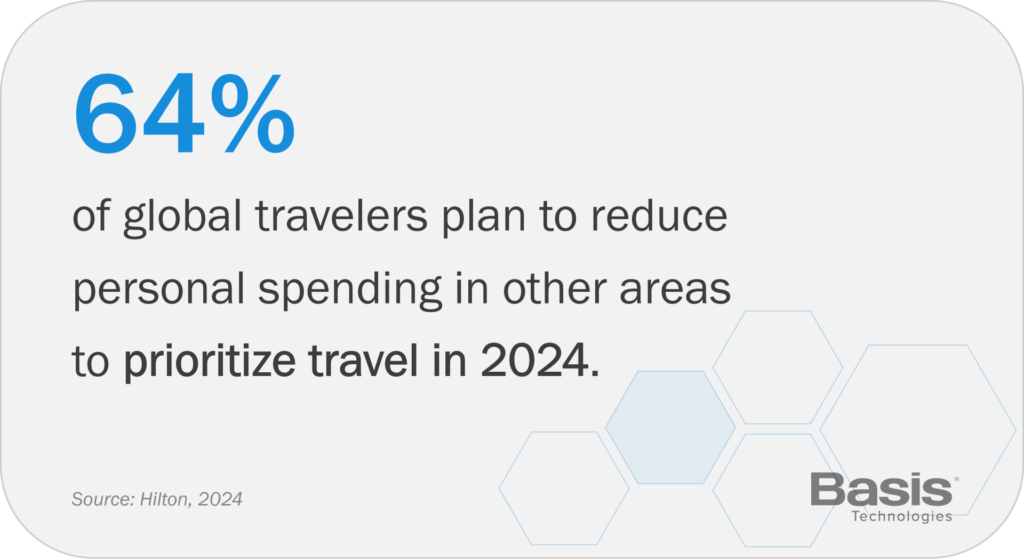
The good news? Inflation in the US has begun to ease, and even though its effects have lingered, demand for travel has remained robust, fueled by consumers who continue to prioritize experiences and connection over material things. Case in point: 64% of global travelers report that they plan to reduce personal spending in other areas to prioritize travel in 2024. This is especially true for millennials and Gen Z.
So, how can travel and tourism marketers position themselves to make the most of this increased demand for travel in the year ahead? Read on for three key trends to know to stay ahead of the curve in 2024.
Though many consumers report they’re planning to spend more on travel in 2024, they still have lingering price sensitivity from the economic uncertainty of the past several years. As a result, people aren’t necessarily searching with one destination in mind, but may in fact be considering a variety of places to travel and/or experiences—and their decision will likely be based on the value they perceive each option to provide.
For travel and tourism marketers, this combination of increased price sensitivity and willingness to explore multiple travel destinations makes it critical to lean into the value that a specific brand, service, or product can provide. Take, for example, a hotel near a bustling beach town: If that property’s pricing is already competitive with other nearby hotels, they’re going to have to find alternative ways to highlight their value. If they offer certain amenities (i.e., free beach transport, complimentary umbrellas and towels, location within walking distance to popular restaurants), their marketing team should emphasize these benefits through their messaging to show customers the added value they’ll get by choosing their hotel over another that’s comparable in price.
Today’s travelers are multi-faceted and fit into many different buckets—in other words, there’s significant overlap between different traveler “personas.” For instance, someone who used to never mix travel and work might now be a “bleisure” traveler since they work a mostly-remote job but have to travel to on-site meetings several times a year. And that same customer might also be interested in international travel, which they enjoy during their non-busy season.
So, what does this mean for travel marketers? First, it means that most pre-packaged audiences (think: “people interested in traveling to Phoenix”) aren’t cutting it anymore. The solution? Travel marketers can action their brand or property’s first-party data for customization. Going forward, the most successful audience segments will be dynamic and modeled off a destination or property’s owned website traffic. First-party data is more reliable, since it comes from customers themselves, and will allow brands to better craft intentional, personalized advertising experiences to better connect with (and convert) audiences.
It has long been a practice in the travel and tourism industry to show audiences the experience they’ll have with a product, brand, or service, rather than tell them about it. Competition is high between travel brands, and providing an immersive advertising experience to prospective travelers is one way for travel marketers to set their brand apart. Leveraging digital video is a key component of this, especially when long(er) form content (such as CTV) is paired with short-form, less polished content (i.e., user-generated content on social).
And, with new and exciting technological innovations available (such as AR, VR, and AI-generated content), there are even more opportunities for travel marketers to craft compelling creative that motivates audiences to take action. For instance, hotels can leverage AR/VR to offer a “look inside” to prospective guests, ski resorts can utilize these technologies to allow avid skiers to explore their terrain prior to booking, and tour companies can use these tools to preview the experience travelers will have with their company.
With many consumers planning to prioritize travel in the year ahead, marketers in the travel and tourism industries are well-positioned to make the most of this opportunity for growth. By leaning into value-based messaging, leveraging first-party data effectively, and showing exactly what travelers can expect from a certain trip or experience, savvy marketers can grow their brands and forge meaningful—and profitable—connections with key audiences.
__
Hungry for more 2024 trends? Check out our 2024 Trends Report for everything digital marketers need to know for next year.
Digital health innovations and technologies are evolving at a rapid pace. More and more interactions are taking place digitally rather than in-person, and individual health consciousness is at an all-time high. Further, health and pharma advertising is undergoing some substantial digital shifts: In 2023, the health and pharma industry spent $17.8 billion on digital advertising, and that number is projected to hit nearly $20 billion in 2024.
In addition to adapting to these factors specific to the healthcare industry, advertisers in the space are making substantial changes to meet the demands of the digital advertising world, including Google’s long-delayed deprecation of third-party cookies in Chrome in the second half of 2024. Considering these complexities, it’s no surprise that the advertising strategies health and pharma brands and agencies use to connect with consumers are transforming at a remarkable rate.
With the increasingly digital nature of the healthcare ecosystem, marketers in the space must be flexible and adaptable. And in this ever-evolving landscape, staying ahead of the curve is not just a strategic choice—it’s a necessity. To that end, read on for three key trends that should be top of mind as we head into 2024:
Beyond the increased privacy and regulatory demands that all digital marketers are encountering, health and pharma advertisers face additional challenges to ensure all their communications adhere to HIPAA regulation. And, thanks to a 2022 Office for Civil Rights (OCR) policy, IP addresses are now considered protected health information under HIPAA. This can make it difficult (if not downright impossible) to use pixels for targeting and measuring while maintaining legal compliance.
This is especially meaningful when it comes to performance marketing, and more and more healthcare brands and agencies are shifting away from these types of tactics and relying, instead, on mixed-funnel media strategies. Moving forward, there will also be an increased focus on awareness-based media, since it can be tracked with third-party brand lift studies while maintaining HIPAA and OCR compliance.
“OK, great,” some healthcare marketers might say. “Does that mean I should throw my lower funnel activities out the window?”
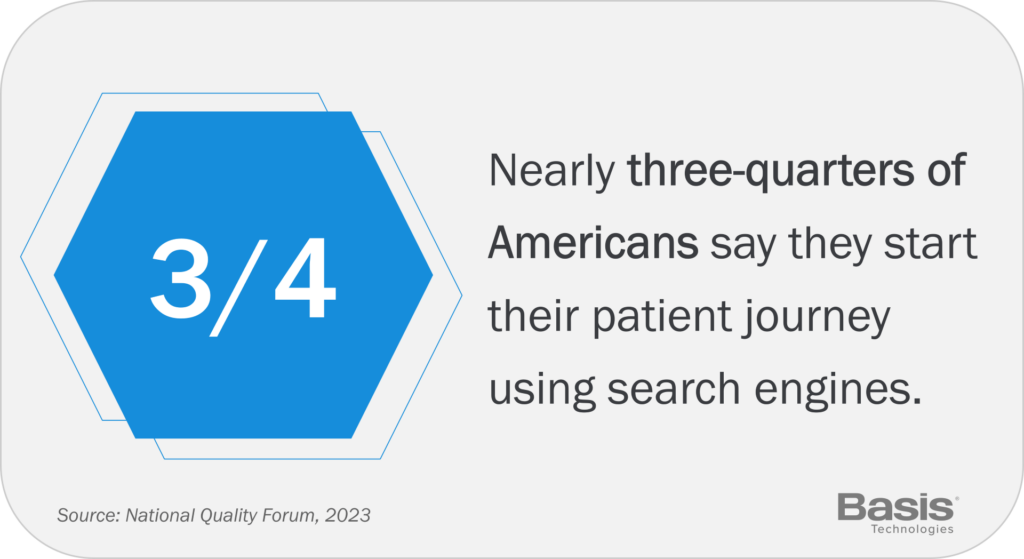
Certainly not! Even when brands can’t accurately measure attribution on their mid-to-lower funnel channels, they nevertheless remain a critical piece of a holistic marketing mix. For example, since brands know that most consumers start their health journeys online, they might focus on search ads and using contextual targeting to ensure such ads are in places where relevant patients are likely to encounter them.
And even though lower funnel attribution is a sticky point when it comes to healthcare marketing, there are ways to evaluate campaign performance to inform future marketing strategies:
Within that larger context of increased regulation and consumer privacy demands, savvy health and pharma marketers will also benefit from auditing past campaigns and applying key learnings to future campaigns in the year ahead. This is especially true when it comes to those aforementioned lower funnel tactics, where attribution can be particularly tricky.
For example, if a brand uses paid search ads to promote their telemedicine offerings to new patients and notices an increase in these types of appointments, they can use that historical performance data to continue to prioritize investment in the channel. Alternatively, if a brand invests in social media ads aimed at getting audiences to opt-in to receive more information about specialized treatments and doesn’t notice an uptick in conversions, they might choose to re-allocate investment in that channel—or reapproach their creative and/or messaging.
Given the increased demand for (and regulations around) patient privacy, 2024 is likely to bring a greater focus on marketing to healthcare providers (HCPs), rather than directly to patients. HIPAA protects individuals’ personal health information, meaning they can’t be targeted based on conditions, IP address, etc. But that doesn’t mean that HCPs that treat specific conditions can’t be targeted. As such more and more health and pharma brands are focusing their efforts on targeting HCPs rather than trying to connect with patients directly.
For example, if you’re a pharma brand whose drug treats a specific type of disease, you can’t target patients with that disease, since that’s protected healthcare information. And, thanks to the new OCR guidance, you’re even limited when it comes to targeting IP addresses within a certain location of a treatment center for that disease. So, what you can you do? Use job title-based targeting to reach HCPs who treat that disease. Once they have a greater awareness of your drug and its benefits, they may then be more likely to turn around and recommend it to patients.
It’s clear that the healthcare landscape today is complicated and that brands and agencies in the space face distinct challenges. By leveraging mixed-funnel media to connect with audiences, leaning into historical data to inform future campaign strategies, and shifting focus from patients themselves to their healthcare providers, health and pharma marketers can find success in 2024 and beyond.
__
Hungry for more 2024 trends? Check out our 2024 Trends Report for everything digital marketers need to know for next year.