
Technology
Basis Platform
Advertising Operating System
Communication Portal
Intelligent Collaboration
All Channel Activation
Activate Media on Every Channel

Consulting
Resources
During the early stages of the pandemic, consumer shopping behaviors migrated online out of necessity and convenience. Today, while pandemic restrictions have loosened and in-store shopping has now rebounded in some areas, e-commerce is still on the up-and-up across nearly all retail categories. The online retail and e-commerce space has truly come into its own, with consumers increasingly shopping websites and apps for items ranging from luxuries to necessities.
As part of this online shopping boom, and in preparation for cookie loss, retailers are learning how to collect more first-party data from customers through promotions and loyalty programs. This, in turn, is resulting in new opportunities to monetize, analyze, and diversify how they activate this wealth of valuable customer information to drive both online and in-store sales.
Meanwhile, technology has continued its rapid advance: Artificial intelligence, which is forecast to grow globally in retail market size from $10 billion to $45 billion in the next decade, is powering retail data analysis and subsequent recommendation engines. At the same time, consumers’ screens, big and small, are becoming more interactive, actionable, and attributable to sales in real time.
Looking to make the most of all the new opportunities available to retail marketers in 2024? Read on for three key trends:
If first-party data is gold for marketers, then retailers and e-commerce brands that successfully collect and activate that data can be considered retail royalty. And retail media networks (RMNs)? They’ve quickly created a kingdom of their own. In fact, it was that inherent value of first-party data—opt-in, great for targeting and attribution, and future-friendly in a cookieless world—that created a catalyst for the explosion of RMNs, which are forecast to reach $55 billion next year.
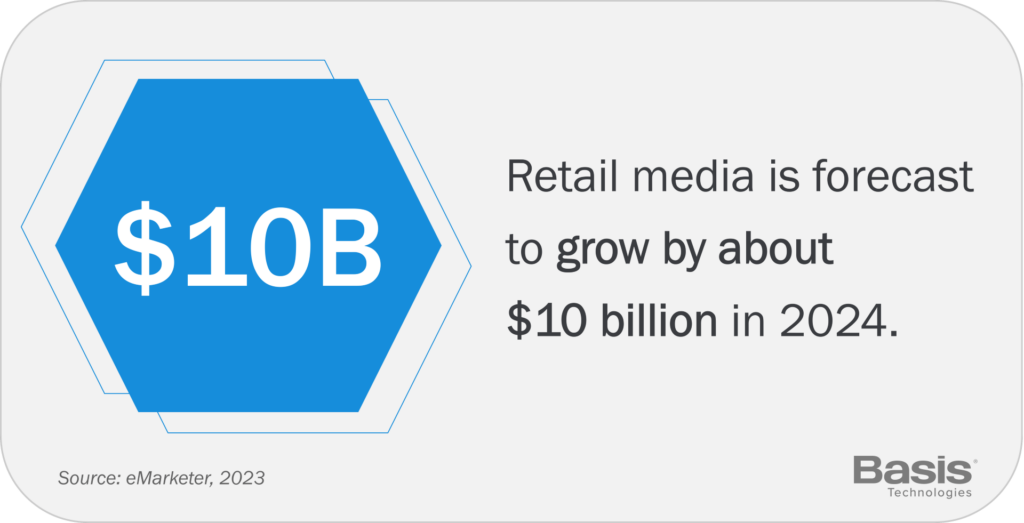
RMNs allow retailers to monetize first-party data by providing targeted, attributable advertising inventory on their websites and apps, as well as in stores. For instance, Walmart.com can activate a logged-in user's first-party data and analyze their shopping patterns to target them with relevant product ads to drive future sales. This could look like displaying ads for baby food to someone who purchased diapers, or showing a shopper who almost bought a certain sweater an ad for an alternate knitwear brand.
Right now, RMN data is very siloed and lacks standardization. This makes it difficult for advertisers to assess which networks are driving strong performance, incremental sales lift, and ROI across all their chosen RMNs, which hinders informed budget allocation. And the biggest players, like Walmart and Amazon, don’t have much incentive to share their data outside their own walls. So, it’s in the best interest of retailers and e-commerce businesses to take a balanced approach to the visibility of RMNs—remember, your own first-party data is king.
While certain aspects of artificial intelligence are still evolving, there are already numerous practical applications in use. These include personalization opportunities, customer service capabilities, and the ability to analyze data to forecast product demand.
As customers call for more personalized shopping experiences, AI will enable retailers and industry marketers to deliver on expectations in key ways. Data analysis will continue to improve as AI matures, and retailers and e-commerce marketers will consequently be able to utilize AI-powered tools to better segment and target audiences and tailor the advertising they see across the web.
Post-purchase, generative AI tools are evolving to be head and shoulders above previous iterations of simple chat-based customer support. Pairing owned data with GenAI can help retail marketers with tactics like targeted and relevant promotional messages based on past purchases, up-sells or re-sells (if a prior purchase is getting old), cross-sells (say, a deal on golf shoes for a customer who just bought a new driver), or creating content, talk tracks, and dynamic offers or webpages within a more controlled customer service environment. Of course, retail brands will want human team members to review content generated by AI to ensure accuracy and brand authenticity.
Shoppers have continued their shift to smaller screens—smartphones, tablets, and laptops. Still, with the growing addressability and connectedness of the large screens in our homes, retail marketers are increasingly able to advertise their goods cohesively across devices. Even better, those devices and platforms have evolved to let customers scan, click, or tap to shop directly from the ads they display.
There are many ways to create shoppable videos, including adding product links to video descriptions, using overlays to display product information, or displaying QR codes that link viewers to product pages. For example, QR codes in CTV advertising allow highly targeted consumers to navigate to retail or e-commerce sites, an action that can be directly attributed to the advertising campaign. It’s an opportunity to get the best of both worlds: the lean-back, immersive experience of traditional TV plus the granular targeting and measurement capabilities that come with digital advertising.
On smaller screens, platforms like Meta, TikTok, and YouTube are developing technologies that let consumers purchase products within videos on their platforms. This trend was accelerated in no small way by Apple’s App Tracking Transparency, which made it difficult for platforms to track user behavior outside their own ecosystems. Social media channels are rewarding retail advertisers with greater visibility for creating shoppable ads, as they keep users on the platforms, and they offer a chance to collect valuable user data from purchase activities—a win-win for platforms and for retail marketers.
Overall, as pandemic-era online shopping behaviors have maintained and evolved, competitive retailers and platforms have adapted to those behaviors in ways that turn data into dollars. Marketers in the retail and e-commerce industry who strategically tap into retail media networks, artificial intelligence, and shoppable video will meet customers where they are and how they expect to transact, in ways that foster sales and longer-term loyalty.
__
Hungry for more 2024 trends? Check out our 2024 Trends Report for everything digital marketers need to know for next year.
As restaurant and dining businesses recover from the era of peak pandemic restrictions, the industry continues to show signs of improvement. As an example, for most of the past year, restaurant operators more frequently reported higher same-store sales than lower same-store sales on a year-over-year basis.
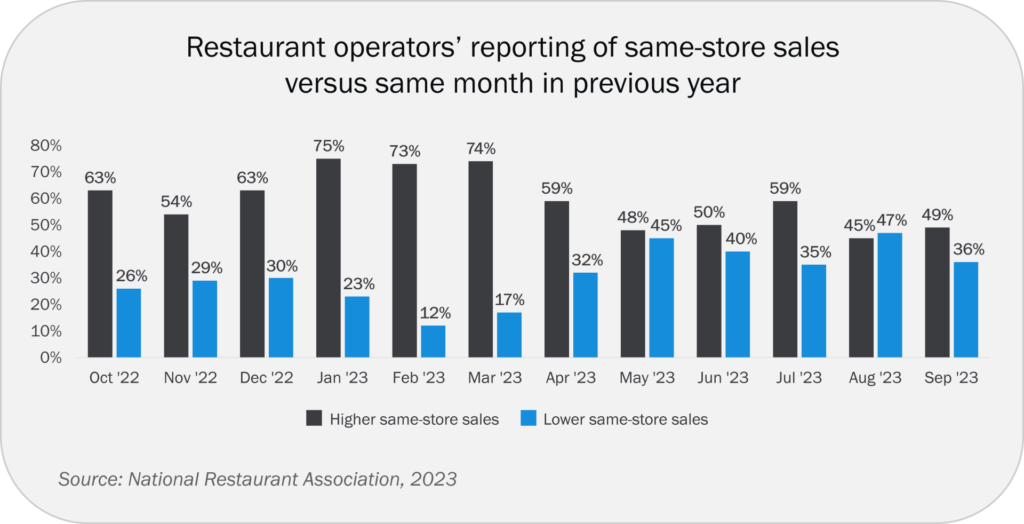
Plus, the impacts of macroeconomic headwinds—inflation, increased food prices, the labor shortage, and supply chain disruption—seem to be easing. The forecast of continued (albeit stabilized) revenue growth, combined with the valuable experience of running leaner operations that restaurant and dining institutions gained during the early years of the pandemic, suggest that, while challenges still exist, there’s room for growth in the year ahead.
How can restaurant and dining industry advertisers whip up marketing recipes for continued success? Read on for three key trends to keep top-of-mind in 2024 to achieve greater visibility, provide more value to customers, and craft an enhanced dining experience.
The restaurant and dining industry was hit hard by economic downturn in recent years, as were its customers. Inflation has driven up food costs, which has affected the pricing strategies of restaurants, as they strive to maintain profitability while keeping prices competitive. Those prices have caused lower-income consumers to spend less on dining out and to visit restaurants less frequently—although the wealthiest diners are actually spending more.
Food service businesses are adopting strategies to up the value they provide, and then investing in marketing those approaches. For instance, some restaurants have lowered prices but adjusted portion sizes to match; others have provided discounts on slow days or at off-peak times; and others still have found that “more” is actually the way to go—Olive Garden’s famed “buy one, take one to go” option during the pandemic allowed diners to stretch their order beyond one meal.
“Value” can also extend beyond the price tag. Businesses that sell or serve food that’s healthier, more functional, or more sustainably sourced should highlight that connection to the values held by their diners. Instituting loyalty programs with incentives can also result in higher and more frequent spending over time, something 8 in 10 adults said that they’d likely join if offered by a favorite local restaurant.
Though the economy shows signs of improvement, emphasizing value will continue to remain key in 2024. Marketing messages that highlight promotions, special offers, affordable dining options, and non-monetary value will resonate with discerning consumers.
The COVID-19 pandemic accelerated the adoption of contactless and tech-driven dining experiences, as evidenced by the boom in third-party delivery services like DoorDash and Uber Eats. Today, consumers have come to expect, if not rely on, that level of convenience. As such, it’s no surprise that the food delivery market size is projected to grow.
Part of that growth is due to the growing number of restaurants that plan to offer food delivery directly. Benefits to the food establishment include not paying fees to third-party delivery apps, and, in turn, passing those savings onto the customer by not marking up menu items; and building loyalty to the restaurant brand instead of the app. Plus, app downloads and associated loyalty programs have inherent marketing implications, such as the opportunity to own customers’ opted-in data and activate it through advertising and one-to-one marketing (like email and SMS), pushing promotions more directly to customers.
Embracing partnerships with third-party delivery apps also provides opportunities to create new revenue streams and relevant marketing touchpoints. Restaurants that aren’t leveraging the popularity of apps like DoorDash or Uber Eats may be missing critical visibility at key moments—last-minute supper plans, additional hungry party guests, or late-night snack attacks—as well as a chance to generate goodwill (if not repeat business) with app users. Once those valuable partnerships are forged, industry marketers can consider in-app advertising or app listing optimization tactics to reach and speak to customers who are hungry for convenience.
From birthday dinners to boozy brunches, consumers are continually seeking dining experiences that go beyond the food itself. These outings are often occasion-based, but sometimes, the allure of a hands-on cooking demo or a class on cocktail mixing can be the reason why people choose to dine out—and a memorable, shareable experience might result in repeat visits and word-of-mouth recommendations.
It took a few years, but the experiential dining trend is finally catching up with consumers’ desires for a unique dining experience. In that time, the a la carte menu of experiential options has exploded: Dinner theaters, multi-sensory dining, immersive environments, and augmented and virtual reality have all provided noteworthy nights out for the current generation of foodies.
Given that food is inherently visual, restaurant and dining advertisers can add this “experiential” layer to their marketing to tease the tastebuds of today’s experience-seeking customers. Faux out-of-home creative has become a popular way to attract attention, by simulating (or wildly exaggerating) a digital food or dining experience (Popeye’s and Burger King are two recent FOOH practitioners). Augmented reality for this industry has evolved past QR code menus to include interactive food visualization and immersive environment exploration.
Advertisers who present enhanced creativity by leveraging emerging technologies, high-speed data networks, mobile accessibility, and consumers’ desire for an innovative dining experience will whip up a marketing recipe that satisfies and delights.
While consumer dining behavior can change more drastically than a seasonal menu due to factors like the economy, technology, and social influences, there are a few things restaurant and dining marketers can focus on to drive success in 2024. By centering their messaging on value and dining experiences, and by tapping into the opportunities available in the delivery realm, marketing teams can gain and retain hungry customers in the year ahead.
—
Hungry for more 2024 trends? Check out our 2024 Trends Report for everything digital marketers need to know for next year.
The financial services industry is undergoing rapid transformation, driven by customer expectations, governing bodies, technological advancements, and competitive disruption. Financial institutions (FIs) face pressure to adapt to new technologies and provide a seamless and personalized customer experience, all while under heavy regulatory scrutiny. Meanwhile, finserv marketers must reconcile those increased customer expectations and growing competition with significant digital ad spend growth and strict advertising compliance regulations.
Going into 2024, finserv marketers who monitor and respond to industry trends with a consumer-centric approach can build the sort of trust that puts FIs at the forefront of people’s evolving financial needs. Read on to learn more about the trends set to shape the year ahead:
While most (if not all) industries have felt the brunt of the past few years’ economic turbulence, it’s had a unique impact on financial services. Consumers are dealing with the rising costs of borrowing money and obtaining insurance, at the same time that higher price tags for goods and services are influencing record credit card debt. Meanwhile, banks big and small are closing, often due to investment strategies that failed for reasons correlating with the pandemic.
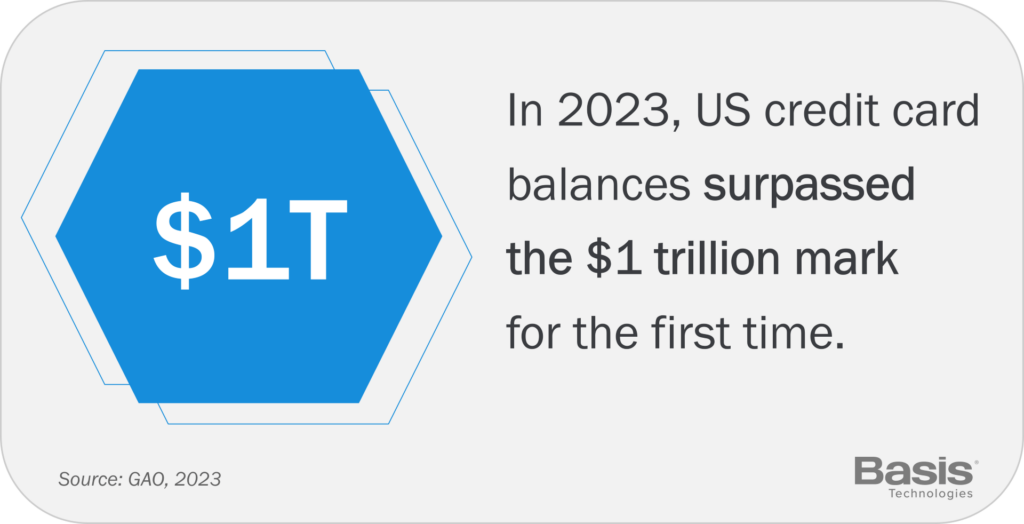
However, despite this confluence of factors, many FIs thrive today: They offer security that many alternatives don’t, their products and services are as valuable as ever, and the expertise within these institutions has benefits from educated consultations to hands-on transactions. FIs can be more involved in their customers’ personal finances at a smaller level like checking and savings accounts, up to major decisions like home and auto loans, financial advice, and retirement planning.
Financial services marketers should lean into those advantages to position FIs as a resource for customers anywhere on their trajectory. Brand advertising with consistency across channels can create awareness for products like accounts, loans, and credit cards or services like investing, accounting, and wealth management. Then, applying content marketing best practices to educate consumers on the value of those products and services through website and app content can create a tangible connection based on safety in a tumultuous economy.
Financial marketing that’s highly relevant, timely, personalized, and educational can create trust that leads to new or stronger relationships. And by zooming in on target audiences and their unique financial behaviors, marketers can provide personalized education and serve targeted messaging that meets consumers where they are on their individual financial journeys.
For example, tech-savvy younger consumers (think Gen Z and millennials) are increasingly expecting more personalized and innovative financial products and services, and they’re also more likely to use alternatives, such as peer-to-peer lending and embedded financial features. FIs are responding by investing in technologies like artificial intelligence and machine learning; enhancing their mobile and online platforms to appeal to younger customers; and strengthening valuable fintech relationships by offering embedded finance. Promoting those enhancements through social media, online video, and other programmatic advertising options can find digital natives where they are, with messaging to educate them and make them feel seen and heard.
In another life stage, older Gen Xers and boomers who are knocking on retirement’s door are redefining what it means to “be retired”—some are taking a phased approach, pushing “pause” on their careers to travel and explore, then re-entering the working world for a spell before doing it again. That nontraditional retirement plan requires new ways to save and more fluid ways to spend, and FIs should advertise the savings products, points, perks, and wealth management services that can help retirees live their visions in—or before—their twilight years.
Along with personalization, innovation, and education, consumers are increasingly demanding transparency from FIs that, in turn, need to tap user data to tailor experiences, develop relevant new offerings, and segment customers for accurate ad targeting—all with a high level of compliance by institutions, marketers, and service providers. People want to know how their data is being used and trust that their data, like their money, is safe.
Finserv marketers who apply current tools and techniques can better communicate to their intended audiences both about their data and based on their data. For instance, FIs can add more details on data usage (for background checks, credit checks, or future marketing) at the point of collection (like form submissions, quote requests, and online chats) into dynamic web content or iterative ad copy, which they can create with generative AI or other scalable methods afforded by emerging technology.
Then, based on data, finserv marketers can efficiently deploy that personalized, trustworthy experience across platforms by leveraging automation to accurately target customers with relevant, optimized messages. For example, consumer signals for “buying a home” can trigger ads for home mortgage loans, while underlying creative optimization can help display timely, transparency-friendly notes like current rates and terms, fees and associated costs, and other decision-affecting factors. This goes for annual fees from credit card companies, transaction and maintenance fees from investment firms, and any instance when honesty, accuracy, clarity, and relevance can lead to a higher degree of consumer trust.
The financial services industry has never been immune to the economy, technology changes, evolving consumer expectations, or strict policies and mandates from governing bodies. If anything, the industry has proven itself quite resilient and resourceful amidst these complexities. When it comes to the marketing bridge between FIs and their customers, industry marketers who track economic trends that lead to consumers’ banking behaviors—as a whole and by demographic or life stage—and apply an omnichannel approach to deploying tailored, targeted messages that meet expectations and regulatory standards will be primed for success in the coming year.
—
Hungry for more 2024 trends? Check out our 2024 Trends Report for everything digital marketers need to know for next year.
It’s a complex time for consumer packaged goods (CPG) advertisers. There are no shortage of factors to juggle: From differentiating products and brands within highly saturated markets, to navigating the private-label goods boom, to determining how emerging media channels like retail media networks fit within a holistic digital media strategy, and lots more. Couple these with the challenges faced across industries—including inflation woes, interest rate hikes, and souring consumer sentiments—and CPG marketers must be nimble and savvy as they adapt to meet customers’ needs.
Amidst this complexity, it’s critical for CPG marketing teams to prepare for what 2024 has in store and take steps to adjust their strategies to set their brands or clients up for success. To that end, let’s dig into some of the key trends that should be top-of-mind as we head into the new year.
The last several years have been a wild ride for consumers—and their spending habits have fluctuated accordingly. Though inflation isn’t as high as it was a year ago, the US consumer sentiment index, which gauges the level of positivity consumers have regarding general economic conditions and their own financial well-being, dropped for the fourth month in a row in November 2023.
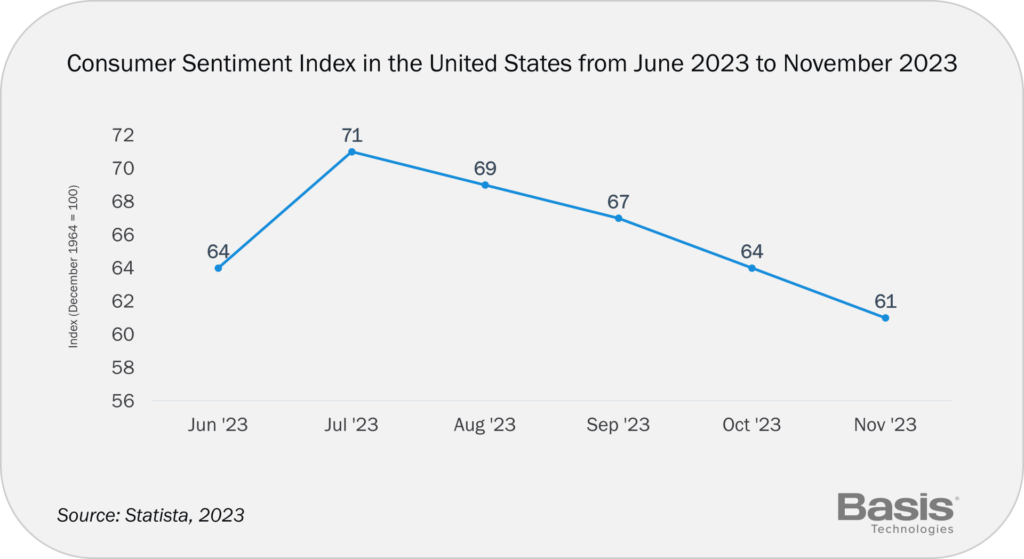
With inflation rates still climbing and student loan payments restarting in October, many consumers are still adjusting their spending or abandoning previously go-to brands in favor of cheaper options. But, interestingly, these increased economic pressures aren’t leading to an overall decline in spending. There’s significant variance across demographics, but in general, most consumers are being more thoughtful about how they spend—not necessarily spending less. For example, a millennial shopper might be more apt to “trade down” for a store’s private label of paper towels, but would likely stick with the skincare brand they love even if it means spending a bit more.
In 2024, it will be increasingly important for CPG brands to invest in tracking and understanding the decisions and behaviors of their target consumers, with the goal of better anticipating (or even shaping) that behavior. Amidst this complexity, brands will also benefit from sharpening their value propositions and refining how they communicate them in their marketing.
In 2023, retail media ad spend will reach $45.15 billion. That’s an increase of nearly 20% year-over-year. That said, retail media networks are still in their infancy, and standards and guidelines for their use are still emerging. Until those become solidified, it’s important for CPG marketers to know what they want to achieve through retail media and to evaluate if a specific network can provide it.
If a brand focuses all their efforts on just one network, they’re limiting their dollars to just that audience and no one else. Additionally, retail media networks are essentially walled gardens, offering very little (if any) access to their data. If CPG brands focus only on retail media networks to connect with audiences and don’t build up their own first-party data, they’ll find themselves way behind the curve in the privacy-first future where first-party data will be of utmost importance for marketing teams. Which leads us to our final trend...
Since retail media networks are still emerging and being refined, and since they don’t allow CPG brands to build up their own first-party data, they are best used as part of a holistic digital media approach. For CPG marketers, it’s critical to evaluate where retail media fits within their overall strategy, which part of the customer journey they want to use it for, and how many different retailers/retail media networks they’ll want to focus on.
Pairing retail media with connected TV (CTV) advertising can be particularly impactful. Additionally, CPG marketers might opt to use a mixture of digital out-of-home, digital audio, display, social media, and retail media to reach customers at different points along their buying journeys. By complementing retail media with other digital channels, CPG brands can ensure they’re reaching consumers when and where they’re spending time and make sure they aren’t putting all their eggs in just one basket.
__
Hungry for more 2024 trends? Check out our 2024 Trends Report for everything digital marketers need to know for next year.
Massive changes are taking place in both the automotive and the marketing industries, and automotive marketers are caught right in the middle.
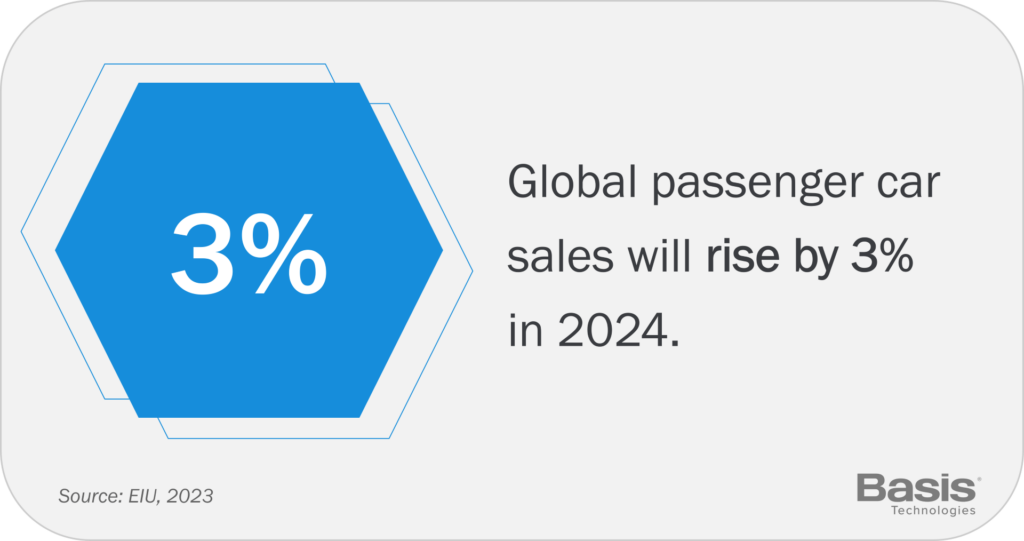
On the automotive side, both the unprecedented supply chain disruptions and semiconductor shortages that began during COVID-19 continue on to today, with many industry analysts predicting that inventory levels will never return to what they were pre-pandemic. In 2024, EIU forecasts that the sector will also be weighed down by slow consumer spending, high interest rates driven by stubborn inflation, and big bets on electric vehicles. On top of all that, in the longer-term, the resolution of the United Auto Workers (UAW) strike will likely result in UAW brands raising their prices to account for increasing employee salaries—and other auto brands may follow suit as part of a trickle-down effect.
And on the marketing side? Nothing major: just signal loss driven by the continued deprecation of third-party cookies, an uptick in digital advertising regulation and scrutiny, and massive technological advances that stand to redefine the landscape... you know, nothing much.
Amidst all these challenges, automotive marketers must prioritize strategies and tools that allow them to make the absolute most of their advertising dollars and their people. To that end, here are three trends that will be top of mind for future-forward auto marketers in 2024:
We all know that prioritizing the collection and extension of first-party data is a must as we move towards a privacy-friendly future. As marketers in the automotive industry move in that direction, leading brands and dealers will begin to consolidate their databases and execute a coordinated first-party data strategy to reduce the duplication of efforts and to make the most of all the data available to them.
Most automotive brands have had CDPs and data lakes in place for a long time. Now, those tools are being adopted within the dealership ecosystem, and with more sophisticated audience segmentation capabilities, dealers will be able to share more relevant audiences with brands and to deploy those segments on their own. Most dealerships have significantly more data than brands just by virtue of the nature of their business, so there’s a huge opportunity to share that with brands. This consolidation and coordination of data between brands and dealers will reduce duplication of tactics and strategies and allow both parties to make the most of all the first-party data available to them.
Automation is key for digital marketers who want to make the most of first-party data for personalization at scale. After all: If first-party data constitutes the wheels that enable marketers to connect with consumers, then automation is the engine that allows marketers to use that data effectively. (Sound familiar?)
But that isn’t the only use case for advertising automation. Automation can help automotive marketers build and deploy omnichannel campaigns more quickly, automatically optimizing pace and spend across all channels and moving budget from low performing channels to high performing channels—saving advertisers both time and money. For automotive marketers, the efficiency offered by these tools will be a game-changer for overcoming challenges like slow consumer spending, high interest rates, and signal loss. These technologies are developing quickly, and there’s a benefit to getting your foot in the door early so that you're primed for taking advantage of all the innovations coming down the line.
Artificial intelligence is another area that’s innovating quickly, and savvy automotive marketers will be keeping an eye on the space to ensure they’re tapping into all the ways AI can work for them. There are a host of ways marketers can leverage AI, such as using generative AI tools and DCO to produce marketing content and deploy targeted one-to-one email communications at scale. AI can also assist in personalizing and automating parts of customer communication via websites and call centers. Like automation, artificial intelligence tools can provide both time savings and cost-efficiencies, giving automotive marketers a competitive edge in a particularly competitive moment for the industry.
2024 is a year for automotive marketers to step on the gas. Marketing teams can get ahead by prioritizing the collection and extension of first-party data and coordinating that data with their brand/dealer counterparts; and embracing automation and AI tools that can reduce manual labor and save time as well as money. The road to automotive marketing success is clear—why wait?
—
Hungry for more 2024 trends? Check out our 2024 Trends Report for everything digital marketers need to know for next year.
The 2024 US election cycle is poised to be quite the ride for political advertisers. There’s a contentious presidential race at the top of the ticket, a slew of other high-profile races further down the ballot, and a highly partisan and emotionally charged voter base, to name just a few of the elements shaping the terrain. To add to the drama, awareness-building and fundraising efforts start earlier each election cycle, so the wheels of 2024 campaigns are already in motion.
Amidst these complexities and record-setting election ad spend—projected at a whopping $12 billion—political advertisers must have the latest strategies and insights to plan and execute winning campaigns. To that end, here are some key trends that campaign teams should keep top-of-mind as they develop strategies and partnerships heading into 2024:
Linear TV advertising has long been a go-to for campaign teams. It provides a familiar, engaging experience and gives political advertisers the opportunity to promote their messages in an emotional, memorable way. But over the past several years, there’s been a decrease in linear consumption: In July 2023, linear TV fell below 50% viewing share for the first time, with most of the time lost to linear shifting over to streaming. Savvy political advertisers are following these habits—thus reaching voters who watch less (or have never watched) linear TV. Plus, CTV offers political advertisers all the same benefits as linear, as well as the ability to target, measure, and optimize those ads more precisely.
CTV viewership is increasingly popular across all generations, but particularly so amongst millennials and Gen Z. This makes it a critical resource for political advertisers looking to motivate younger voters to head towards the polls, as well as those seeking to extend the reach of their TV buys to audiences who are not viewing linear tv.
Given that booming popularity, it makes sense that political advertisers are continuing to shift investment into CTV. In Basis, for example, programmatic ad buying on CTV grew by more than 60% in percentage of impression share from 2020 to 2022. Strong growth is expected in 2024 as CTV spend is forecast to reach $1.3 billion in spending during the 2024 cycle. To make the most of the expanding CTV opportunity, political advertisers should leverage a mix of buying approaches—including direct, programmatic guaranteed, private marketplace (PMP) deals, and open exchange—to ensure their campaigns stay on-budget, and seek out highly valuable exclusive CTV inventory through select partnerships to extend reach their reach.
Interested in a deeper dive into political connected TV advertising? Check out our comprehensive guide >
Ultimately, all elections are won at the local level—even presidential races come down to specific districts in key battleground states. As such, using geotargeting and voter files to reach voters based on geography is an established practice for political advertisers. But as technology has advanced and ad inventory expanded, more opportunities for advanced targeting have arisen. Perhaps the most notable of these technologies for political advertisers? Automatic content recognition, or ACR.
ACR is a technology that tracks what viewers watch on their smart TVs, thus allowing advertisers to place ads in a more targeted way. Though not available on all devices, it is available on an increasing amount of premium CTV inventory. By using ACR, political campaigns can create voter targeting segments of viewers who have seen a competitor’s ad, as well as those who have seen their own candidate’s or cause’s ad. These are segments that can be layered on top of geotargeting and voter files, allowing digital buyers to make even more personalized impact and extend reach to non-linear households. And though this technology is not brand new, there is now sufficient CTV inventory—due to increased viewership—that political advertisers can leverage it at scale for their 2024 campaigns.
The third and final trend that political advertisers should keep top-of-mind heading into 2024 is the importance of crafting relevant and interest-based messaging—especially in the context of mis- and disinformation. False and/or misleading content is, to some extent, inevitable during an election cycle, and most constituents will encounter it at some point. This is, in no small part, due to the growth of social media platforms and other online spaces where inflammatory online discussions can run rampant. To make matters worse, many major tech companies (think: Meta, Google, Amazon, X, and Alphabet) have recently made major cuts to their internet trust and safety teams.
So, how can political campaigns ensure their candidate’s true message is resonating with and persuading key voter groups? In short, by adapting quickly to the current narrative and nailing the creative messaging. Political advertisers can break through the noise of mis- and disinformation by personalizing messaging to create connection based on issues voters care about. Issues will define the 2024 election, and political advertisers will benefit from leaning heavily into interest-based messaging and targeting. For example, reproductive rights will be a major issue discussed by candidates during the 2024 cycle. Aligning a candidate’s pro-choice stance with voters passionate about reproductive choice will create connection and activation. By responding rapidly throughout a campaign and expressing a candidate’s views in a way that is clear, authentic, and emotionally resonant with audiences, political campaigns will ensure their message is cutting through a clutter of news and garner a strong share of voice.
Amidst what’s already shaping up to be a complex and highly competitive election cycle, political campaigns will need to ensure they are maximizing every dollar in their ad budgets in the year ahead. To that end, teams will benefit from using connected TV to reach audiences when and where they’re tuning in, leveraging advanced targeting technologies like ACR, and being strategic with their messaging to break through mis- and disinformation.
_
Hungry for more 2024 trends? Check out our 2024 Trends Report for everything digital marketers need to know for next year.
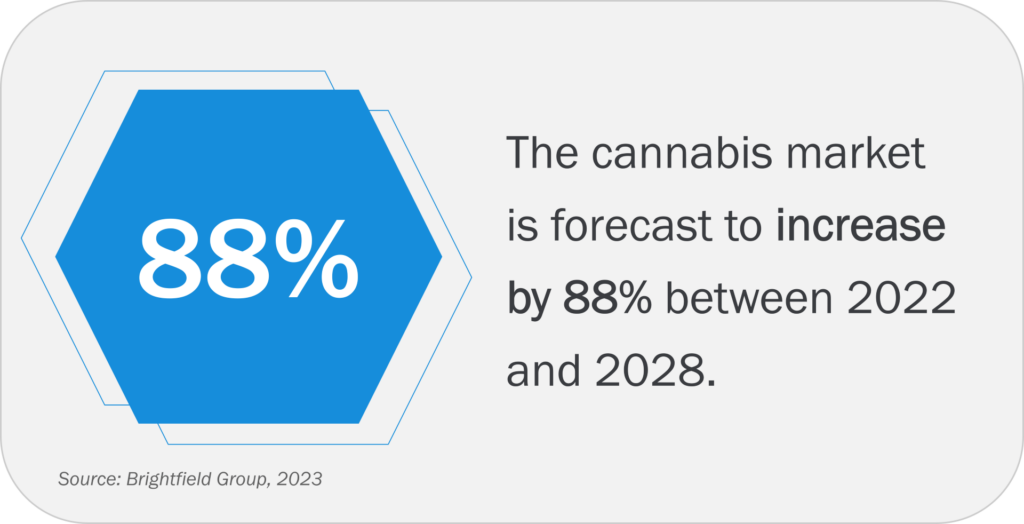
Cannabis is becoming more and more mainstream in the US: 2023 saw continued growth in the social acceptability of cannabis use, new states legalize medicinal and recreational cannabis sales, and a major social media platform change its policies to allow for cannabis advertising. The cannabis market is forecast to reach a whopping $50.7 billion in sales in 2028, representing an 88% increase from 2022’s $27 billion.
While the industry is clearly on the rise, cannabis marketers have plenty of challenges to contend with—from a maze of advertising regulations, to economic uncertainty and inflation, to the upcoming loss of third-party cookies in Chrome and shift towards privacy-friendly digital advertising. To both navigate these challenges and capitalize on the market’s potential, cannabis marketing teams will need to prioritize brand awareness, crafting targeted strategies that make the most of the spaces where cannabis can be advertised and where their target audiences spend time.
Here are some trends and tips for making the most of cannabis ad spend in 2024:
There are a lot of consumers out there who are new to cannabis. So, when they go to purchase a cannabis product, they're often choosing whatever the budtenders recommend, whatever looks flashy and fun, or perhaps most commonly—especially during inflation—whatever’s at a good price point for them. As such, it’s extra important for cannabis marketers to drive education of their brands and generate interest in their products. Connected TV, digital audio, and digital out-of-home (DOOH) are great channels for accomplishing this. Marketers can tap into CTV private marketplaces (PMPs) that accept cannabis, such as Telaria and FreeWheel, cannabis-friendly podcasts, and digital out-of-home partners like Place Exchange.
In 2024, cannabis brands looking to amp up awareness and differentiate themselves most effectively will also need to ensure their tactics are as targeted as possible. One way to get more targeted with these efforts is to identify specific consumer personas and tailor lifestyle content that extends beyond cannabis use specifically for these groups. There are segments of consumers who enjoy things like cooking, gardening, and outdoor activities in addition to cannabis, so tapping into those interests is a great way to create consumer personas for targeted advertising efforts. And looking towards a privacy-first future, CTV and podcasts also offer contextual targeting opportunities where cannabis marketers can reach these groups of people.
While cannabis brands are very familiar with traditional out-of-home, 2024 should see more and more marketing teams spending on digital out-of-home (DOOH).
DOOH is great for cannabis advertising for a variety of reasons. First, it offers all the benefits of traditional OOH, plus all the benefits of digital advertising—the ability to target, track, optimize, refine, measure results, and quickly switch out creative as needed. Also, as cannabis gains legal status in different regions, an increasing number of dispensaries are emerging. The more dispensaries there are, the more opportunities there will be for advertisers to leverage in-store DOOH screens to reach customers who are ready to buy in prime places and moments.
At the same time, while there are many restrictions when it comes to advertising cannabis online, DOOH comes with fewer restrictions, so advertisers can get many more impressions from a wider audience. Overall, it's a great way for cannabis brands to get more bang for their buck with less red tape.
Finally, next year should see more and more cannabis brands trying to engage audiences beyond the digital world. For example, brands will likely invest more time and money in educating budtenders on their products: If you go into a dispensary and have no idea what you're doing or what you want, you’re going to ask a budtender for their advice. If those budtenders are educated and excited about your products, then they'll be more likely to talk about them with those customers.
Savvy marketers will also lean on real world engagement opportunities that are more commonly associated with B2B advertising—such as conferences, panels, and interviews—to get people talking about cannabis and their brands. These strategies can help make up for all the regulation and restrictions that exist for traditional and digital cannabis advertising.
Overall, cannabis marketers will need to approach brand awareness in new and creative ways in 2024 to differentiate themselves in a market where everyone is vying for consumers’ hard-earned dollars. By prioritizing targeted messaging, digital out-of-home, and real world engagement, cannabis brands of all sizes can ensure they're making the most of their marketing dollars and setting themselves up to capitalize on the explosive growth coming to the cannabis space.
—
Hungry for more 2024 trends? Check out our 2024 Trends Report for everything digital marketers need to know for next year.
B2B advertising has reached a digital tipping point.
In just five years, B2B has gone from spending just 29% of its media dollars on digital channels to a projected 49% in 2024. That’s an increase of nearly 70%!
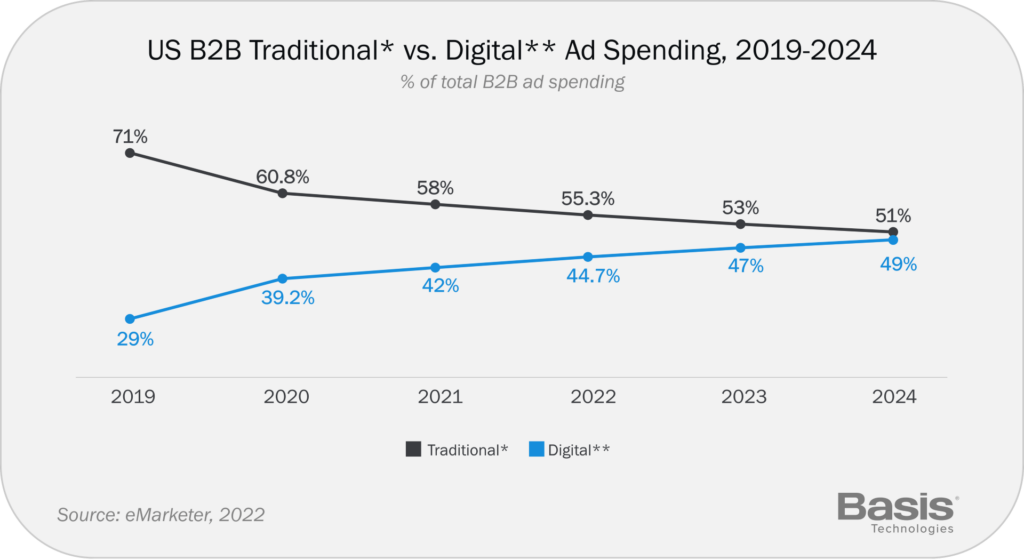
Simply adapting to this digital transformation would have been a big task in and of itself. But B2B marketers have been navigating the digital shift while battling through a global pandemic, a prolonged economic downturn, supply chain challenges, layoffs in the tech industry, and a significant shift in who is making purchasing decisions in the B2B landscape. Even more, rapidly approaching on the horizon are the signal loss challenges that will change (and have already begun to change) how B2B marketers connect with target audiences.
Overall, it’s clear that B2B marketers will need to be flexible and adaptable as they navigate an increasingly complex landscape. With all this in mind, here are some key trends B2B marketers should consider in 2024:
In 2023, 60% of B2B marketers said that social media was their most effective revenue-driving channel. It’s no surprise, then, that social media will continue to dominate in 2024. This is likely to prove particularly true when it comes to partnering with influencers and subject matter experts across key platforms, such as Meta and LinkedIn, as B2B marketers continue to rely on these content creators to drive personalized connections with their audiences.
To make the most of the social media opportunity, B2B marketers should be deliberate about which creators or subject matter experts best align with their product(s) and/or services. They can then leverage many different types of content—from user-generated content (UGC), to testimonials, to case studies, and more—to build up credibility, trust, and connection with prospective audiences.
Speaking of building connection, digital video is another channel that will be crucial to helping B2B advertisers elicit emotion and foster relationships with target audiences in the year ahead. Video allows marketing teams to capture audience attention with the power of sight, sound, and motion. These qualities can be particularly impactful for B2B brands when leveraged for sharing education- and testimonial-driven content. Plus, with digital video, marketers can tailor that content specifically to target audiences.
Even more, by leveraging compatible creative across multiple video channels, B2B advertisers can create a curated and consistent customer experience. For instance, teams could use CTV for upper-funnel awareness tactic targeting for specified geographies, reinforce those ads with digital out-of-home (DOOH) displays in the same geographic areas, and further reach target audiences by placing pre-roll video ads within reading content that relates to their specific product or service offering. And, thanks to the benefits inherent to digital technology, video campaigns can now be measured and optimized to maximize a team's return on ad spend (ROAS).
It’s no secret that generative AI has been making quite the splash—both within the world of advertising and beyond—and B2B marketers can use this emerging technology in a variety of ways.
AI-powered chatbots on a website can help improve the user experience and automate lead generation by swiftly and efficiently gathering relevant information on a customer’s needs, making quick decisions to support those needs, and setting sales teams up for success. Generative AI tools can also assist in the content creation process, either for brainstorming or early creation phases. Just remember: Since authenticity and credibility are critical for fostering connection with audiences, a human team member should be reviewing anything generated by AI to ensure that everything is up to par with brand guidelines and to prevent outdated or inaccurate information from sneaking its way into the content.
Amidst the complexity of today’s B2B advertising landscape, it can be tough to know what marketing teams should focus on. But by using social media to connect meaningfully with target audiences, leveraging digital video to show how specific products or services can help solve audiences’ problems, and making the most of emerging AI technologies, savvy B2B marketers can find success in 2024—and beyond.
__
Hungry for more 2024 trends? Check out our 2024 Trends Report for everything digital marketers need to know for next year.
Like students cramming for a final exam, the pressure’s on for marketers at colleges and universities.
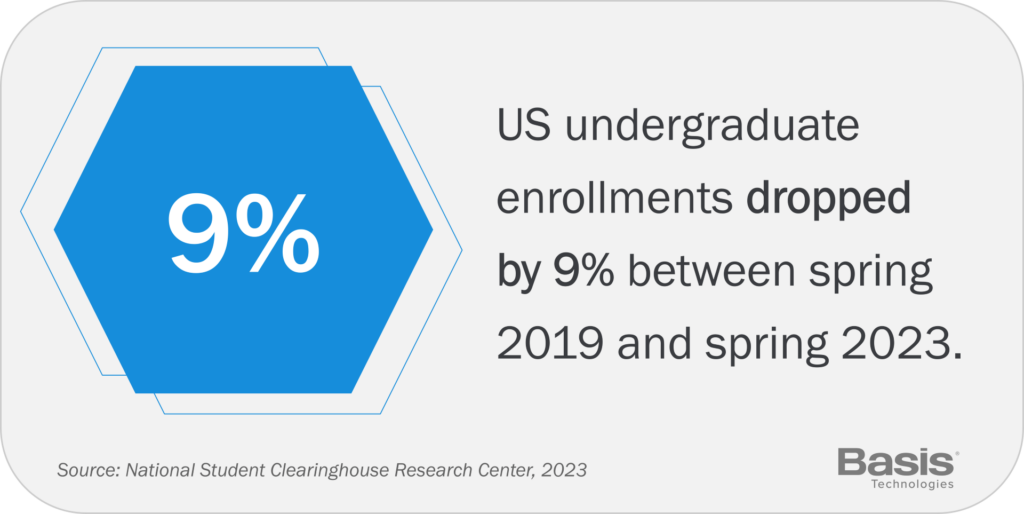
Undergraduate enrollment has declined since 2010, driven by increased skepticism about the value of a college degree and hesitance around acquiring student loan debt—even though college grads tend to earn more and experience lower rates of unemployment. The COVID-19 pandemic accelerated undergraduate enrollment declines, with rates dropping by a whopping 9% between spring 2019 and spring 2023. And though graduate enrollments saw a bump during the early days of the pandemic, those numbers also declined in 2023. Then there’s the looming college enrollment cliff, which promises a 15% decline in the number of college-aged students starting in 2025 due to lower birth rates during the Great Recession.
Add it all up, and it’s clear that 2024 will be a critical year for colleges and universities. The good news is this pressure has seriously upped the value of higher ed marketers. Smart leaders will be prioritizing and investing in their marketing teams, which gives marketers the opportunity to shine by taking creative approaches to big challenges.
Looking for some ideas to give your 2024 planning a competitive edge? Check out the following trends set to shape the year ahead:
Interest in online classes and flexible learning hasn’t slowed, and according to a survey of Chief Online Learning Officers at higher ed institutions, that demand for online courses will continue to grow in the years ahead. Students want online, virtual, and hybrid options, and savvy advertisers will prioritize showcasing these offerings as colleges and universities continue to invest in them. Providing digital experiences like virtual events and campus tours is a great way to show students that you know how to tailor engaging digital experiences.
Creating hyper-personalized ads for students will also be crucial for higher ed marketers in 2024. If a college or university can make prospective students feel like an ad is speaking specifically to them—and that the institution in question is a great fit—that can be an effective strategy for winning over individuals who may be on the fence. At the same time, this approach ensures that marketing budgets are spent as efficiently as possible.
Investing in research and having the ability to slice and dice data like enrollment numbers is key to supporting these efforts. Consumer personas in higher ed have shifted significantly in recent years, and the “traditional college student” persona has morphed into multiple target audiences. There are a lot more nontraditional students, such as part-time students or students enrolled in shorter-term non-degree programs. Marketers need partners who can pull research on consumer and market trends for them and then dig into their enrollment numbers to get specific about where it makes the most sense to invest.
In terms of executing on those hyper-personalized ads, programmatic advertising can provide targeting opportunities so that institutions can reach particularly niche audiences. For example, an omnichannel programmatic strategy allows teams to remarket individuals on higher funnel platforms—which are starting to remove some of their targeting capabilities and the data segments marketers can tap into with the onset of signal loss and third-party cookie deprecation—using insights gained from other channels. Leaning heavily into first-party or DMP data to really figure out what prospective students are looking at on your site and what their priorities are is another great way to maintain that hyper-personalization as we move away from third-party identifiers.
The growing use of artificial intelligence in marketing is a trend across all industries. For higher ed marketers, it’s important to start testing and learning with AI tools now so as to develop a comfort and ease with that skill set, which will put marketers in the best position to quickly jump on any new AI-based opportunities that may emerge in the next few years.
For target audiences, no matter the vertical, attention spans are a lot shorter than they used to be. However, this is especially true for the younger prospective students higher ed marketers are looking to target. Having access to AI-powered features like VR campus tours or chatbots that can answer people’s questions right away are very effective for keeping an audience engaged.
Also, some social platforms, like Meta and TikTok, offer integrations to create augmented reality components. Basically, marketers provide creative assets like images and headlines, and the platforms will try out different variations of those assets until it identifies what is going to perform the most successfully for individual consumers. It’s a great way to leverage AI for creative optimization.
Overall, the focus for savvy higher education marketers in 2024 will be on digital—not only marketing universities’ online and virtual opportunities, but also taking advantage of and getting comfortable with digital advertising tools that empower hyper-personalized advertising, such as programmatic and AI. Education marketers who lean into these digital opportunities are sure to pass with flying colors.
—
Hungry for more 2024 trends? Check out our 2024 Trends Report for everything digital marketers need to know for next year.