
Technology
Basis Platform
Advertising Operating System
Communication Portal
Intelligent Collaboration
All Channel Activation
Activate Media on Every Channel

Consulting
Resources
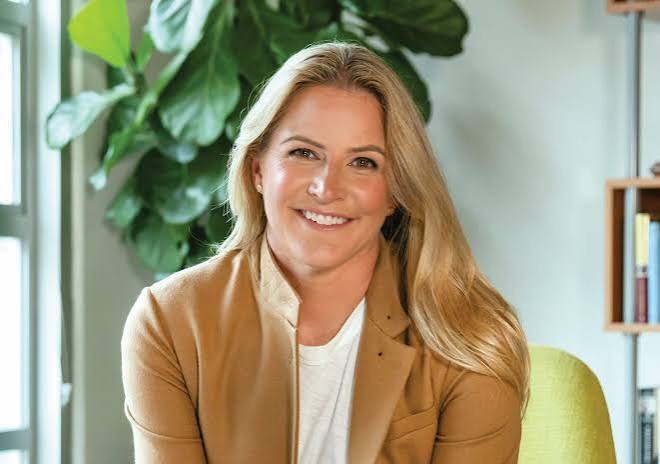


Everyone wants to build a billion-dollar brand, but few understand the marketing strategy necessary to get there. Jean Freeman, however, has built her agency around helping ambitious brands make that leap.
In this episode, Jean—Principal + CEO of Zambezi—joins host Noor Naseer to discuss why growth requires more than just putting more money behind what already works, and why creative, media, and long-term brand investment become increasingly important as a business scales. They also explore Jean's “ideas over inventory” philosophy, the role AI should play in advertising, and why influencer marketing is becoming an increasingly important part of the growth equation.
Noor Naseer: What does it actually take to build a billion-dollar brand? It's not just a great product, a big media budget, or a clever campaign. It's knowing how to turn all three into lasting growth. Hey, this is Noor Naseer for Adtech Unfiltered, and today I'm speaking with Jean Freeman, CEO of Zambezi, the award-winning women-owned independent agency. Jean has grown Zambezi into an integrated creative media and production powerhouse. Zambezi has earned AdAge's Small Agency of the Year honor three times, and its media division, Scaled by Zambezi, was named Adweek's Breakthrough Media Agency of the Year. We're getting into what separates brands that break through from those that stall, and what it really takes to build a billion-dollar business. Let's get into this episode with Jean now.
--
NN: Well, Jean, it's a pleasure to see you and to talk to you about billion-dollar brands, something you really know a lot about.
Jean Freeman: Thanks for having me.
NN: Your tagline, like I just mentioned, isn't, correct me if I'm saying it the wrong way. We build billion-dollar brands.
JF: You got it.
NN: And so I feel like you'd be an expert in that area. So let's dive right into it. At least in theory, every agency leader or marketer wants to be in the business of doing exactly that. But if you were to share what the distinctive qualities that need to be there, that are required to build one, what are they?
JF: So as a business owner, I think this also speaks to me as well because we are constantly re-interrogating ourselves to how growth is possible. Business is a growth game, right? And so if you kind of think about it through the lens of a company as you're building, a lot of times, like the fundamental aspects that you need to get right, your product, your delivery, those are critical in order for scale to even happen. So let's say you have now a successful product and you're starting to be able to scale and gain momentum. Having people understand your brand is such an important part of the next journey of growth for you. And so the way we kind of view it as, when brands are making that transition from a middle market, have enterprise goals, investment in brand and marketing is pivotal. And a lot of times, it's also when, from a marketing standpoint, you really have to re-evaluate the spend, things that you're doing, and have a whole new approach. And so that's why I think from the idea of building billion-dollar brands, we love to work with brands whose best days are ahead of them.
NN: So to that point, I want to ask for some more clarifying details on what makes a brand well-suited to become a billion-dollar brand. And you just mentioned folks that have a lot of runway ahead of them. Are we talking about startups? Are we talking about challenger brands? Could it be both?
JF: Startups are usually, like, in their early, I would say, it's not quite understood how things could go. I mean, most businesses in the US fail after the first three years. So we're talking about more about from an established standpoint, you've gone from a startup really more to middle market, which, you know, you had to be, from a revenue standpoint, 100 to 300 million. So you've shown there's viability of the product, you've shown there's sustained interest, and now it's about continuing to have that growth potential be there. And usually, a lot of times, for marketing, marketing is that key ingredient to get you from 300 million to 700 million to a billion.
NN: Yeah. I'm curious, as the person who is at the front of the lines for Zambezi, are you just always evaluating businesses on an ongoing basis to see who meets the profile, who hits that criteria? Maybe they're not an opportunity today, but they could be an opportunity tomorrow, because I feel like getting that right chemistry is mission critical to work with them.
JF: Definitely. I mean, there's a lot of components to it, but I think that's the thing that I'm intrigued more by is the overall business makeup of the company. The brand is an opportunity, and we have experts in brand strategy and creative that can really diagnose where the brand can be. But I really look at it more from the holistic, fundamental view of the business. How is their product? How is distribution? What's the pricing strategy? If it's more of a DTC model than two, how is social being part of that? The components of the business are critical to kind of see that. The founder, a lot of times we see compelling founders being that also from a growth standpoint of being really critical for that brand to really reach enterprise level.
NN: A follow-up question I want to ask you about is just maybe hearing an example or two. Can you share a premier brand that you all work with that meets that criteria? Maybe give us the quick 30 seconds or one minute, let's say, of what makes a brand that you guys have worked with a billion-dollar brand.
JF: Yeah, I think Once Upon a Farm is a great example. So Once Upon a Farm is food company created by Jennifer Garner, really focused on healthy, organic, nutritious food in a convenient price point and also convenient type of product. And Jen started this because she really cares about food. She grew up on a family farm. It's a very, very relatable brand story, and then also for an investment for her to have a food company. So they came to us when they were ready to have their first national brand campaign. They had done marketing, but not to the point where they had gone with a national campaign, where they put significant media investment behind it. Zambezi worked on that a year and a half ago. The communications that we launched are still running, and Once Upon a Farm just had their IPO a few months ago, at about $800 million valuation. So I think that's a really good example of a brand that's in the sweet spot. When we talk about billion-dollar brands, they come to us specifically with a need where they have to do things differently from a marketing perspective to continue them on their enterprise journey.
NN: Uniquely in this example, you shared that they came to you and you also said that brands consistently come to you, and that's where you're at today with Zambezi. I don't know the whole history, you know it much better than I do. Working for Zambezi for so long and then eventually becoming CEO and now I'm the owner of Zambezi. There are certainly occasions where you're going and pitching new business and pursuing new opportunities. Is that fair to say or is it primarily coming the other way?
JF: We have a lot of inbound interest, and I think that's something that's unique about us. We are now through this lens of billion-dollar brands, we have a very sharpened prism to be able to go out and have conversations to work with brands that we think that we can have a great opportunity. I think the Honest Company is a great example of a brand that we are currently working with right now that is post-Jessica Alba. What does the Honest Company look like moving forward? And we're working on a few different campaigns for them and really kind of getting them to that billion-dollar status.
NN: Well, I also want to talk more about building these brands in a modern era. And I know some what does modern era even mean? What do you think has fundamentally changed in, let's say, the past decade when it comes to really serving billion-dollar brands or just serving brands in general? And has something changed specifically this past decade, or are the fundamentals really the same?
JF: It's an interesting question because I think it depends on the prism that you're looking at it. I mean, at the end of the day, a good idea is going to be a good idea, right? You need to have a breakthrough creative idea. And I think with even more so from the media landscape that we are in, that articulation is more important now than ever. But I will also say what has changed and what I think is a great opportunity is the media landscape. It's changed drastically if you just think about the scope of 10 years ago where digital hadn't really surpassed from a linear perspective. That is now really changed and now we're also kind of coming into a new frontier with retail media as well. So I think the media fluency is necessary in order to ensure that you can have breakthrough ideas really kind of come through. Again, you can have a great idea, but if no one's seeing it, then it's not going to be as impactful. So I do think that is the idea of an agency, which is why we've invested so heavily in media to have a media practice. We were actually named Adweek's breakthrough media agency of the year last year, even just starting our media practice only six years ago. So I think that says something. It says something about how quickly the landscape is changing and you have to have an entrepreneurial approach in order to really stay ahead of it.
NN: So you just said yourself recently named media agency of the year and that this is a new aspect of the practice of Zambezi. I want to talk about optimization and dashboards and attribution, not in detail, but at least at a high level. Do you think that modern marketing has made it harder for companies to invest in brand building because we're so obsessed with optimization on really a more short-term basis?
JF: Yes, and I can understand why, because you have the immediate results to show what it's doing and what's happening. Earlier, when I was kind of talking about that marketing playbook, kind of shifting when you want to go to a billion dollars, it's exactly that. It's having it not be about short-term, but understanding investment for a long-term is necessary in order for that next growth horizon to go. It's new marketing principles, it's new marketing approaches, and a lot of times CFOs don't understand that. And truthfully, I think marketers need to do a better job of explaining and understanding and getting the key metrics from that aspect. Brand lift studies are important. We always recommend those for our clients, because managing and brand health, you need to view it through a standpoint of like, that is a key metric to continue to kind of put into the larger things as you're tracking.
NN: So there's marketers out there who are going to say, new marketing principles, I'm not open to that. And there are other agencies out there that are so just light years away from the situation that you and Zambezi are in. They're dealing with marketers or clients in general who are going to say, I'm worried about revenue tomorrow, so don't give me all this nonsense about modern principles. So when you are referring to modern principles, can you just tell me a little bit more about what those are?
JF: Yeah, I mean, really what we view is, we view creative media as a differentiator for us. And we believe in ideas over inventory. Inventory will always be there, but the inventory will be most successful if you also have the ideas. So again, it's that mixture of understanding the media, and when you need to have the metrics that are about short-term, immediate, seeing it as opposed to more of a longer-term investment, at the end of the day, that comes down to really sound strategy and also building relationships. When we are working with clients, as I mentioned once upon a farm, they had never done a national brand campaign. They had never spent the money that they had on a media national footprint. That is a big jump for a brand to do, and it requires a lot of trust. And I think that's the one thing that we're also really good at as an agency, is helping brands do things that they haven't necessarily done before, and helping them in a way that we come to it from a standpoint of also being part of their team, and knowing we're not going to get everything right, but we're going to continue to test and learn to ensure it's going in the right direction.
NN: So you describe yourself as an integrated agency, a creative agency, a full service agency, like what are those adjectives you use to define what Zambezi is?
JF: Yeah, I mean, I would say we're an integrated agency. I think full service gets thrown out a lot, and actually a lot of agencies don't have the services to actually back it up. But what clients really want is integration. They want creative media production. They want agencies that can do it and seamlessly do it together, because it speaks to the output of what the work is. But yes, we have been building, for the past seven years, I have been building us from a creative only to integrated agency.
NN: From the jump, what do you need to do so that brand is not hounding you about, we're worried about optimization, but get them to sign on and trust the process?
JF: I think it really kind of depends again. We have always been focused on awareness building. So brands come to us when they're really ready to make that jump from just true optimization conversations to larger level partnerships that they haven't done before. Great example, with Liquid IV, we brought in the How to Love Island partnership. We're the type of agencies that will bring those ideas that haven't necessarily been done before. Dashboards are important. Optimization is important. Return on investment need to have it. But the other thing that we also provide, which brands have really been drawn to, is the larger strategy of how to do something different also with media dollars.
NN: So you just said it yourself, ROI matters, yield, ROAS matters. So you have folks in house that are focused on that. What does that evaluation process look like? I know you're at the top of the packing order, so it's not your job to meet with every Adtech partner out there. But what are your expectations as far as still making sure that that work is being done properly, even though you have this philosophy as far as what you're focused on, you're not trying to be obsessed with purely optimization. But what does the Adtech evaluation look like? Yeah.
JF: I mean, again, I think we're a relationship agency. Like our relationships are long standing with our clients. And so with anything specifically we're talking about Adtech partners, we want the same type of relationship. I just really view the most you get out of partnerships is really putting into what you get, right, from the standpoint. And usually then if both sides are invested, the output is going to be even better. So that's really what we're looking for. Again, when people are talking about specifically price, price is important, but we're a new evolving practice. Like we're pretty new on the media block. We have a lot to learn as well. And so we love to work with partners that also embrace that same philosophy.
NN: I want to ask more about creative as a competitive advantage and us also living in an AI centered world today. AI could be argued to be making content easier to create and produce. Is your org seeing some great ways for great creative to be even more valuable with the use of AI application?
JF: I think AI is a tool that needs to be learned as we are all learning it. It's not going to be the only tool. You have to have an idea. A bad idea that uses good AI is still a bad idea. That's how we really view it. And I think there's a lot from an application standpoint of certain brands have certain content needs where AI is a great fit. And we're exploring that. And really more from a product standpoint, kind of building some solutions, because it is going to be a consistent need. Brands also need storytelling. They need high premium production. And so again, it's evaluating where the tool is most needed and useful. And I think that's why brands also come to work with us because we can give that recommendation where it's best fit for the brand.
NN: It's interesting. You did not say this, but I'm just sharing a thought that I'm walking away with. Not to call any agency mediocre, but mediocre agencies would be more receptive to a mediocre idea that AI generates because they can't distinguish between an idea being great and being okay. Correct. In terms of operating a practice where you really are focused on great ideas, what kind of signals are you looking for to make sure you are validating that you have a great idea?
JF: I mean, I think that's when it comes back from a team standpoint, right? Validation of idea requires business acumen, and then also from the brand lens and from a customer standpoint. Brand strategy is so critical to break through creative work. And I think that sometimes was get lost when we're talking about specifically on AI and its application. We're focusing a lot on the end product, but not necessarily the upstream. Why are we even making the investment even to do this? And what is the best approach for it?
NN: How involved are you in accounts? I know you can only be so involved, but to what extent are you involved?
JF: Yes, I'm involved in some of the accounts, and I love specifically with certain client partners, forming those relationships and getting them the best team that they need. I was a college athlete, and I've always really viewed myself as a coach. I don't have to be involved in every single meeting, but I definitely know exactly who is on what and who is best suited to work on certain client business problems. And that's what a lot of a coach does. You're modifying the team. You're seeing how things change. But I think that's the thing I really love about it. And I love about this business in general. Every client, while they, yes, have the same goal of building a billion-dollar brand, the way that they need to do it for the successful for their organization is different. And so having that different approach and needs and also listening to clients on that, I think clients appreciate that about us because we don't have like a one-size-fits-all type of way to do it. It is more customized and more consultative.
NN: There's obviously a lot of things that are happening in the industry right now as far as fragmentation, there's a lot of chaos happening, utilization of AI, AI slop, a lot of stuff happening out there. I know you've carved out your own niche, but all of these factors impact the opportunities that we have in the future. I want to ask you, which emerging technologies do you think will fundamentally reshape marketing, and which are noise? Are there things out there that you identify as hype and things that are not hype, or is that not even an active factor that you're worried about?
JF: I don't know. I just think I've seen this, like I've been in the industry now long enough to kind of see the pendulum swing. Digital came to be a thing and then social. And so I just think we're in one of these moments right now where it's really swinging really heavily, and it might be a little bit too concentrated. I think that's the larger thing concern that I have with AI technologies, is we're talking about few but with very large amounts. And so the consolidation and not enough options, I think you will start to hear more from a consumer standpoint that more is kind of needed. I think it's safe to say we don't quite know yet. I mean, AI has been here for a while. I think I really view it as you need to know how and when it can be the best tool for your business. And what one agency is doing on the AI front could be something totally different. What I've really found specifically for independent agencies who have the desire to grow and to scale, I think it's about diversification of services, figuring out other things that clients actually want and being nimble enough to create those services because holding companies just can't.
NN: I think something else unique about Zambezi is that you all are not desperately turning to AI to help create your magic. You already have a firm hold on what your magic is, so you're not going to have this over-reliance on technology to spin something up. Correct. One final question for you. What capabilities should brands be building today that will matter in the future so that they can be billion-dollar brands?
JF: You know, one thing that I think we can't deny is the role of influencers and how much that is starting to take over. If you kind of look over just media spend in general and how that pie has become more fragmented as more social and digital channels have come to it, I mean, influencer has been part of it, but it's growing and growing and growing. So I just think that is something that I'm seeing specifically with growing brands that they're heavily invested in between the 250 to 500 range in revenue and that is a lot of times becoming more of an internal aspect, which I think if you're really combining it and closing it really to from a sales perspective, it's kind of like how social also became in to become more of an internal brand part of the overall marketing ecosystem that is definitely the first thing that I always recommend to CMOs and ask them about their influencer spend in relation to their total media spend.
NN: This is the real final question.
JF: Yeah.
NN: You all have created this magic. You have a cultural impact that attracts people to your agency, and that's an amazing accomplishment. Then a lot of people want to come and partner with you, work with you, knock on your door, to be a part of that special space you've created. What advice do you have for anyone that does want to partner with Zambezi?
JF: Yeah. I mean, again, I'm a business owner. So from the standpoint of what we're here to do is to move brands, businesses forward. So I'm always viewing it through the business lens, but the human side is so important to me as well. I think that is really how you get great results is by having a great team around you. And so we want to work with best-in-class partners, and that is really ensuring that everyone's goals from an alignment perspective, long-standing relationships are really important to us, and Vasis being one of those. And so from that aspect, you want to work with top people. A players want to work with A players. That's something I just really view and believe in. And so if you stand that up, creating a culture of like we make great work and we have a great time doing it, who doesn't want to sign up for that?
NN: Yeah, I have nothing to add. That makes so much sense. And again, like I was saying to you earlier, this is just, it's inspiring to hear from the leader of an agency that's accomplished as much as yours and I think it's just such an exciting time to be working in this business. There's a lot to see in the future and we'll be over here watching.
JF: Great. Thanks so much.
NN: Yeah, thank you. A big thanks to Jean Freeman for joining me. A notable takeaway from this conversation is that an agency's job isn't just to help a brand stand out in a campaign running this month or this year, is to help that brand earn attention, stay relevant and grow long after the initial buzz wears off. And it's way easier said than done. It takes a complex mix of art and science to bring that type of long-term vision to life. That's it for this episode of Adtech Unfiltered. I'm Noor Naseer. Another episode out real soon.