
Technology
Basis Platform
Advertising Operating System
Communication Portal
Intelligent Collaboration
All Channel Activation
Activate Media on Every Channel

Consulting
Resources
Say hello to Hulu! Centro’s platform, Basis, is now certified to buy on Hulu’s private marketplace (PMP). Basis customers that secure approval from Hulu gain cross-channel video advertising capabilities through programmatic ad buys that reach 72 million viewers watching on connected TVs and other devices.
Basis is a comprehensive, automated, and intelligent digital media platform—the only software solution of its kind to consolidate digital operations across programmatic, direct, search, and social campaigns. Access to Hulu’s PMP complements the connected TV advertising features already offered in Basis, allowing users to automate large-scale upfront Hulu deals and direct ad buys on every major OTT and digital video platform.
“Advertisers deserve choice and control in their transaction experience,” said Doug Fleming, Head of Advanced TV at Hulu. “Adding Centro’s Basis as a certified DSP partner offers advertisers yet another opportunity to reach their target audiences with efficiency on Hulu via our Advanced TV platform.”
Buying on Hulu’s PMP allows users to:
Agencies using Basis to buy on Hulu’s PMP are able to align programmatic tactics with every other major part of a campaign to power cross-channel video marketing strategies. Campaigns utilizing direct buying, programmatic buying, paid search, and paid social are centrally planned and managed within the workflow automation platform. Performance data from these tactics feed directly into Basis, empowering media professionals to optimize in real-time and unify reporting.
Tyler Kelly, president of Centro, added: “As the streaming OTT leader with the largest wholly addressable marketplace, Hulu continues to grow as a partner for engaging viewers of premium video. Its innovations create more ways for marketers to scale top-of-the-funnel, site- and sound-driven branding efforts. Hulu and Centro are aligned in automating the buying of OTT video to make ad spend on this channel more seamless, effective, and compelling for agencies.”
In addition to its Hulu certification, Basis’ DSP accesses all major video supply sources for open RTB and private marketplaces. It is the technology platform of choice for users of digital media software, scoring the number one position for the Demand Side Platform (DSP), Video Advertising and Cross-Channel Advertising categories on global user review site G2. The Adweek Readers’ Choice Best of Tech Awards named Centro as the winner for the Display DSP, Mobile DSP and Retargeting categories.
Learn more about Connected TV Advertising with Centro.
In an age where innovation is king, it can be shocking to see advertisers and agencies stick to the adage, “If it ain’t broke, don’t fix it.” Yet, media buyers are often stuck using the same tools and systems that were in vogue over a decade ago.
Centro's President, Tyler Kelly, has a different approach: He knows that the system is broken and is already working hard to offer solutions. In this episode, Kelly speaks with host, Noor Naseer, about innovating in a hypercompetitive marketplace, accommodating the shifting expectations of marketers, and attracting new generations of talent.
A customer or consumer data platform (CDP) is a platform or a software that creates a persistent, unified record of customer data that is accessible to other systems. Data is integrated, contextually enriched from multiple channels or sources, to create a single consumer data profile. This integrated and structured data can then be utilized by other marketing systems for various use cases like bid optimization, personalization, segmentation for ads and emails etc.
According to Gartner, “Customer data platforms have evolved from a variety of mature markets, including multichannel campaign management, tag management and data integration.”
So, then, why is customer data integration vital for insights-driven businesses?
Gone are the days of spray and pray marketing to promote businesses. Big data was a buzzword more than five years ago, but it continues to be relevant for business success today. Offerings from customer data insights have evolved into multichannel campaign management, tag management, identity resolution etc.
Consumer digital footprints are now larger than ever, giving enterprise businesses significant opportunities to target, market to, and maximize the lifetime value of customers. Businesses that take full advantage of big data and consumer data insights to meet these goals are uniquely positioned to stay ahead of the competition and thrive in the long run.
A recent Forrester report calls companies that focus on the value of data “insights-driven businesses”, and they’re set up to dominate the competitive market. Those that prioritize data insights are growing at an average of more than 30% annually and will earn a projected $1.8 trillion by 2021.
A lot of what empowers insights-driven businesses is technologies that allow them to process and analyze large volumes of relevant data at scale. But that’s only one piece of the puzzle. Successful organizations also develop a business culture where these insights are maximized and constantly used to inform decisions and improve processes.
Most enterprise businesses today know the value of big data and consumer insights, but few are prepared to make all the necessary changes to fully benefit from it. According to a recent global research report by Cloudera, 69% of enterprise organizations view having a comprehensive data strategy as a requirement for meeting business objectives, yet only 35% think their current analytics and data management strategies are sufficient for this purpose.
Choosing the right management platform for your business needs is valuable, but there’s a lot more to building an effective enterprise data strategy today.
Investing in technologies that can integrate, manage, and analyze the wealth of relevant business data out there is the first step towards success. In order for enterprise businesses to maximize the value of major data analysis initiatives, they must also create an internal strategy for success.
This includes a clear vision for what the business hopes to gain from data analysis and a roadmap for achieving this. Key players at different levels of the business, beyond marketing or data science teams, must have a vested interest in this strategy.
Illustrating clear goals for your data analysis initiatives impacts your approach significantly. Here are some of the many ways it can inform your strategy:
Some of the goals you define may depend on your type of organization and industry. That said, most businesses want to use data insights to inform strategies that can help them reach new customers, earn their loyalty, attract investment, beat their competitors, and improve other business capabilities.
Once you have a clear understanding of what you hope to achieve with data analytics, you’re ready to identify which strategies and data management solutions you need to succeed. The types of data you need will depend on the different analytics goals you set out. Some examples include:
This is the area where choosing the right data platform is most important for insights-driven businesses. There are plenty of data management solutions out there that can automatically collect, process, and analyze some of the important data points businesses need to meet their analysis goals. But missing even one or two of the key data streams means missing out on important insights or wasting time and resources with manual analysis.
Insights-driven businesses should focus on finding a data management platform that offers the most integrations to process and analyze all relevant data for their business goals. Either that or be prepared to invest in a partial solution and manage the rest manually with internal data science teams.
Once you know what systems and technologies you’ll use to manage your data, it’s also essential to define clear data management roles. Not everyone is a data scientist, and many people outside of the analytics team will likely come into contact with and/or edit your enterprise business data. In order to maintain data integrity and management efficiency, it’s important to define key roles so everyone understands expectations related to data management within the business.
Identify all individuals who may perform some tasks in your data science pipeline. You may discover that internal team members don’t have enough skills or the capacity to meet analysis needs. In this case, it can be worthwhile to enlist the help of third-party agencies to work with your data and analysis tools. This is a common strategy among enterprise-level businesses - in fact, spending on marketing agencies accounts for nearly a quarter of marketing budgets today, according to the latest Gartner research.
Once you know exactly who will be interacting with your business data, you next need to detail what kind of tasks they will perform with it. When enterprise businesses actually take the time to do this, it’s easy to find ways to improve data analysis efficiency and performance. Your data scientists, for example, are an incredibly valuable asset for deriving insights, despite what automated technologies have to offer. Often, they spend significantly more time (as much as 80%) preparing data than actually performing analysis. Why not delegate some of the more tedious tasks to data managers, allowing data scientists to focus on the work that matters most?
In enterprise-level businesses, there are often issues with teams working apart from each other. This is true both within data management and IT tasks, as well as with the rest of the business. Insights-driven businesses need to make specific changes to their organizational structure to sidestep this issue. For starters, avoid allowing your data scientists to work in silos. It makes sense to assign different teams to work on different goals, but they should still have an integrated approach.
Ensuring clear communication between IT and business leaders is critical for success. Creating and approving clear data management goals is just the first step of this collaboration. There needs to be ongoing feedback between different units to ensure data insights remain the most valuable to current business needs.
Many business leaders believe that data should only be accessible by the teams that analyze it. But making it more widely available to invested teams throughout the business can maximize its value for reaching business goals in the long run. Breaking down silos may cause some confusion in the short term, but the long term benefits are worth the effort.
Once a business is certain that technologies and teams are set up to maximize the value of big data, they need to ensure they’re prepared to report on data insights. How you approach this is largely based on previously outlined goals. Several important areas include:
Create reports that help improve operational efficiency and effectiveness. Relevant data insights should be made available to key players across the organization. Encouraging this kind of data-driven company culture makes it possible for all department leaders to improve internal operations based on these insights.
In today’s highly competitive digital landscape, efficiency is the factor that can set an enterprise business apart from its competition. Data insights can help a business identify problems and take action to streamline internal processes. Success isn’t just about improving marketing performance. Data insights can be applied to sales, customer relations, product distribution, employee performance, and more.
Marketing investment insights are probably the biggest opportunity to drive more revenue from data insights. Campaign performance data can tell a business a lot about what strategies work and which don’t. Bidding technologies are uniquely positioned to help businesses automate changes based on these insights.
The time and energy marketing managers save by using automation needs to be reinvested into other initiatives. Evaluating the ROI of different marketing channels, exploring new options, experimenting with targeting strategies can lead to new data insights that improve performance even further. Insights-driven enterprise businesses need to be prepared to use both automation and manual data insights to inform future marketing investment decisions.
Advanced data analysis can require significant time and financial investment, between collecting, processing, storing, analyzing, and taking action based on insights. Enterprise executive officers today understand that data insights are necessary for success. But they also need a clear picture of the benefits if they’re going to continue investment in the long term.
That’s why from the very beginning, there needs to be analysis processes in place to illustrate how this investment relates to the business’ bottom line. Linking data insights to drive specific marketing goals is one thing. But what’s the direct impact on sales? How does investment balance out in terms of ROI?
Another critical aspect of running an “insights-driven” enterprise is that the insights truly drive action. There needs to be a company culture in place that ensures data insights are utilized continuously throughout the organization to improve processes and meet internal goals.
What makes this happen are teams ready to act quickly on insights to create a competitive advantage. But in 2020 and beyond, success is also largely based on automation technology. Look at the search advertising landscape, for example. Opportunities to optimally target search audiences exist in what Google calls “micro-moments.” Consumers leave a digital footprint suggesting their intention to buy. But often they’re searching for businesses while they’re on the road, or standing in line at a store about to buy. The time between expressing purchase intent and actually buying is a micro-moment. But it’s something advertisers can target when they use automation technology.
Bidding automation technology, for example, can make micro-changes to a bid strategy throughout the day in real-time based on the latest data insights. Instead of waiting on data teams and data scientists to make targeted changes, automation technology can ensure all relevant data is used in a timely manner to optimize campaigns.
There are lots of ways automation technology can help insights-driven businesses succeed today. Using the right data management tools in combination with internal business processes is essential to maximize the value of this strategy.
Today, there’s a wealth of relevant consumer data that businesses can use to optimize their marketing and sales strategies. The volume of relevant data is so great that customer data management technology is an essential requirement for success. But that’s far from the only thing enterprise-level businesses need to build an effective and efficient data strategy.
Insights-driven businesses choose the right technologies for their goals as well as develop internal processes to maximize their value. This includes creating an organizational culture that regularly utilizes data insights to drive change.
Welcome to the roaring 20's! 2020 will be a defining year for advertising technology. With global cultural events like the U.S. presidential election and the summer Olympics just around the corner, advertisers will have many opportunities to connect with audiences in transformative ways.
To predict where 2020 will take us, it's important to understand how far we’ve come. Read on for an overview of the themes, trends, and tools that ruled 2019!
Data Privacy
Universal Pixel
Native Ads
Advanced TV
Automation
Whatever 2020 holds in store, it’s important to understand the background of how these themes and innovations have developed, in order to make informed decisions moving forward.
Do you have questions about any of the Basis features described in this post? Connect with us to learn more.
.single.single-resource .cont ol a:not(.btn):hover,.single.single-resource .cont ul a:not(.btn):hover{text-decoration:none!important;box-shadow:inset 0 -1.2em 0 0 #ffbf3d;-webkit-box-shadow:inset 0 -1.2em 0 0 #ffbf3d}.single.single-resource .cont ol a:not(.btn):hover,.single.single-resource .cont ul a:not(.btn):hover{text-decoration:none!important;box-shadow:inset 0 -1.2em 0 0 #ffbf3d;-webkit-box-shadow:inset 0 -1.2em 0 0 #ffbf3d}.single.single-resource .cont ol a:not(.btn),.single.single-resource .cont ul a:not(.btn){text-decoration:none!important;box-shadow:inset 0 -2px 0 0 #ffbf3d;-webkit-box-shadow:inset 0 -2px 0 0 #ffbf3d;transition:all .1s ease;-webkit-transition:all .1s ease;font-weight:600}.single.single-resource .cont ol a:not(.btn),.single.single-resource .cont ul a:not(.btn){text-decoration:none!important;box-shadow:inset 0 -2px 0 0 #ffbf3d;-webkit-box-shadow:inset 0 -2px 0 0 #ffbf3d;transition:all .1s ease;-webkit-transition:all .1s ease}
The holiday season is often wonderful and challenging at the same time. Many of our biggest stressors are exacerbated during these months, including financial pressures and familial relationships. It’s a time when everyone could use some extra care.
Reflecting on the holidays five years ago, a Basis Technologies recruiter started the Give Thanks program as a way to live out one of Basis’ core principles: support each other. Since then, a “Give Thanks” table stacked with blank thank-you cards has marked the beginning of the holidays in each of our offices.
How does the program work? It’s simple: Basis provides thousands of blank thank-you cards and creates mailboxes for each of our offices. After the submission deadline, Beeps from our Talent and Development team sort and mail the cards. This year, sorting the (almost 4,000!) cards took over two full days!
The Give Thanks program has flourished since it’s inception. This year’s Give Thanks helpers had these things to say about the program:
“It was loaded with positivity and reminded us that a brief message or a couple of words of appreciation can go a long way.”
“Is it wrong to say that I think it’s my favorite task I’ve ever done as office manager??”
“This is one of my favorite initiatives of the year!”
Research shows that practicing appreciation is a simple way to create a big impact. According to Forbes, cultivating gratitude results in stronger relationships, better physical and psychological health, and higher levels of resiliency.
Further research states that nurturing a culture of gratitude in the workplace is equally powerful. Employees who practice and receive gratitude perform more acts of “organizational citizenship—” or behaviors that aren’t in their job description, but serve to enhance a team environment (such as filling in for a coworker or welcoming a new employee). These are the traits we hope to foster in our people, and what we look for in new team members.
It’s clear that gratitude is a powerful tool for cultivating wellness in oneself and in the workplace. So, what are you waiting for? Give the gift of gratitude this holiday season—it’s free!
Interested in learning more about Basis Technologies’ culture? Read more about what makes it great.
Trim the tree. Light the candles. Wrap the gifts. Finish up that holiday shopping. And of course, don't forget to put the finishing touches on your holiday campaigns.
We know that like a certain red-suited, sleigh-driving, North Pole-dwelling elf, you’re making a list (and checking it twice) with a million items on it. And it’s only getting longer as the season progresses.
And in addition to the typical holiday frenzy, we also know that your PPC campaigns are never far from your mind - in fact just the opposite. Your campaign tasks are piling up and your end-of-year deadlines are drawing nearer (all while your staff is packing up and heading out on for vacation). That means, in addition to making a perfect eggnog, untangling the lights and putting animatronic reindeer in your front yard, you’ll also be prepping your digital ad and marketing campaigns for the upcoming festive season. For many of you, that means aligning promotions with PPC campaigns, writing holiday-themed ad copy and organizing customer gift lists. It means you have to simultaneously coordinate giveaways and specials, and conduct granular reporting and closely monitor holiday traffic - all while planning for the New Year ahead.
Whew. That’s a lot.
It’s enough to make you say “bah humbug” and channel your inner Scrooge (that is, before he met the ghost of Christmas Future). But don’t worry - we have you covered with our 12 Days of Holiday Campaigns lookbook (feel free to set it to music, if the mood strikes. We find it helps to revive the holiday spirit).
In the guide, we provide some handy holiday digital ad and marketing campaign tips that are sure to put your holiday woes at ease and give you some much-needed peace of mind. With one tip for each of the “12 days,” we touch on everything from holiday-themed graphics and ad copy, to generating user engagement, invoking the spirit of the season, and showing gratitude for your customers who helped you get where you are today.
So sit back, pour a hot drink of your choice, stoke the fire, turn on that favorite holiday movie and relax. Here’s to a peaceful - and profitable - holiday season! And may you - and your campaigns - be merry and thrive in the New Year!
Happy Holidays from QuanticMind!
At Centro, we know that keeping up with the trade pubs and latest trends can be tough and time-consuming. To make that easier, we’ve compiled all the articles, reports, and other bits of awesomeness you may have missed, but should definitely read. Enjoy our latest list below!
LUMA’s State of Digital Marketing 2019 [:20]
As 2019 comes to a close, the LUMA team releases its annual State of Digital Marketing report, breaking down the winners and losers of 2019 in IPOs, what the ecosystem looked like in 2019 and how it will change in 2020, and how digital media will be impacted by the latest privacy laws.
The Adtech Trends Rounding Out 2019 [:06]
In the next year, advertisers should expect changes across the industry, from creative resurgences to tighter measurement standards and growing consolidation among media partners. Players on both the buy-side and sell-side will have to continue to make strategic shifts as consumer behavior, digital regulations, and technical capabilities evolve at record pace.
Top Marketing Trends for 2020 [:05]
With constant updates, new techniques, and changes to algorithms, the digital marketing world moves fast to keep up with the trends. Fortune predicts that the following will be marketing trends for 2020: shoppable posts, virtual and augmented reality, interactive content, personalization, Google Ads Smart Bidding, content marketing, video content, and SERP position zero.
‘There Is A Trade-Off:’ How Immediate Media Is Preparing For A Cookie-less Future [:04]
Publishers are increasingly finding themselves at the whims of how platforms will adapt to an ad ecosystem that doesn’t rely on third-party cookies. The most worrying prospect will be in February when Google will let users opt out of third party tracking. Publishers are beginning to wring out more value out of first-party data strategies, like growing subscribers, getting more readers logged in and collecting data. With publishers able to do this, they will need to educate the buy side to show them they are still a fit.
Why PayPal’s Acquisition Of Rewards Platform Honey Is A Big Deal [:06]
Paypal acquired Honey for $4 billion, making it PayPal’s largest acquisition to date. Honey is profitable and most valuable is that PayPal will now have access to shopper data which will allow for personalization in the future.
Tesla’s Plan to Leave the Auto Industry Behind on In-Car Infotainment [:10]
The average car already has more than 150 million lines of code, according to a 2018 KPMG report, and a greater percentage of software will be devoted to in-car entertainment in the future. As self-driving cars come closer to reality, the inside of an automobile is going to become a new medium to reach consumers. Today, Tesla is leading the infotainment race with these in-car entertainment services, but others are starting to rethink the experience, as well.
Before We Kill the Cookie, Let's Ask Why [:03]
In the advertising world, the term ‘cookie’ is commonly associated with the perceived invasion of online privacy. But at the heart of the collection of 3rd party cookie data is something many consumers really want: more personalized user experiences. In a future that is anticipated to be cookie-free, the author breaks down the anticipated reactions of advertisers, publishers and consumers in a world that must abide by stricter privacy and data regulations.
25 Fascinating Years of Digital Advertising [:02]
Digital advertising has been redefining the marketing landscape since the early 1990s. To provide perspective on its development, the following infographic breaks down the evolution of advertising across these past 25 years.
Static vs. Digital OOH: Here is how they stack up [:03]
The out-of-home advertising industry continues to sing the virtue and value of digital out-of-home. Last year, DOOH accounted for 37.3% of the total global OOH ad spend, according to estimates from WARC. The same report predicts that DOOH will grow 10.1% each year between 2018 and 2021. This short piece illuminates factors that make DOOH appealing, along with some details on targeting, measurement and pricing.
How to build an effective marketing attribution strategy to avoid dependence on Google, Facebook, or Amazon
Building an accurate attribution model is more important for digital marketers today than ever before. According to the latest Forrester research, end-to-end B2B conversion rates are 0.75% on average. A lot happens between the first and last interactions with your business that can influence conversions. That’s why it’s essential to build a comprehensive attribution model using the highest quality data that illustrates your customer journey.
Truly understanding which marketing initiatives are responsible for sales and revenue can help you make targeted changes to improve performance and drive a greater return on investment.
Today, there are a number of major platforms that address marketers’ attribution needs in terms of quality, testing, and data management. But do the benefits of working with one-stop-shop platforms outweigh the problems they create in data management?
Here’s an overview of the most popular options:
Google has always been the forerunner in providing attribution technology. Google Analytics is a free tool anyone can use to track different touchpoints in the customer journey and attribute them to sales. Google Ads also has attribution capabilities for paid advertising.
Attribution 360 was originally an enterprise-level offering, but now a simplified version is available for everyone. It integrates with Google Analytics, Google Ads, and DoubleClick Search. This allows advertisers to analyze cross-channel performance data, as well as upload offline conversion data. You can assign whatever attribution model you want to your conversion events, as well as compare different models.
Facebook Attribution is the newest major option out there, designed to help you build a clearer picture of the customer journey. You can use it to assign credit to various audience touchpoints across your Facebook, paid, or organic efforts and then estimate the incremental impact of your marketing on Facebook, Instagram, Audience Network, and Messenger.
Using Facebook Pixel on your website further makes it simple to target previous site visitors with ads on the social media platform. You can then use data-driven attribution modeling to see how your efforts pay off.
Last year, Amazon introduced its own measurement solution for brands that sell on the platform. It allows them to measure the impact of display, search, social, and video channels based on consumer behavior on Amazon. It includes valuable conversion metrics like page views, purchase rates, and sales. Ultimately, you’re able to get a comprehensive understanding of how your marketing tactics across the web impact shopping decisions on Amazon.
On the surface, it looks like there are a number of easy solutions for marketing attribution today. Marketers just have to decide which major platform is the most valuable for their audience data needs. However, simply relying on big players like Google, Facebook, and Amazon creates some inherent issues that businesses should be aware of.
These platforms provide valuable data on consumer behavior at a granular level that you just can’t get elsewhere. But once you start relying on them to track your own audience behavior, you lose control over your data entirely. These platforms operate using what is called “walled garden” data management. They have complete control over audience data, making it impossible for businesses to utilize it for their own analyses.
Walled garden scenarios with Facebook and Google have been in the news for a while:
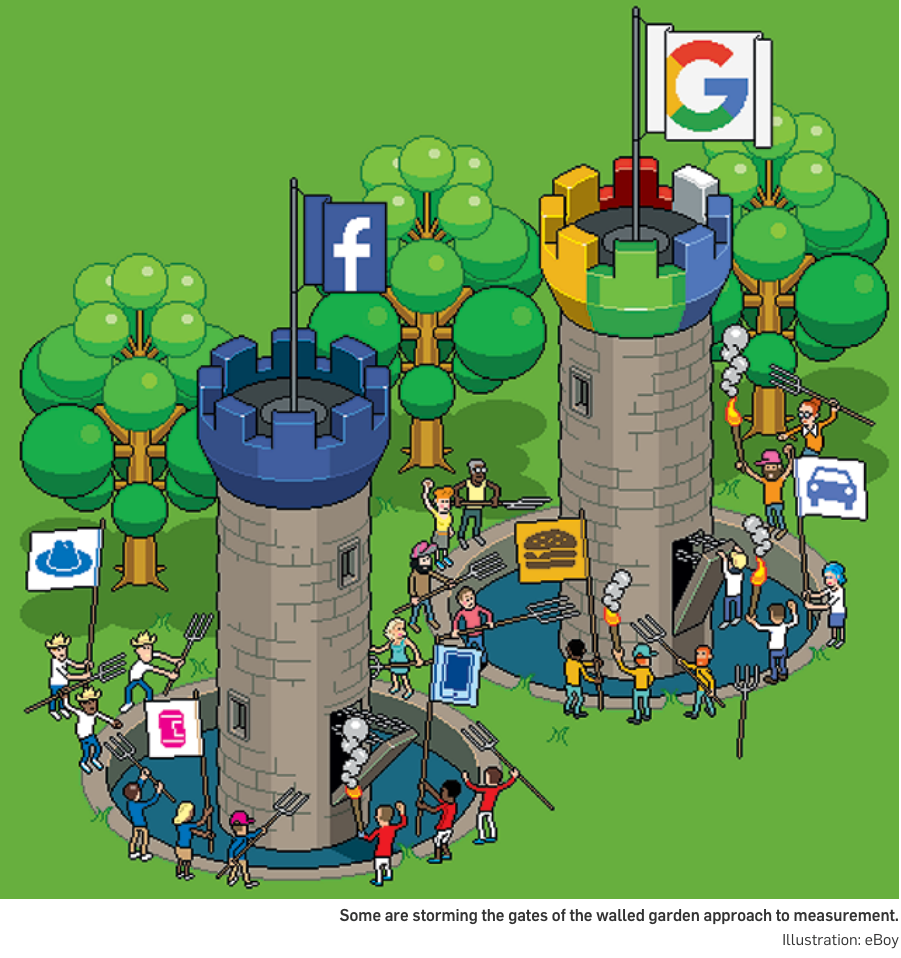
Now Amazon recently joined their ranks.
Working with walled gardens for marketing attribution can provide a lot of value, but it also encourages businesses to relinquish control of their own audience data. Features like Google’s tracking tags and Facebook’s tracking pixel give them control of your first-party data as well as the third-party data they provide. This might seem like a worthwhile solution given data management regulations like GDPR and the California Consumer Privacy Act, but managing your own consumer data is infinitely more valuable because you can perform your own unique analyses. Platforms like Google, Facebook, and Amazon are also under no obligation to give you full access to your audience data if they don’t want to.
With all that in mind, choosing an attribution technology should be about more than just selecting the best walled garden to work with. Forward-thinking marketers are prepared to use third-party tools that give them the freedom and flexibility they need to manage their own data while building a powerful attribution strategy across a clear customer journey.
Attribution modeling is an evolving art. As the volume and depth of audience behavioral data continue to grow, businesses are learning there are many different ways to attribute value to your marketing efforts. Choosing the most accurate attribution model is important, as it can drive decisions to optimize marketing campaigns and gain more sales.
Here’s an overview of the main options for attribution modeling in 2020:
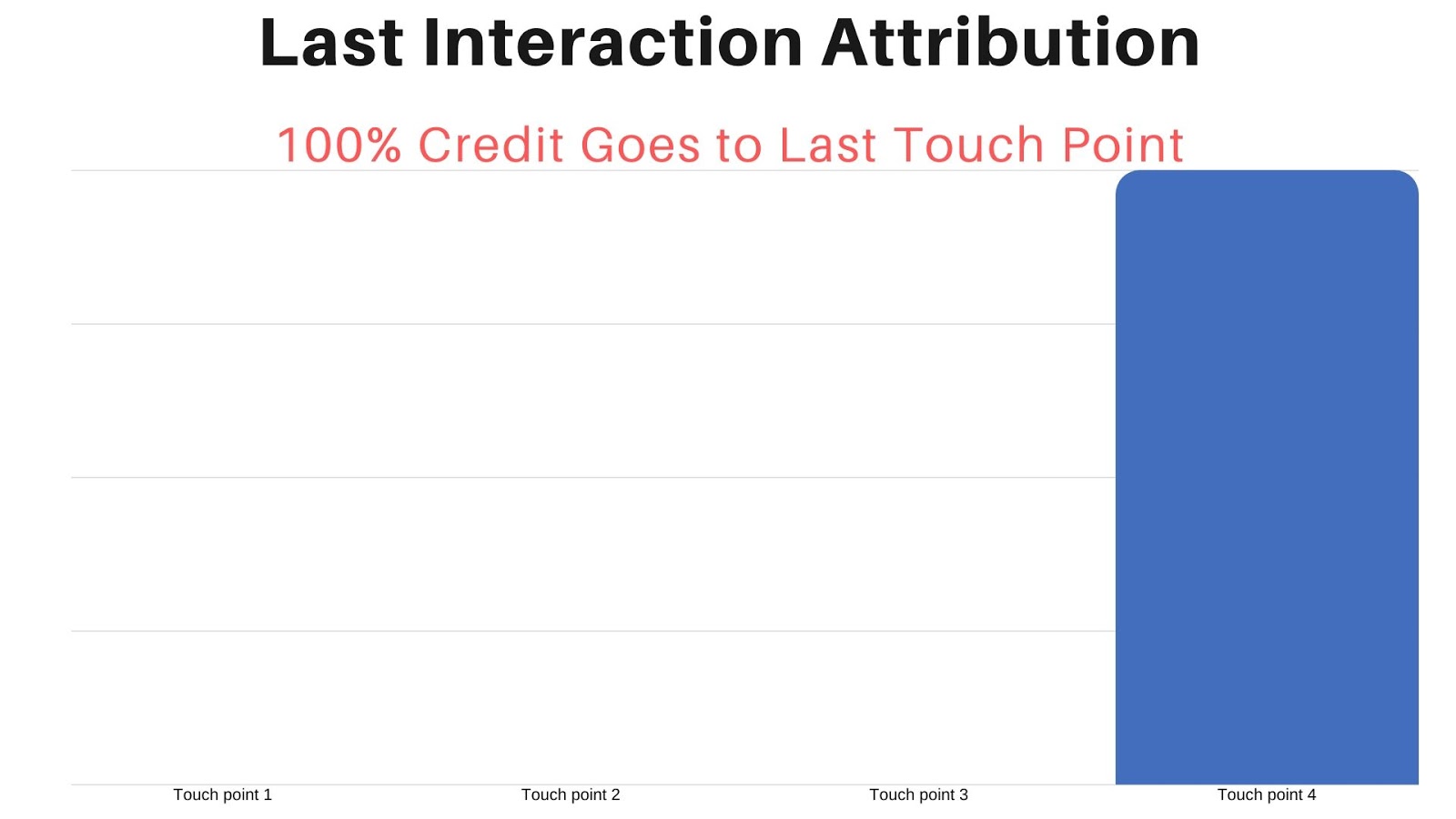
This is the standard model used traditionally in Adwords and with many other platforms. All credit is assigned to the last touchpoint before converting. This model doesn’t consider any other interactions a customer made with your business before converting.
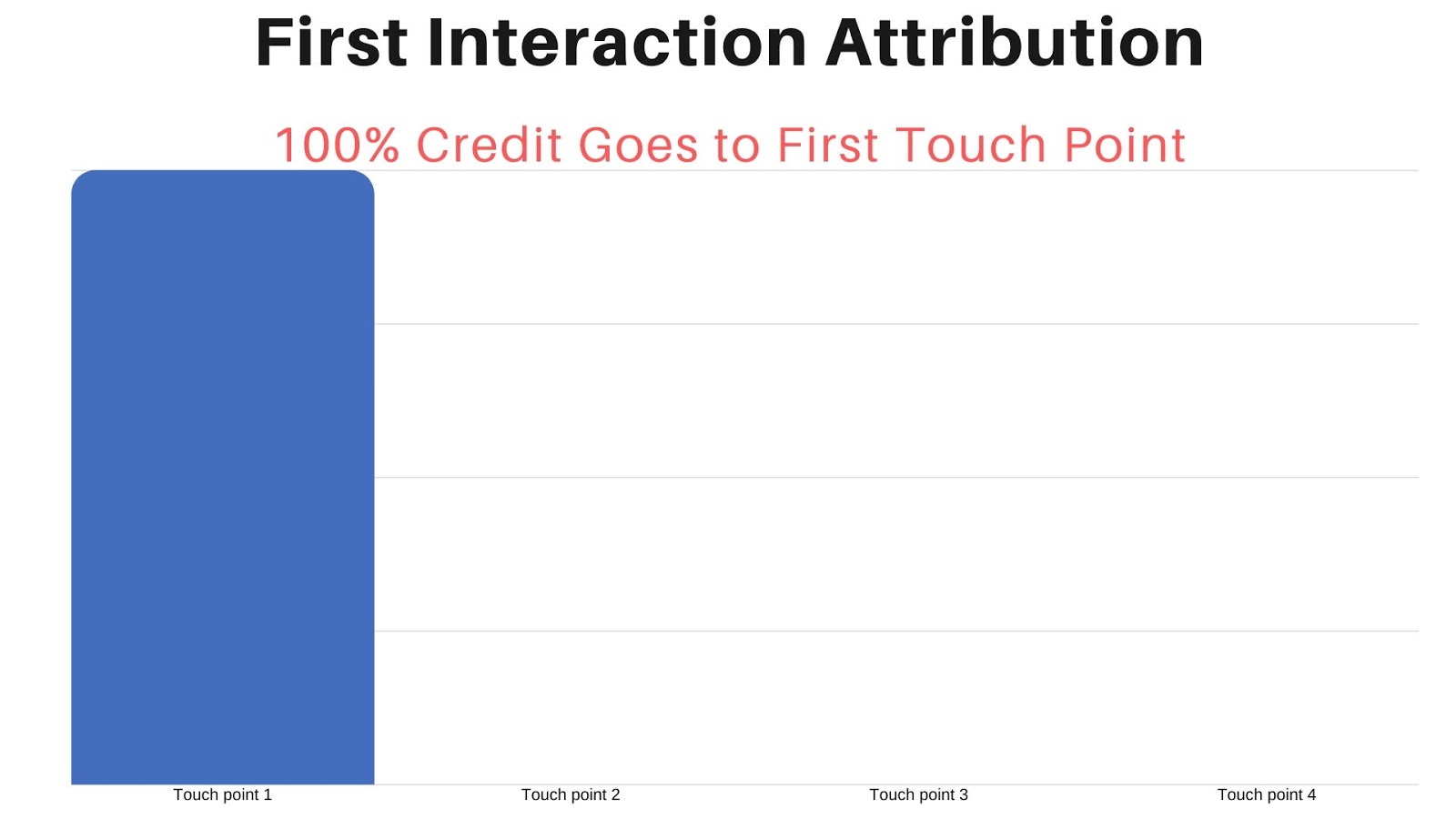
First click attribution gives 100% of the credit for a conversion to the first interaction with your business. If, for example, someone finds your business from a PPC ad, clicks through and converts, the ad would receive all the credit for the conversion.
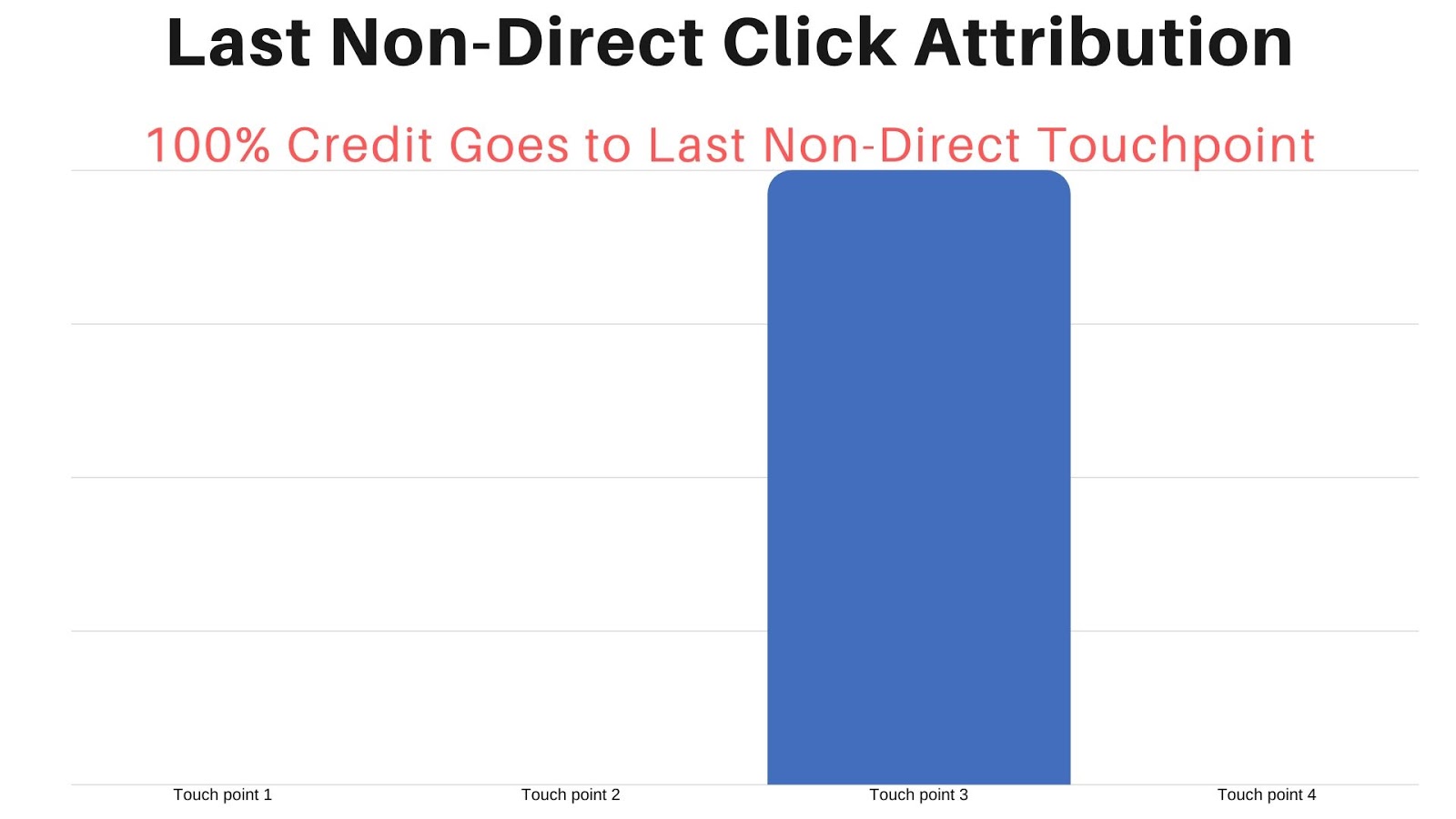
This model also assigns 100% of the conversion value to a single interaction. If someone types in your URL then converts on your website, this model ignores that last click and instead focuses on the interaction that came right before it. It’s a valuable option for businesses that get a lot of direct traffic to their website.
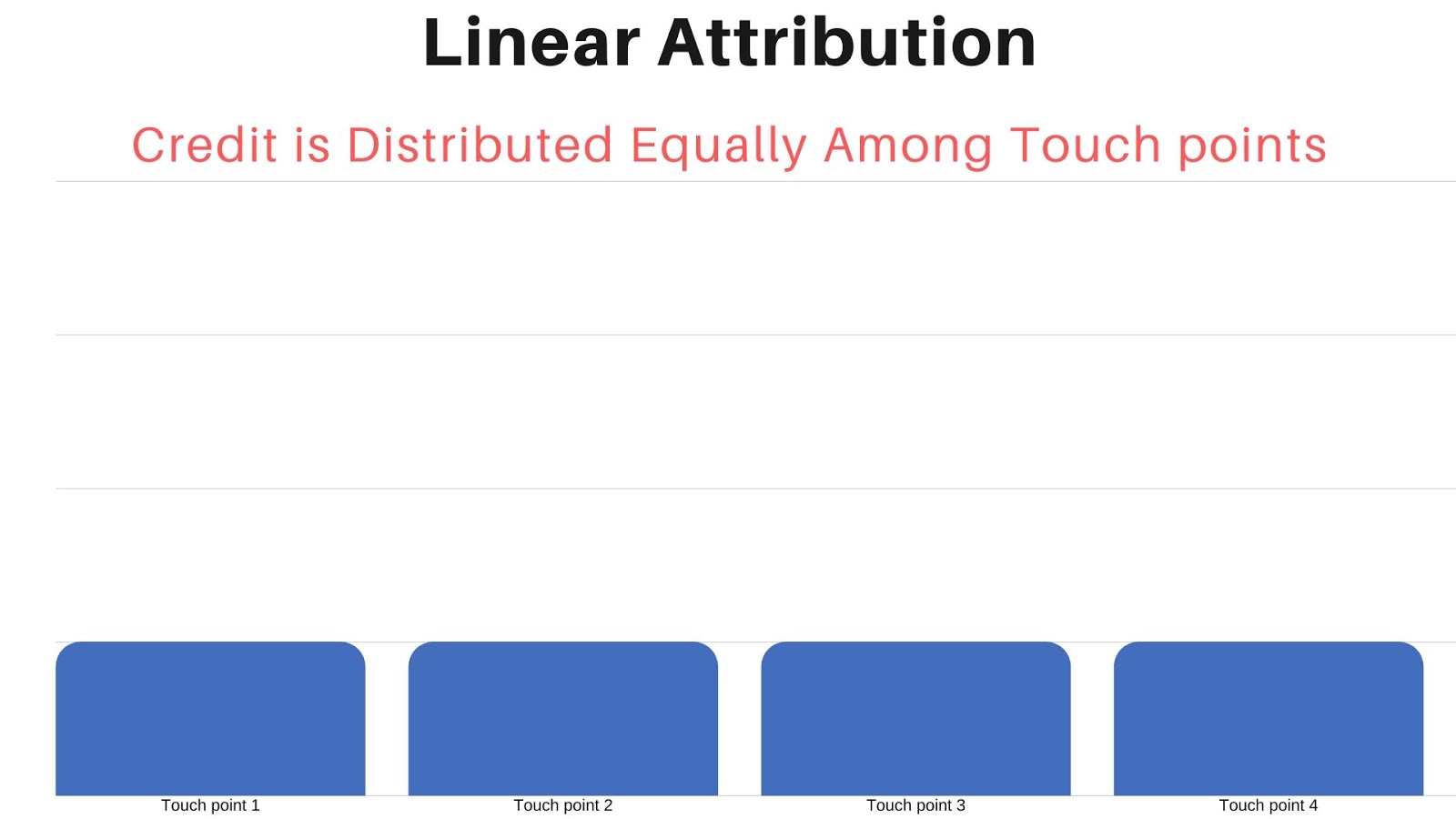
Linear attribution splits credit for a conversion across all the interactions a customer has with your business before converting. Say they find your business on Facebook, sign up for your email list, then go directly to your site URL to convert. Linear attribution would give equal value to each of these 3 interactions.
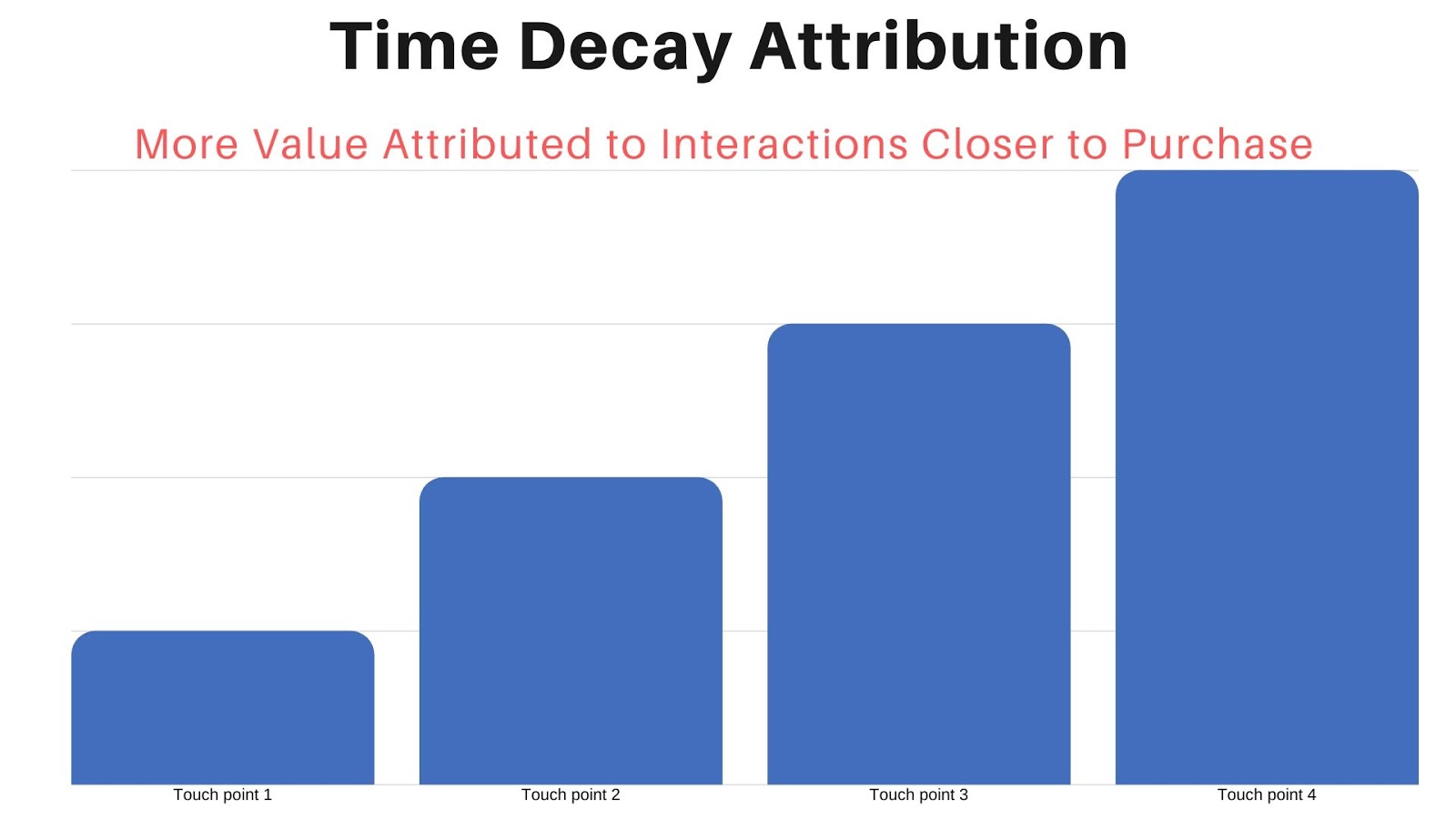
Time decay works like linear attribution in that it assigns value to several different touchpoints across the customer journey. The only difference is that it assigns more value to the touchpoints closer to the point of sale. So it might assign 15% value to the first two touchpoints, 30% value to the third touch point and 40% value to the last. It’s possible to adjust how much value you assign to each touchpoint.
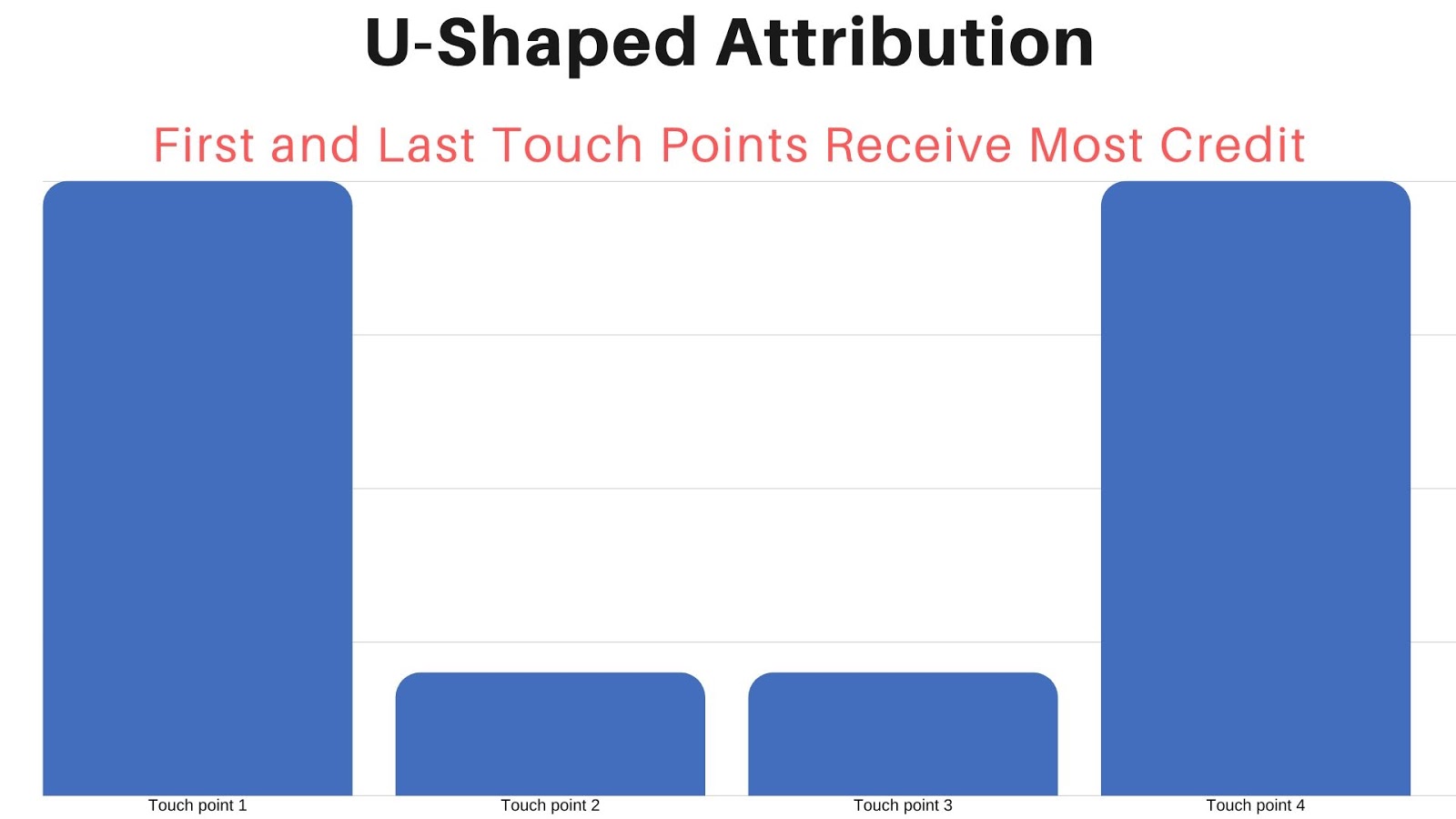
The U-shaped (or position based) attribution model prioritizes both the first and last interactions before a sale. It’s based on the idea that the first time someone discovers your business and the last contact point before they convert are the most valuable for driving conversions. In this case, 40% of the credit is given to the first and last touchpoint while 20% is split between the other interactions in the middle. This results in a U-shaped graph for attribution.
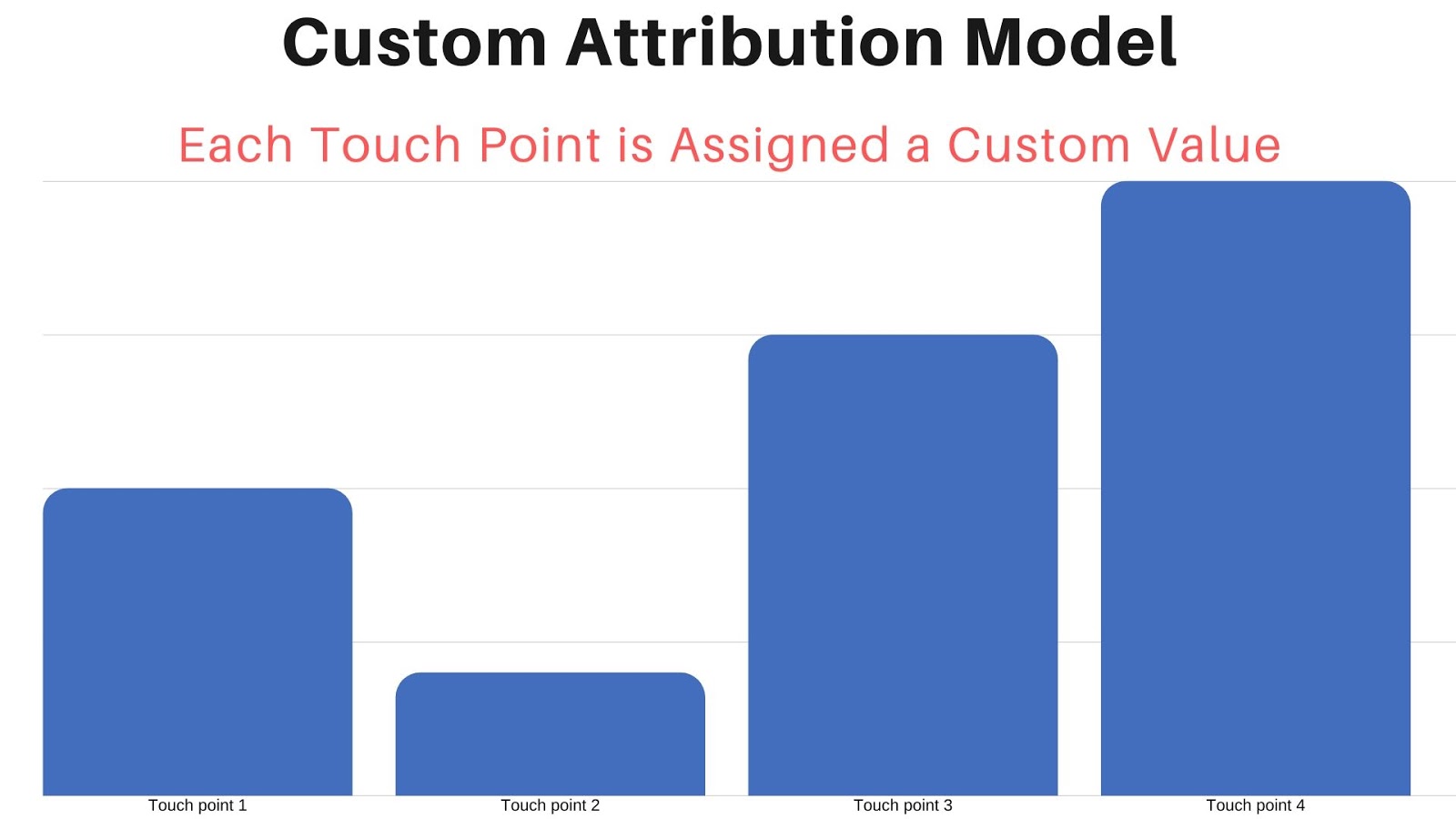
A custom attribution model involves assigning whatever value you want to the various touchpoints in a sales funnel. No one understands the inherent value of different pieces of marketing material more than those who created them. If you have touchpoints in the middle of the funnel that you think are more valuable for driving conversions, you can assign a custom percentage of value to it.
Algorithmic attribution is a more advanced modeling strategy that relies on machine learning technology to assign a value to your various touchpoints. It uses historical performance data, including won and lost deals, to create a unique model with custom weights for your customer journey. Also known as data-driven attribution, this strategy is able to make more nuanced inferences and changes to your attribution model based on your unique audience. To use this attribution model, you need advanced technology designed specifically for this purpose.
~
So, which attribution model is right for your business? The only way to know is by testing out different models and comparing their performance. It’s important to utilize technologies that offer the flexibility to test and compare varying modeling strategies.
That said, the data you feed an attribution model is just as important as the model itself. Marketers need access to nuanced, high-quality data regarding audience behavior and the customer journey across marketing channels in order to get a full picture of their marketing operations.
Luckily, there are a number of technologies out there that can help marketers create their own beautiful landscapes instead of relying on the walled gardens. QuanticMind, for example, helps you integrate and manage your data and help you employ data-driven attribution models. Some options are integrated marketing solutions, some are for attribution only, while others focus on tracking specific marketing channels. Assuming you plan to avoid relying on walled garden data giants, some third-party options include:
The list continues to grow. If you want to invest in technology that rivals the capabilities of Google or Facebook attribution, here are a few key features to look out for:
Unquestionably the most important element you need to build an accurate attribution strategy is data. Your marketing attribution technology should be able to manage your first-party audience data while simultaneously integrating with third-party providers. Tracking all customer interactions across numerous platforms is important for building a clear picture of the customer journey. This includes on-site, search, social media, email, and even offline conversions.
If you use certain technologies for data management as well as analysis, then they should have processes in place to accommodate privacy regulations such as GDPR.
Competitive intelligence is the ability to monitor your marketing performance compared to other major industry players. This can include news monitoring, tracking trends in news mentions, and analyzing how your PR initiatives perform compared to others. This can be based on keywords for search advertising, news topics, social signals, or other important factors. Advanced technologies can also provide recommendations to improve your marketing strategy based on historical performance and the current industry landscape.
The best technologies offer flexibility in the types of attribution models you can use to analyze marketing performance. Customization allows you to build any kind of attribution model that makes the most sense for your business. You can also analyze your data using a variety of different models (last click, linear, U-shaped, etc.) and compare results.
Data-driven attribution is widely considered the most nuanced option with the most potential to deliver accurate results. Investing in an attribution technology with machine learning capabilities will allow you to test the performance of data-driven attribution versus other models.
Effective attribution isn’t just about building the best model. It also involves having the analytical capabilities to truly understand the impact of individual touchpoints on your marketing goals. Important tracking features include:
Most importantly, your technology should be able to make connections between specific marketing initiatives, use cases, and their value for ROI. You need to be able to build a clear picture of how financial investment and marketing initiatives impact sales and revenue. Comprehensive data about the customer journey and historical performance allow the tool to accurately attribute cost and revenue data to specific bidding decisions.
Building a comprehensive, accurate attribution model is essential for advertisers to understand the impact and value of their marketing initiatives. But these insights are only valuable if marketers are prepared to make quick, targeted changes to their strategy based on performance. The competitive landscape is constantly changing. Touchpoints in your sales funnel that were once responsible for significant revenue can quickly become less valuable over time. Marketers need to stay on top of these changes if they want to maximize the value of comprehensive attribution long term.
That’s why predictive advertising is the perfect solution for search engine marketers today.
And this is where QuanticMind comes into play. Our automated bidding technology collects all important data points to assign value to clicks and identify the most profitable price to target your PPC ads.
It also offers more precision than any stand-alone attribution technology by using decimal conversion values, allowing it to attribute a conversion to multiple clicks. This illustrates how specific keywords, audience targeting, and bids impact the path to purchase.
Based on these nuanced attribution insights, QuanticMind uses automation to make new bid decisions. This ensures your paid search initiatives are always optimized.
Businesses today have a lot of options when choosing marketing attribution technology. In summary, the keys to success are:
Lastly, consider investing in technology that can help you build a nuanced attribution model as well as automate campaign optimizations based on these insights.
As competition in the paid search space intensifies, the use of automation to manage digital programs follows suit. The push and pull between full automation, partial automation, and manual bidding only further muddies the water. So what is the best approach?
There is no right or wrong answer when choosing a bidding strategy—the answers are not always black and white. To add more confusion, Google has begun adding error messages in Google Ads Editor to not-so-subtly push advertisers into using their automated bidding platform.
For advertisers that don’t work out of editor that often, below are examples of the error icon and error messages coaxing the implementation of Smart Bidding:


Another new tactic Google Ads has rolled out in beta is the Optimization Score. "What does that mean?" I hear you ask. Good question.
Here is their definition: “Your optimization score is an estimate of how well your account is set to perform. Apply the recommendations to help your campaigns perform better and raise your score.”
In short, the Optimization Score is a really smart way to talk advertisers into spending more money. If you’re competitive like me, you’re going to do what you can to get the highest score possible, which seems like it’d be a good thing, right?
In reality, a lot of the recommendations Google offers to improve your optimization score revolve around their best interests. Examples of negligent recommendations include raising audience bid modifiers by over 200% and raising daily budgets by over $400. Budget-related recommendations are often embellished in order to encourage advertisers to spend more money in Google Ads. They aren’t necessarily beneficial to advertisers, nor are some of them even realistic with budget constraints.
It’s not all bad, though. Google Ads optimization score does offer some useful tips to improve campaign performance. Some useful optimization suggestions include using new ad types, utilizing extensions, and editing ad groups missing ads or keywords, to name a few. To find your account optimization score, navigate to the left menu > click on recommendations, and the header of the recommendations tab will show your account’s optimization score and how to improve it. Screenshots below will outline what to look for:
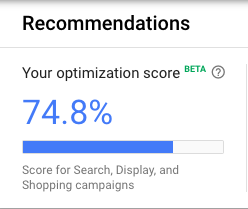
Below is an example of a recommendation to switch to smart bidding, and what difference it would make to your optimization score.

To make viewing suggestions simpler, you can click the three dots on the right and click “dismiss all” to clear these recommendations:

Here are the steps to remove these errors in Google Ads Editor: Click the error to expand and view the message (which should look like the screenshot below)
1. Click “Show Rule” which will navigate you to the right side of the editor page and show custom rules set to flag campaigns using manual bidding.
2. Click the X next to any of the rules that include manual bidding - enhanced CPC or manual bidding
3. Hit save on those filters and that should remove these error messages in your Editor view.
4. Another simple way to remove these error alerts is to hit “ignore” on each message but this is a more time-consuming option.

Digital advertisers should always keep an open mind when viewing Google’s recommendations. The opportunity to try new strategies with ads, keywords, and extensions can be tempting if your performance is not at the desired levels, but some suggestions are not advisable to act upon, particularly when they relate to bid strategy and budgets.