
Technology
Basis Platform
Advertising Operating System
Communication Portal
Intelligent Collaboration
All Channel Activation
Activate Media on Every Channel

Consulting
Resources
At Centro, we know that keeping up with the trade pubs and latest trends can be tough and time-consuming. To make that easier, we’ve compiled all the articles, reports, and other bits of awesomeness you may have missed, but should definitely read. Enjoy our latest list below!
What a $5.6M Super Bowl Buy Can Purchase in Digital Media in 2020 [:04]
Advertising during the Super Bowl is always a massive expense, especially when compared to what buyers could purchase if they allocated that money elsewhere. Take a look at some of the ad placements buyers could afford if they reconsidered their Super Bowl ad buy, like 37 DAYS of TikTok hashtag challenges. #wow
5 Mandates To Help Marketers Seize The Linear Addressable TV Opportunity [:04]
Dentsu’s EVP of Video Research, Maggie Zhang, shares her thoughts on the forthcoming impact of mass reach and personalized messaging via linear addressable television in 2020. She provides 5 mandates that will serve as guidance for industry players from both the buy and sell sides to work toward the common goal of making every video impression addressable.
As Addressable TV Advertising Grows, The Industry Must Address Overwrite Measurement [:04]
Today, addressable TV currently accounts for less than 4% of total TV ad spending. TVAdSync’s CEO shares his thoughts that while the addressable TV advertising sector is poised for growth driven by new initiatives, it may be stymied by a lack of new standards, measurement, and makegood rules.
The State of Connected TV Report 2020 [:15]
In this report conducted by Innovid and ANA, there are three main takeaways: More reach, more interactivity, and more time. CTV is becoming the MVP among TV views and there's a reason why nearly 50% of advertisers plan to increase their spending on CTV in 2020. Brands always follow their audiences. Not only are consumers spending more time with CTV, but there are also more than 500 hours of video being uploaded every minute (FYI, these aren’t UGC cat videos). Viewers are engaging in multi-screen viewing. Attention spans are actually evolving, not necessarily getting shorter. 55% say that a great story keeps people engaged (and maybe 45% are there for the cat videos?).
Axios 2020 Media Trends [:02]
Sure, it’s February now, but that doesn’t mean we're done reviewing trends for the year ahead! Axios shared their list of media trends expected to impact the media landscape in the new year. Noted trends include:
Forbes: Top Marketing Trends for 2020 [:05]
With constant updates, new techniques, and changes to algorithms, digital marketers are frequently scrambling just to keep up. Being aware of emerging or continuing trends is a vital part of staying on top of the game. With a brand-new decade rapidly approaching, Forbes shares their list of the top marketing trends for 2020.
Columbia Journalism Review: Who is right about political ads, Twitter or Facebook? [:10]
With the 2020 general elections drawing near, social platforms are highlighting their separate approaches to political advertising. Twitter and Facebook have notably opposing policies, Twitter choosing to ban political advertising and Facebook not even fact-checking their political ads. The Columbia Journalism Review assembles a set of industry panelists to discuss the approach of each popular platform.
Google Chrome : The Next Chapter Has Yet To Be Written [:04]
Now that Google has announced the demise of third-party cookies in the next two years, everyone in the industry is wondering what’s next. Here are three reasons to remain optimistic: We need a better cookie anyway; consumers need more information; and there’s still time to influence the outcome.
With Third-Party Cookies On The Way Out, Shared IDs Face An Existential Crisis [:07]
Shared identifiers (standardized ways of identifying and sharing user data between publishers and ad tech vendors) are likely next in line to be squashed by business developers. Shared IDs were never meant to replace the cookie—they were only intended to give ad tech vendors a shared identifier to track people across sites so that they don’t have to spend time syncing the cookies.
The Consultancy vs. Agency Debate [:05]
Over the past decade, management consultancies have increasingly intruded onto agencies’ traditional turf, competing for media budgets and marketing operations engagements. How has this evolved and what does the future look like for both agencies and consultancies?
Performance marketing is a simple concept. Investment in strategies that deliver performance results: more clicks, more leads, more sales, more revenue. Choosing the right performance marketing strategies, however, has become more difficult in recent years. Now there is an abundance of marketing channels to invest in, myriad technologies to choose from, and a wealth of changes happening in the digital landscape to keep pace with.
To succeed in performance marketing today, it’s essential to first invest in the right strategies then work diligently to optimize your efforts. There’s no time and no extra budget for trial and error. In this article, we present 10 of the top performance marketing strategies for 2020 and beyond, all based on the latest trends and opportunities.
Today, there are nearly 50 times more technology providers in the marketing ecosystem than there were a mere eight years ago. Even small businesses must utilize a number of tools to manage their marketing across various channels. Larger businesses are faced with building a complete MarTech stack, which must include an array of tools that help them automate and analyze performance.
Just how much return you get out of your investment in marketing technology really depends on the value of each tool and how well it integrates with your other software. Since new technologies and features are constantly being released, marketers should regularly reevaluate their MarTech stack to ensure they’re always using the most valuable solutions for their needs.
Here are some important questions to ask when evaluating your MarTech arsenal:
Google, Bing, Facebook, and Amazon offer a significant amount of valuable consumer data that marketers can utilize to better target their audiences. These platforms - referred to as “walled gardens” - are dangerous options, though, because they completely own and control the data on offer.
Gartner recommends that marketers avoid data dependence on walled gardens so you can get the most valuable customer insights for your business. To begin, ensure you have a way to store and manage your own first-party audience data. Then you can invest in third-party data from private marketplaces (PMPs). PMP data can be expensive, but it’s higher quality and you can analyze it however you want. Gaining insights from third-party data can be just the advantage your business needs to stay ahead of the competition when everyone is making use of data from the same walled gardens.
Amazon’s advertising revenue skyrocketed in 2018 and continued to bring impressive revenue in 2019:
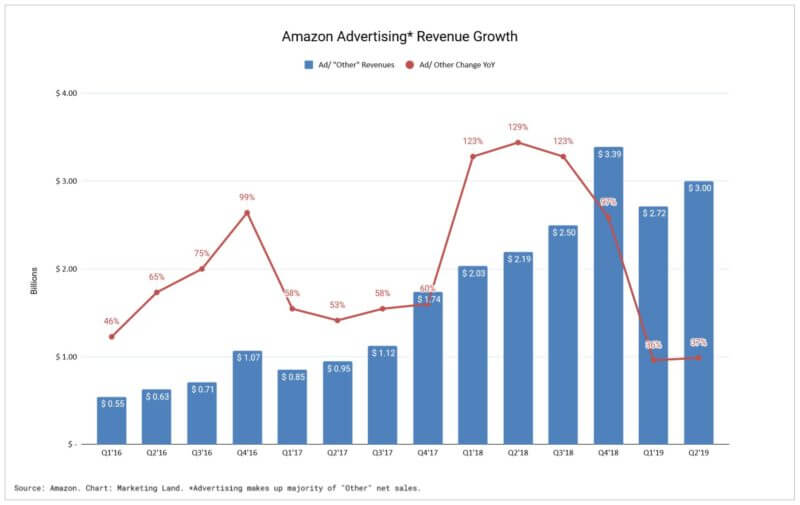
While performance has now leveled out, Amazon advertising is still expected to grow in importance in 2020 and beyond. This is because Amazon is diversifying its advertising options beyond simply on-site display ads. Forward-thinking advertisers should invest in Amazon demand-side platform (DSP) sooner rather than later. Amazon DSP is a special advertising alternative that allows you to programmatically reach your audiences across the web. Options include Amazon-owned sites (e.g. IMDb), third-party exchanges, and other leading publishers through Amazon Publisher Services.
Amazon executives have frequently expressed their intent to invest more in expanding the platform’s advertising options. DSP already offers exclusive audience access to help marketers reach their ideal customers on Amazon and off. Investing in DSP before it becomes mainstream will give performance marketers critical advantages in a competitive market.
Advertising platforms are constantly bringing out new ad types and features to better suit the goals of marketers. Performance strategies should always allocate some budget for testing out these options. As an example, Google recently released lead form ad extensions for search ads, allowing advertisers to capture contact information right from search results:

Facebook also has a variety of new ad types that can help you reach audiences in a unique, relevant way, such as Messenger Ads, Canvas Ads, and Collection Ads. Regularly experimenting with new ad types ensures you’re always using the most effective options that resonate with your audience and drive marketing goals.
Major advertising platforms like Google and Facebook offer dynamic options that automate ad development. Most marketers assume they can create a more relevant advertising message than AI-powered machines could, but testing out dynamic ad options can also provide inspiration for manually created ads.
Dynamic ad creative also has the advantage of combining the right ad elements based on the interests of individual audience members. Dynamic Search Ads (DSAs), for example, include user search queries in ad headlines to make them more relevant to searchers. Regardless of how well targeted your ad copy is, adapting it to each member of your audience has significant advantages, driving more clicks and conversions.
Whenever Google makes changes to its advertising platform, the goal is to benefit their advertisers. The more effective your ads are, the more revenue potential there is from Google. Rather than resisting these changes, then, it’s usually good practice to embrace them. A notable example is when Google Adwords rebranded to Google Ads to deemphasize the role of keywords and encourage advertisers to make use of audience targeting options. Audience targeting is now an essential strategy of any optimized PPC campaign.
Last year Google made some more changes by adding new ad position metrics, including:
Here’s what top and absolute top look like on a search results page:

The goal was to help advertisers understand and appreciate the role of ad position in overall performance. To this day, though, few have added these metrics to their analytics dashboards or considered targeting impression share over other metrics.
Bidding to target the first page of search results is essential if you want your ads to get any visibility and clicks at all. But bidding to target positions above organic search results or the top spot on the page can bring many more clicks and conversions than other targeting strategies ever could. Google added these new impression metrics for a reason, and performance marketers would be smart to utilize them.
Facebook may be the biggest social channel, but it’s far from the only option. In 2020, performance marketing strategies should include testing out other social platforms, such as LinkedIn, Twitter, or Snapchat. While these alternative social media platforms may not give you as much reach as Facebook, they can certainly help you reach more niche audiences.
The landscape of social media is one that is constantly changing. Facebook has recently seen a huge drop in users, especially amongst younger demographics. Twitter’s user base, meanwhile, continues to grow. This Statista graph shows the number of active Twitter users worldwide over the last decade:
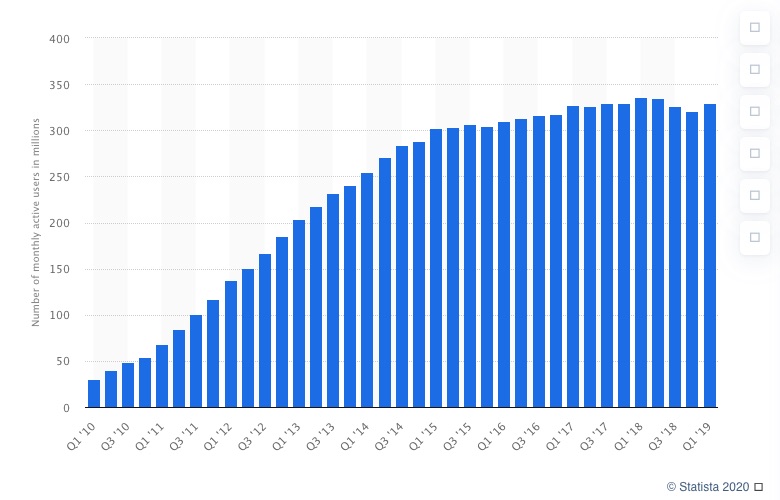
If marketers don’t start diversifying, they’ll never fully understand the opportunities there are to reach audiences on different social platforms.
Omni-channel marketing is an essential aspect of all performance marketing strategies today. Building brand awareness and converting leads means targeting them effectively on different platforms across the web. And the only way you can truly learn from your marketing performance is by attributing conversions to various touchpoints across the web.
Businesses today have many options for marketing attribution. But few develop sophisticated attribution models that reflect the true complexity of the customer journey. Today’s performance marketers need to invest in data management and attribution technology that can analyze data from all relevant marketing channels. It’s also essential to create custom attribution models that reflect the real value of your marketing collateral.
Whether you rely on Google, Facebook, or another third-party tool, you should always test out and compare different attribution models to see how performance pans out. As performance marketing has become the norm, it’s now impossible to rely on one-dimensional models such as first or last-click attribution.
Most enterprise businesses consider building an internal marketing team versus outsourcing as two dichotomous options. You either invest the time and money to train your employees in various marketing tasks or you rely on skilled agency personnel to handle it. But what many don’t realize is that combining strategies can be the most efficient and cost-effective for your business.
According to Gartner’s latest spending survey, CMOs are spending less and less on agency services despite investing more in MarTech:
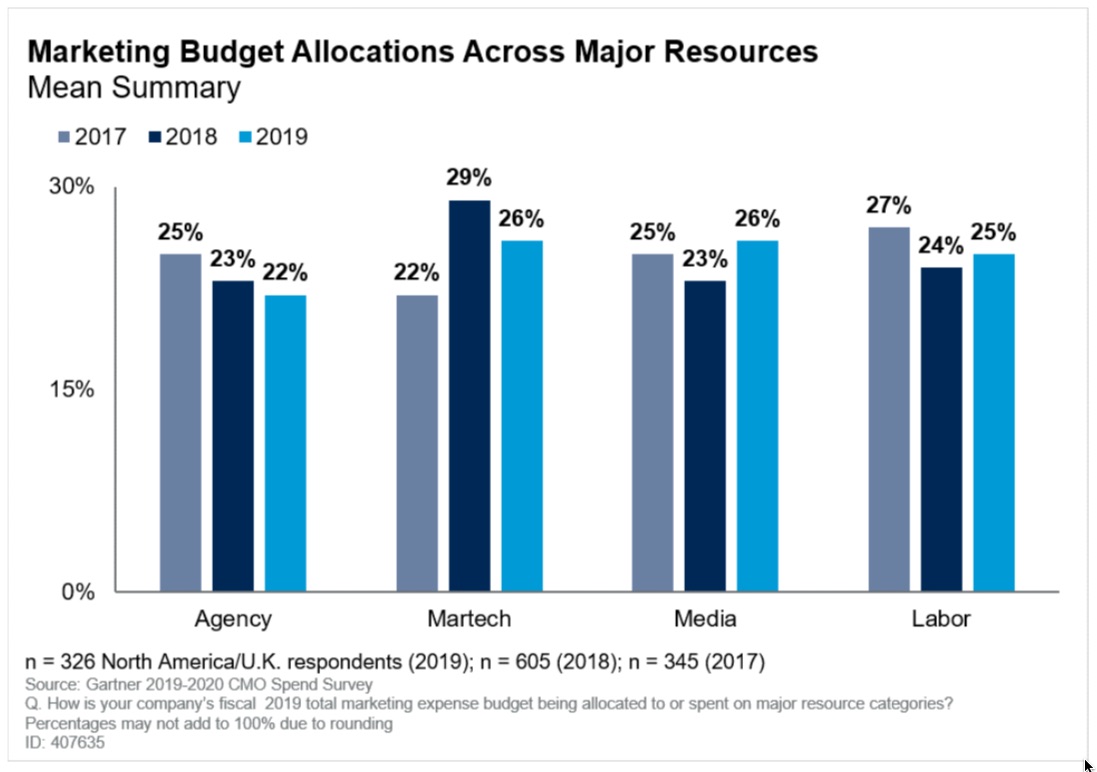
Many marketing software companies also offer agency services to streamline onboarding and help you get the most value out of their tools. Rather than investing in training your team to use the software, it makes sense to outsource to agencies that are experts in driving ROI. This also frees up your internal marketing team to focus on other marketing tasks, such as growth and development.
Google’s Automated Bidding has been around for a while now, yet performance marketers shouldn’t take Google’s word for it with automation. It’s better to experiment with different automated strategies as well as custom targeting and bid adjustments to see which performs best for your unique needs.
Performance marketers need an automated bidding strategy that targets the right combination of value-based metrics for their unique goals. And if Google’s options don’t fit your needs, then third-party tools can. QuanticMind is an automated bidding technology that allows advertisers to target Revenue-Per-Click. This sophisticated bidding strategy considers an array of value-based metrics beyond what Google Ads automation has to offer.
When investing in automated bidding in 2020 and beyond, be sure to evaluate all the targeting options available.
These 10 strategies are just a few of the many paths you can take with performance marketing. The key to success is investing in strategies that offer the most potential for business growth. Whatever options you choose, ensure you monitor performance comprehensively. Accurate analytics insights ensure you always make informed changes to your campaigns, maximizing the value of each marketing channel for your business.
The massive changes happening in our industry are not overnight transformations, but rather ongoing evolutions. This webinar dives into the key trends and themes we predict will impact the advertising industry in 2020:
Whether you’re an ad buyer yourself or invested in the success of your company's media buying, you’ve probably wondered how the best of the best invest their media dollars.
Luke Lambert spends a lot of time making those investment decisions. As the Head of Programmatic at OMD, Luke is responsible for curating world-class capabilities in programmatic trading, inventory curation, and platform strategy across a team of 150. He and the OMD team just secured the title of Top Global Media Agency according to a COMvergence 2019 report—so it's clear that they've got some tried and true tricks up their sleeves!
Lambert chats with host Noor Naseer about how to invest client dollars intelligently, keep teams educated on the latest offerings, secure talented traders, uncover critical insights, and ultimately, keep clients happy.
Content marketing is one of the most common strategies B2B marketers use for demand generation. According to an eMarketer report, B2B marketers primarily produce content to drive sales, among other important marketing goals:
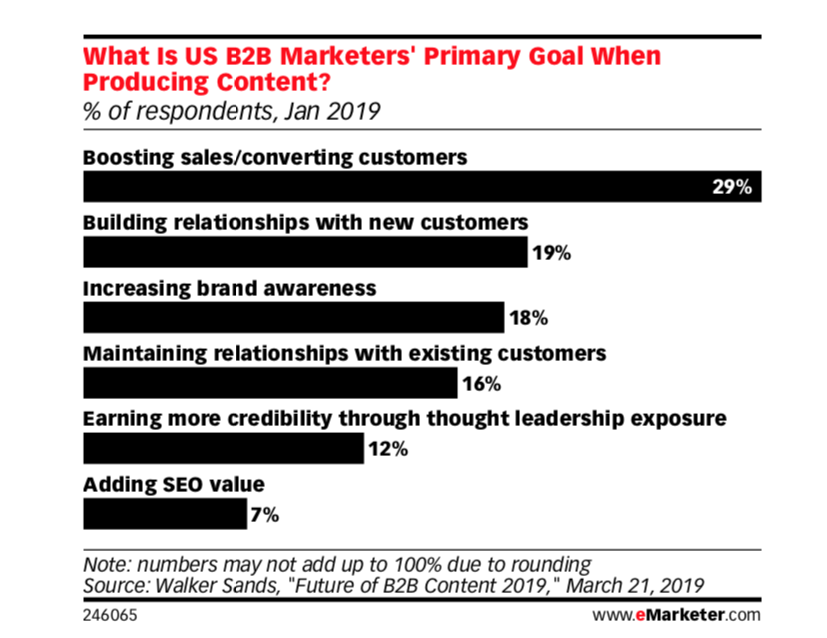
Creating and distributing content to your target audience on key platforms works well for B2C, but while it's an important aspect of B2B marketing, this strategy may not always be enough to achieve B2B marketing goals.
Since you’re ultimately targeting a business—not individual people within it—your content needs to be relevant to all key players throughout the customer journey. One of the best ways B2B businesses can address this issue is with an account-based marketing (ABM) approach.
Account-based marketing is a strategy that focuses on the success of the entire customer experience, both pre and post-sale. To understand the difference, it’s best to compare it to traditional inbound marketing. Inbound marketing involves focusing the majority of a given budget and targeting efforts on generating leads with compelling offers. It prioritizes getting high volumes of relevant traffic to click through to a landing page, where only 1-2% will actually become paying customers.
ABM instead distributes more time, money, and energy to different stages of the customer experience, including lead generation, acquisition, post-sales, and success. Businesses that utilize ABM invest more in accounts that are likely to close, rather than spending a little on a wide variety of leads that likely won’t turn into sales. They also employ strategies that empower them to build lasting relationships with their customers, leading to new sales opportunities and increasing their lifetime value.
Account-based marketing can be incredibly effective at driving business goals, but the strategy wasn’t always an option in the past. In order to identify the right accounts and effectively target them, businesses need to use significant amounts of relevant behavioral and business data that simply wasn’t available five to 10 years ago.
You need to have access to quality data sources and be prepared to analyze all relevant data to inform account targeting decisions. Some examples of important data for ABM include:
Audience behavioral signals
These can be any relevant signals that indicate a business could benefit from your products or services (even if they’re not actively searching for businesses like yours). Important data points vary based on industry. For example, posting new job positions could suggest relevant internal business changes.
Intent data
This also falls under behavioral signals, but they’re specific actions that suggest an intent to make a purchase. Drawing correlations between the kind of content target leads are consuming across the web reveals what their underlying intent is.
Engagement data
How are accounts and associated individuals engaging with your brand, online and off? This is often tracked using CRM or marketing automation technology.
Performance data
This includes any relevant data that sheds light on the performance of your ABM efforts. It can relate to your marketing campaigns, sales cycle, close rates, retention rate, and more.
These are just a few categories of data account-based marketers can use to develop their strategies and optimize their efforts. The more relevant, fresh data businesses can process and derive insights from, the more opportunities there are to improve B2B demand generation and marketing.
Successful ABM requires buy-in and strategic changes at all levels of your business. Here are some key areas that B2B businesses need to focus on to achieve this:
Aligning Relevant Teams
Despite what the name suggests, ABM is about more than just marketing. Many different teams throughout your business serve some kind of role in the customer journey and experience. In order to succeed at ABM, it’s important to bridge gaps between these different departments to ensure they’re all on the same page.
This includes:
Mapping Your Customer Journey
Mapping the customer journey from the account perspective is incredibly important. Rather than building buyer personas for individual people, B2B marketers need to consider the entire business and the individual people they might interact with at various points in the customer journey. The aforementioned eMarketer report also outlines a B2B customer journey map framework, including eight key audience milestones:
Pre-Purchase
Post-Purchase
ABM considers audience perspective at each of these stages. Doing so can have a huge impact on the strategies you use to market to them. For instance, different stakeholders will occupy the main touchpoints at different phases in the customer journey. You could be marketing to someone in IT for milestones one to three, then switch to the COO for making a purchase decision. When marketing to IT, you focus on the benefits of your solution to their specific job, but with the COO, it makes more sense to focus on the potential to drive revenue, reduce wasted spending, etc. Milestones in the post-purchase phase could also differ in this way.
So, based on your previous knowledge of marketing to your target audience, build a clear customer journey then create a relevant marketing strategy for each stage. Over time as you market to more accounts, you’ll realize and adapt to common changes at different milestones from the account perspective.
Aligning Relevant Technologies
Aligning your various teams is step one, but aligning relevant technologies is equally important. Tools need to share data to help different departments communicate with each other. For example, your CRM tool and marketing automation software should share data automatically. It’s also important to properly track all relevant key performance indicators (KPIs) so you can evaluate the effectiveness of your ABM strategy.
Because ABM is so data-driven, you might need additional technologies beyond your current MarTech stack. Consider all relevant business data you might need (audience behavioral signals, performance data, engagement data, etc.). Do you have the right analytics technology equipped to integrate and process all this information?
An Action Plan for Optimization
Success in ABM relies heavily on learning from your efforts. You’re adding new elements to your marketing strategy (sales, customer success, finance, etc.). So you need to effectively monitor their impact on reaching your marketing goals, then make targeted changes to your strategy to improve performance. This should be an ongoing, standardized process that all teams are invested in. Different siloed departments should be prepared to make or suggest changes to their strategies based on overall ABM goals.
The faster your teams can implement changes based on performance data insights, the more opportunity there is to benefit. This is another area where key technologies come in. Marketing automation technologies can help you make quick changes based on the most relevant data insights. More sophisticated bidding solutions can make targeted bid adjustments based on current and historical performance, ensuring you always spend the right amount on advertising to meet your ABM goals.
Advertising is one area of B2B marketing that can benefit significantly from an ABM approach. Here are some of the many ways ABM and advertising complement each other, generating more demand and sales:
1. Target all relevant personas
As mentioned above, it’s important to target all invested personas within a business. According to a recent Gartner survey, 75% of B2B customers agree that their purchase involved people from a wide variety of roles, teams, and locations.
Advertising gives marketers a unique opportunity to do this at scale. Google Adwords retargeting, for example, can help you target display ads to all members of the buying committee that you have contact information for. Using keyword and audience targeting, you can also reach key personas with your search advertising campaigns.
2. Discover more potential accounts
Account-based marketing is largely about targeting businesses that you already have some degree of relationship with. Maybe they visited your booth at a trade show or interacted with your business online. You’re not spending time prospecting for cold leads.
That said, advertising gives you an opportunity to discover new leads that you wouldn’t find otherwise. Your ads build brand awareness and attract traffic to your site. Then you can segment out the visitors who expressed some interest by reading your product pages or downloading resources. Over time, these can become new target accounts.
3. Personalize your marketing message
Since your ads are targeting different personas within a business, they should be tailored to the persona in question. It’s possible to do this using a variety of advertising options. Dynamic Search Ads, for instance, allow you to change the text of your headlines and subheadlines based on user search queries.
Elsewhere, LinkedIn Dynamic Ads offer further opportunities to personalize your message for individual players based on profile data, including their photo, company name, job title, and more. Creating relevant content and landing pages to target key decision-makers is a start, but it’s also incredibly important to create personalized ads to generate traffic in the first place.
4. Use advertising metrics for behavioral scoring
ABM professionals often use behavioral scoring to evaluate the potential of a given account. Marketing automation platforms can monitor how often an account interacts with your business and in what capacity to determine their potential value as a lead.
Incorporating advertising into your ABM strategy can improve the quality of your behavioral scoring efforts, ensuring you don’t miss out on valuable sales opportunities. Advertising brings more website traffic, and thus more touchpoints to analyze. Factoring in ad impressions, clicks, page visits and other metrics of on-site behavior provides much more context to the value of a potential lead. Suddenly all site visitors can become potential sales leads, not just people who fill out your lead forms.
5. Scale Quickly
Targeting accounts with organic marketing strategies takes a lot of time and effort to scale. Investing in advertising gives you the opportunity for major growth right from the beginning. Between Google Ads, Facebook, LinkedIn, and other advertising verticals, it’s possible to generate as many qualified accounts as you can handle.
Automation technologies can also help you market to these leads at scale. As mentioned above, intent data is valuable in helping account-based marketers identify potential accounts to target. Once a new lead expresses interest in your product niche online, you have a limited amount of time to target them with ads before they make a purchase decision.
Automated bidding technology is able to process large volumes of intent data as it comes in, then make targeted changes to your advertising initiatives in real-time. Targeted bid adjustments can increase your ad visibility in the buying cycle when it matters most. What’s more, there’s no need to rely on your internal teams to manually identify these opportunities and make necessary adjustments. Advertising automation helps with demand generation, allowing internal teams to focus on needle-moving initiatives like lead nurturing and sales.
The saying “content is king” is not new in marketing. Creating relevant content for your target audience is more valuable now than ever for marketing. The real challenge lies in understanding exactly which personas to target and gaining visibility for your content on the right channels.
Consider these recent B2B content marketing statistics:
B2B businesses have a huge opportunity to generate demand with content if they invest heavily in its creation and distribution. Here’s a summary of how B2B businesses can get the most out of content marketing to achieve their marketing goals:
Most B2B businesses today invest in content marketing as an ad-hoc initiative. Once you become proactive and start targeting diverse personas with an account-based approach, the competitive landscape changes completely. ABM offers a unique opportunity for B2B businesses to target high-quality leads at scale.
Today’s eCommerce businesses have many options when choosing advertising platforms to work with, but the digital marketing landscape is constantly changing, along with the needs of advertisers. Platforms must keep up with these transformations in order to help eCommerce businesses drive more sales and revenue in the long term.
Rather than change platforms year after year, advertisers should invest in solutions that can tackle these changes and adapt. Here are the biggest challenges eCommerce advertising platforms face in 2020, and how they can address them.
Marketers’ responsibilities for data security and privacy continue to grow. The European Union’s General Data Protection Regulation (GDPR) has been in effect for several years now. There’s also a strong digital privacy law in California, while new legislation is regularly introduced that could pass into law at any time. As such, data security is a top concern for eCommerce businesses today.
Marketers that work with large media management platforms like Facebook, Amazon, and Google have less legal liability because the data they use is owned and managed by those entities. Businesses are still responsible for properly managing their own first-party data, though, unless they process it all together using features like Facebook Pixel. At the same time, relying too heavily on big players like Facebook or Google gives you no control over your own data management or analysis at all.
That’s why many eCommerce advertisers today turn to mid-size data management platforms to help them meet regulatory standards while still maintaining control of their own data.
Digital marketers recently surveyed reported that data privacy and tracking had the largest impact on business last year:
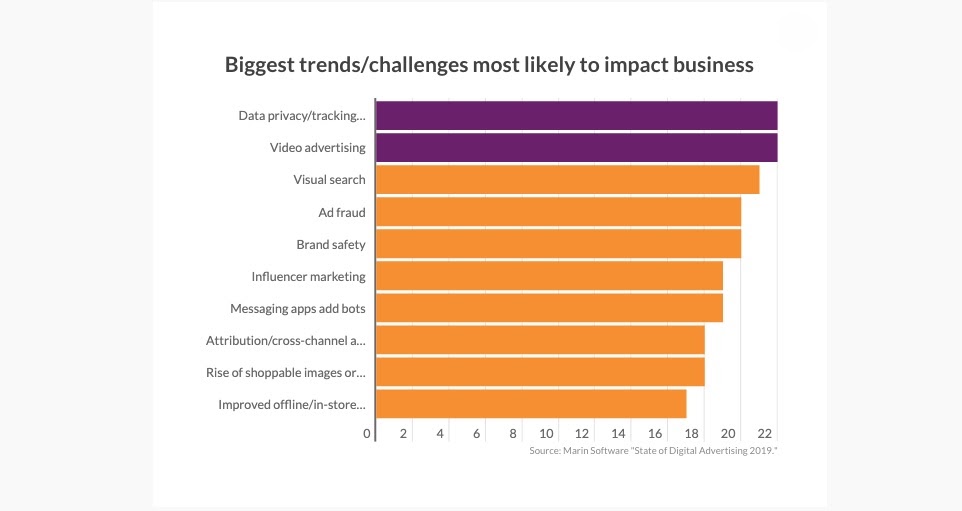
Rather than leaving it all up to individual businesses to meet data regulations, advertising platforms should step up to the challenge by offering internal features to facilitate this. For example, it should be easy to view the data profiles of individuals, so businesses can easily manage, export or delete this information at their request. Another important feature is offering transparency and options for people to participate in data collection or not.
Advertising platforms today offer a huge opportunity to automatically target and convert leads once they show purchase intent. Ninety percent of smartphone users are not absolutely certain of the specific brand they want to buy when they begin looking for information online.
That said, there’s often only a short window of time to target in-market audiences before they make a purchase decision. Consider a woman shopping around for leather boots online. She visits a few eCommerce stores then makes a purchase. An hour or two later, she starts seeing remarketing ads for the boots she just bought.
Targeting these “micro-moments” before people make a purchase decision requires automation capabilities beyond simple remarketing ad campaigns. Advertising platforms must be prepared to process relevant audience behavioral data in real-time, helping businesses reach shoppers before they buy.
Beyond making fast automated bid adjustments for audiences that show purchase intent, advertising platforms can also help businesses target relevant audiences before they demonstrate their intention to buy. QuanticMind by Centro, for example, uses machine learning technology to process large amounts of audience demographic and intent data. Algorithms are able to identify the kinds of people who would be interested in a product before they start searching for it.
The advertising landscape is highly competitive, while consumers make quick decisions when buying online. Today’s eCommerce businesses need platforms that offer advanced data insights to anticipate audience interests and target them ahead of time.
Businesses today have many options when choosing advertising platforms. The platforms themselves make efforts to stand out from the competition by offering unique solutions to specific advertising needs, such as search optimization, social, eCommerce, etc. This “best-of-breed” approach increases the value of certain platforms for some businesses but limits their applicability to omnichannel marketing.
Meanwhile business leaders today are feeling more pressure to invest in solutions that help them manage all their advertising needs. Just a few years ago, Google and Facebook were the only major players in the advertising market. Now Amazon is seeing fast growth.
If advertising platforms want to remain valuable to eCommerce businesses in 2020 and beyond, they need consolidated offerings that help advertisers build an omnichannel approach to marketing. This includes features that help businesses strategically plan, buy, and optimize ads across paid media touchpoints, as well as generating insights to improve performance.
Search-focused platforms are uniquely positioned to adapt and meet this need since search is still the main paid channel for many brands. Expanding targeting and optimization capabilities to include social and Amazon is a great place to start.
Audience targeting options in advertising are more nuanced today than ever. Using the right advertising platforms, it’s possible to target just about any relevant consumer with ads all over the web. But helping businesses do this can actually hurt their relationship with some audience members while helping it with others.
Simply put, not all people appreciate or care about ads. According to Forrester’s latest Omnichannel Advertising Playbook, only 42% of US online adults think advertising is a good way to learn about new products. For some people, targeted advertising is a great way to nurture leads. For others, it’s a strategy to alienate and annoy them.
Ecommerce advertisers today are highly concerned with delivering a relevant message to their audiences based on their preferences and needs. As a result, top advertising platforms need to help businesses by offering flexibility in targeting options. Sometimes, simply maximizing ad visibility across the web is not the right approach.
As businesses learn more about their leads, they can make informed decisions about what kind of advertising message to deliver, where to deliver it, and at what frequency. They need to understand:
All of this can be automatically tracked using a customer relationship management (CRM) platform. Advertising platforms that integrate well with CRMs and allow users to automate changes to their ad targeting strategy based on CRM data are well equipped to address this issue for businesses.
Advertising platforms today need to have enough flexibility to allow businesses to train their algorithms to consider the best interests of consumers over plain performance indicators like impressions or clicks. Delivering intrusive ads to people who aren’t interested can hurt their advertising efforts, decreasing the value of investing in advertising platforms in the long run.
Delivering personalized ads is the key to success with paid media today. Lots of people don’t even pay attention to ads. And those that do are most annoyed when shown ads that are irrelevant to them. Personalization opportunities are so great that consumers have come to expect them. According to Salesforce’s State of the Connected Customer report, in 2020, 51% of consumers expect companies to anticipate their needs and make relevant suggestions before customer contact.
In recent years, data regulations and the death of tracking cookies have made it very difficult for eCommerce businesses to target leads with a personalized message. Advertising platforms need to help address this need by facilitating ad personalization.
Adapting your strategy to consumer preferences (mentioned above) is one part of this. Offering features that help businesses build dynamic ads and landing pages is also an option for personalization at scale. Most importantly, advertising platforms can help by anticipating the interests and needs of audiences before they start shopping. This is done using full-funnel data insights and machine learning technology to make educated inferences.
Even in cases where consumer data is scarce, AI-driven algorithms can draw correlations between other related data, making inferences about the kind of people that could be in-market for products like yours. Instead of relying on reactive remarketing campaigns to deliver personalized ads, advanced technologies can help businesses reach audiences with a personalized, relevant message in advance.
Google has been the leader in advertising automation for years now. Over time they’ve rolled out numerous new ways to automate bids, ad targeting, ad content, and more. Today, Smart Campaigns are the default option for new advertisers. Automation allows new advertisers to compete in their market without so much of a learning curve. But automation is equally valuable to enterprise-level businesses looking to streamline optimizations based on performance insights to scale their advertising strategy.
However, not every aspect of eCommerce advertising can be “set it and forget it.” Businesses want and need some control over the algorithms that run their advertising campaigns today. Alternative automation technologies are charged with offering flexible solutions that allow users to benefit from streamlining automation, while also providing enough insights and control for their unique business needs.
To start with, third-party advertising automation technologies can offer better insights with a unified data approach. Google Ads relies on data from Google properties to inform automated bidding decisions. Third-party technologies can use this data as well as other relevant business data to make more accurate bidding decisions. QuanticMind by Centro can analyze historical revenue and click information, offline revenue data, deep funnel data, cost data from publishers and more to offer better insights and optimization from automated bidding.
Another area where advertising platforms can offer more control for advertisers is strategy. Google’s automated bidding offers a number of goals advertisers can choose from that dictate the choices of bidding algorithms, such as Target Return on Ad Spend or Maximize Conversions. But eCommerce marketing goals are rarely single-dimensional. There are a number of key metrics that are important for businesses to work towards. Advertising platforms can address this need by offering more nuanced and multi-faceted goal targeting options to inform automated bidding decisions.
Whether you’re just getting started or already invested in an advertising platform, it’s important to evaluate platform features and capabilities in 2020. Key trends from 2019 illustrate the importance of choosing the right advertising platforms to reach business goals today:
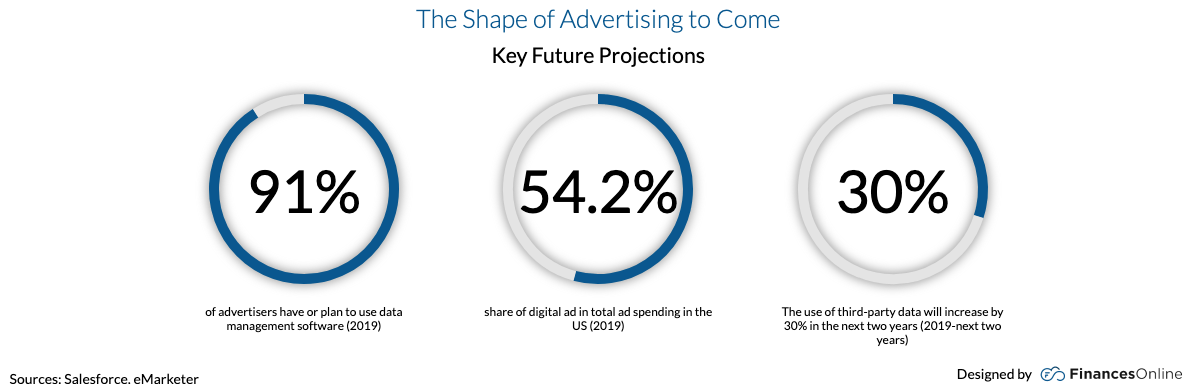
Investment in advertising data management and automation is growing immensely. Meanwhile businesses want to utilize more data, targeting and optimization features than ever before. Lastly, investing fully in an omnichannel approach means looking beyond using Google Ads, Facebook and other advertising platforms in isolation. eCommerce businesses need an integrated solution that helps them stay competitive in the advertising market.
With that in mind, here are some important tips for evaluating eCommerce advertising platforms in 2020:
Start with your current vendors.
Adopting new marketing technologies is always a significant undertaking for a business. So it’s best to take stock of your current capabilities and see how they measure up against your needs. That way you can focus on only adding necessary technologies to your MarTech stack.
Look for sophisticated data management capabilities.
Advertising technologies can and should double as data management platforms. In order to gain the real-time insights eCommerce businesses need, platforms must store and process large amounts of new and historical data from first, second, and third-party sources. Since data privacy regulations are a growing concern for advertisers, providing a solution is essential for platforms to stay competitive in the long term.
Minimize the number of tools you need.
Some enterprise businesses prefer to invest in all the “best-of-breed” technologies for their advertising needs. But this strategy tends to bring more problems than benefits. The more advertising technologies you use, the more integrations they need. You’ll also have to onboard each platform within your business. As omnichannel marketing becomes even more important, that just means more tools to bring on. It’s better to focus on using a few key solutions that offer the most value for your time and investment overall.
Give value to flexibility.
Most technologies prioritize offering advanced automation solutions to make it easier for advertisers. But the challenge is finding a platform that also offers the flexibility businesses need to reach their unique marketing goals. Give value to tools that help you take advantage of automation while maintaining control of audience targeting, bid strategy, and more.
Ecommerce businesses today don’t have the capacity to invest in new advertising technologies every year. It’s best to ensure you choose the best solution that will adapt to your needs and the market landscape in 2020 and beyond. Centro has a track record of evolving and tackling these top challenges as they come along.
Hut-hut-HIKE! Super Bowl LIV is going live on February 2nd, 2020. It's the ultimate face-off between two of the best professional football teams of the season, and the ultimate opportunity for brands to reach millions of viewers.
The Super Bowl is more than just a football game held on the first Sunday in February each year—it’s a cultural event with a live audience unmatched by any other TV program. Millions look forward to the festivities with family and friends, a halftime performance with some of the biggest names in music, and of course, the high-profile commercial ads, commonly known as Super Bowl ads. According to Statista's Super Bowl Survey, these ads are viewers’ second favorite thing about the Super Bowl experience. But the cost of that viewership isn’t cheap: This year, the going rate for a prime, in-game 30-second ad costs between $5-5.6 million and $2-3 million for an ad run during pre- and post-game coverage.
Several brand newbies will be making their Super Bowl debut this year, including Facebook, Sabra, and Kellogg's Pop-Tarts. They’ll be joining regulars like Anheuser-Busch InBev, Avocados from Mexico, Coca-Cola Co., and Audi, to name a few. The game will also get political, with President Donald Trump and Michael Bloomberg's presidential campaigns both buying 60 seconds of ad time.
For brands with widespread name recognition and huge advertising budgets, the decision to advertise at this particular event can be a no-brainer. Brands promote their products during the game to take advantage of the massive viewership that allows them to market to millions of viewers at one time. It's an opportunity to flex their muscles and boost brand awareness, image, and consideration with a one-of-a-kind story that will undoubtedly be talked about for days or weeks past the big game.
However, there are not many companies and advertising agencies that can afford such a large expenditure. After all, $5 million is just the starting point for an ad during Super Bowl. Outside of the price to reserve ad space with the network, the cost for creative development, production, talent, teaser trailer, and more, can make the price of a Super Bowl ad skyrocket. While Linear TV has been critical to the success of the Super Bowl's growing popularity since it first televised in 1967, Advanced TV has recently emerged as a disruptive force.
Forward-thinking marketers and media professionals are now exploring Advanced TV and its benefits as an alternative to Linear. Here are 4 leading benefits:
Advanced TV gives viewers the experience they want: convenience, affordability, premium content, and improved customer support. Viewers watch what they want, when they want, across multiple platforms and devices. In 2019, eMarketer stated that by 2023, 56.1 million U.S. households will no longer have Linear TV and access video entertainment via a digital package. In comparison, 72.7 million households will have Linear TV.
Advanced TV is currently one of the fastest-growing channels in advertising, however, it’s not without growing pains. Advanced TV campaigns require a high level of digital intelligence and adaptability to execute. Luckily, Centro's Basis helps both marketers and media professionals plan, buy, analyze and streamline digital advertising, in order to execute the best-performing TV campaigns.
Looking to explore Advanced TV and premium live programming for your 2020 strategy? Game on! Learn more about Connected TV Advertising with Centro.
Social media presents a unique opportunity for advertisers. Not only do the various platforms provide additional channels for acquiring new customers and obtaining additional revenue from existing ones, but the often granular targeting options available make social media marketing ideal for discovering the unique niche that comprises your highest-converting audience. Here, we’ll lay out some best practices and things to keep in mind when leveraging social media to find your audience.
If social media is going to enable you to better locate your desired audience, it’s important that the networks you choose to advertise on are the ones most likely to contain that audience. Leverage what you already know about your current customers to identify the most promising channels.
For businesses with an established online customer base, delve into your web analytics solution to identify key demographic information about customers that convert. Are they predominantly male or female? 18-25 or senior citizens? Located in a specific geo or scattered around the globe?
If your business is relatively new or you’re just breaking into digital advertising, consider any personas you've created of your ideal customer. For example, if you sell trendy women's clothing, your ideal customer may be female, in her 20s or 30s living in a major metropolitan area. On the other hand, if your business is B2B, your buyer may work in the marketing department of a company with at least 500 employees, be equally as likely to be male or female, and in their 40s or 50s.
Once you have these basic demographics defined, consult publicly available data for how this maps to the various social media networks. For the United States, Pew Research Center puts out yearly demographic breakdowns of the major social media platforms. For most companies, Facebook is a good starting point due to its scale (two billion monthly users) and its variety of targeting options, but additional networks like Instagram, LinkedIn, or Snapchat might be key channels depending on your intended audience.
In addition, make sure to examine your key competitors' social media presence. Which networks are they on? What is their messaging (both paid and organic) like? While you should focus on ways to differentiate your company (rather than simply copying what competitors do), competitive research can help ensure that you have all of your bases covered.
Customer Match provides an easy entry point for new advertisers to break into Facebook and other platforms. To get started, export a list of your existing customers from your CRM that includes key identifying information like full name, email address, phone number, city, and state, etc. The more data fields you can provide, the more current customers the social media network will be able to identify. LTV data can also be incorporated to further refine targeting to only the most valuable customers. Apply this audience for campaigns designed to drive additional revenue and repeat purchases from those already familiar with your brand.
From there, you can leverage the same customer list to begin your acquisition efforts on social media by creating a lookalike audience. This approach will target users that Facebook has determined share common characteristics with the source audience, whether it be demographics, interests, behavior, etc. Given the similarity between the two groups, these users should have a higher propensity to convert.
Note that controls are available to control the degree of similarity between your source and lookalike audiences, and therefore the lookalike audience's size and potential reach. While an extremely high degree of similarity may result in high ROI, it also means reaching fewer potential new customers and obtaining fewer insights for further audience creation. On the other hand, very loose constraints may mean quickly spending your budget without much to show for it. Aim for a middle ground (1 - 3% similarity in Facebook's settings) or test out a tiered approach where you create several lookalike audiences of differing degrees of similarity and see how they perform.
You can further expand this retargeting plus lookalike strategy by creating additional custom audiences and lookalikes based on your website traffic or mobile app users. Note that these other customer audience sources require placing a pixel on your website and providing information regarding your mobile application.
Depending on your potential audience and social networks in scope, leveraging the unique targeting options available to each network can also help you to better find your audience on social media and beyond. For example, if you are a B2B company that exclusively serves Fortune 500 companies, using LinkedIn's Account-Based Marketing targeting can be an effective choice. Alternatively, if you decide to try advertising on Twitter, given your potential audience's demographic breakdown and competitors' presence, try targeting hashtags relating to your offering. In short, make sure to use all of the tools at your disposal for additional audience discovery and potential revenue-driving opportunities.
Once you are live with your initial set of audiences, leverage your web analytics platform and Facebook's Audience Insights to more closely evaluate the types of users that are spending the most via social media and the type of messaging that best resonates with them. What are their demographics and interests? Where are they located? Which ad creative and messaging is delivering the best return? How do these users and ads differ from what you know about users converting from other channels?
Take these insights and use them to build out additional audiences, exclude segments that do not convert efficiently for more granular targeting, and refine ad messaging across both social media and other channels. For example, if you are targeting all of North America but Canadian users have a lower conversion rate (perhaps due to shipping cost), consider targeting the United States. Or, if you find that a particular ad creative performs well, consider testing it out for display retargeting. Take your learnings from social media and see where else they can apply.
While most of this post has focused on paid social, I would be remiss not to emphasize the importance of maintaining a strong organic presence on the social media networks on which you advertise. Not only is your page/profile a potential destination for users who have seen an ad, it can also help drive free clicks and conversions. To help drive organic traffic in conjunction with your paid social strategy, make sure your brand aesthetic and messaging are consistent throughout and post a steady stream of compelling content (not just ad-worthy copy).
In addition, look for Groups relating to your type of product or service and join to directly engage with your customers and consider reaching out to influencers who have a following with your target audience. These types of strategies will help you drive organic conversions while also obtaining further insights that can be used for paid social and other channels. For example, if you find that a post from an influencer leads to a high number of conversions, consider creating a target audience of people who like their fan page for a new ad campaign.
In summary, the variety of targeting options available via social media marketing make it an ideal laboratory to experiment and discover the audience that comprises your highest LTV customers. By taking an iterative, data-driven approach that slowly builds on your audience targets and A/B tests various ad sets and messaging, you can achieve a higher ROI on social media and leverage the insights gained about your users for cross-channel improvements.
~
To learn more about how you can optimize your social media game, get in touch with our digital media experts.
At Centro, we know that keeping up with the trade pubs and latest trends can be tough and time-consuming. To make that easier, we’ve compiled all the articles, reports, and other bits of awesomeness you may have missed, but should definitely read. Enjoy our latest list below!
Twelve Million Phones, One Dataset, Zero Privacy [:24]
A fascinating (non-advertising industry) look into how every connected individual is tracked, can be targeted with advertising, and how anonymity may not be we believe it to be.
The Top 10 Events That Shaped–And Rocked–The Digital Ad Industry Over The Past Decade [:07]
Over the last ten years, programmatic buying and the rise of ad tech changed the face of digital advertising. Look back on what impacted the industry from the rise of the walled gardens to mobile’s meteoric rise to the decline of ad networks.
The Best Cannabis Marketing Campaigns of 2019 [:04]
New year, new laws. While CCPA may be a focus for many marketers, the hottest opportunity in advertising may be in cannabis. With 33 states allowing medicinal, there are 11 states who have legalized recreational sales, not to mention the green-rush that is CBD. Take a look at the creative approaches marketers took in showcasing (and normalizing) cannabis to the masses.
The Call For Clarity: How Measurement Will Change in 2020 [:04]
Marketers are seeking a more complete view of their audience. The following shifts are predicted to take place in 2020 – clarity will reign over clutter, campaign KPIs will change, and cookies will give way to connections. As we approach this next decade, we can expect to see cookie dependence for brands to decrease and brands will turn to richer, direct connections with their audiences.
Where to Go from Here: The Outlook for Programmatic Advertising in 2020 [:03]
2019 has come to a close, and it featured key developments for programmatic advertising. From the rapid growth in over-the-top (OTT) and connected TV to significant improvements in addressable advertising to the current implementation of the California Consumer Privacy Act, 2019 saw momentous developments in the programmatic space that will change industry standards this year.
In a Post-Cookie World, RTB is Key to Effective Digital Marketing [:02]
Since GDPR became enforceable, the number of third-party cookies used per webpage declined from about 80 in April to about 60 in July, and the number of third-party cookies found on news websites (major advertising publishers) in Europe declined by 22%. In response, there’s been an onslaught of articles claiming the value of real-time bidding (RTB) and all of programmatic will decline in direct correlation with enforced privacy regulation, browser and cookie deprecation. While the cookie (and associated use of cookies) has been the centerpiece of all digital advertising performance reconciliation in the last 15 years, it is not the only reason RTB is an important component of effective digital marketing.
Why LiveRamp Quietly Sold Its Location Data Business Last Year [:02]
LiveRamp is distancing itself from location data. With the recent privacy regulations like the CCPA and GDPR and new iOS features that aim to cut down on location tracking, the location data business will be getting a bit complicated from a privacy perspective. LiveRamp will be focusing on data manufacturing business and focusing on their strategy on operating a neutral and open marketplace to connect high-quality, ethically-sourced data sources with data buyers.
WTF is Chrome’s SameSite Cookie Update? [:04]
On February 4, Google will be rolling out a new Chrome update that includes a new approach to cookies. The SameSite update will require website owners to explicitly state label the third-party cookies that can be used on other sites. Cookies without this proper labeling will no longer work in the Chrome browser. Chrome currently has 64% of the browser market. Chrome already offers user the ability to block third-party cookies. This change will allow users more control over their settings.
AR Puts the Person in Personalized Advertising [:04]
With investment in augmented reality (AR) advertising beginning to boom, the global market is expected to grow over 30% each year to 2023. The hardware and software technology has improved for AR and opened up unique advertising opportunities, most notably through Facebook and Snapchat.