
Technology
Basis Platform
Advertising Operating System
Communication Portal
Intelligent Collaboration
All Channel Activation
Activate Media on Every Channel

Consulting
Resources
When it comes to Search Engine Marketing (SEM) programs, the question of the synergy between SEO and PPC eventually comes into play. Does it matter? Do the two interact or influence each other? Which should you prioritize?
Here's everything you need to know about the relationship between SEO and PPC.
Search Engine Optimization, or SEO, is the process of getting traffic from the organic (unpaid) search results on search engines.
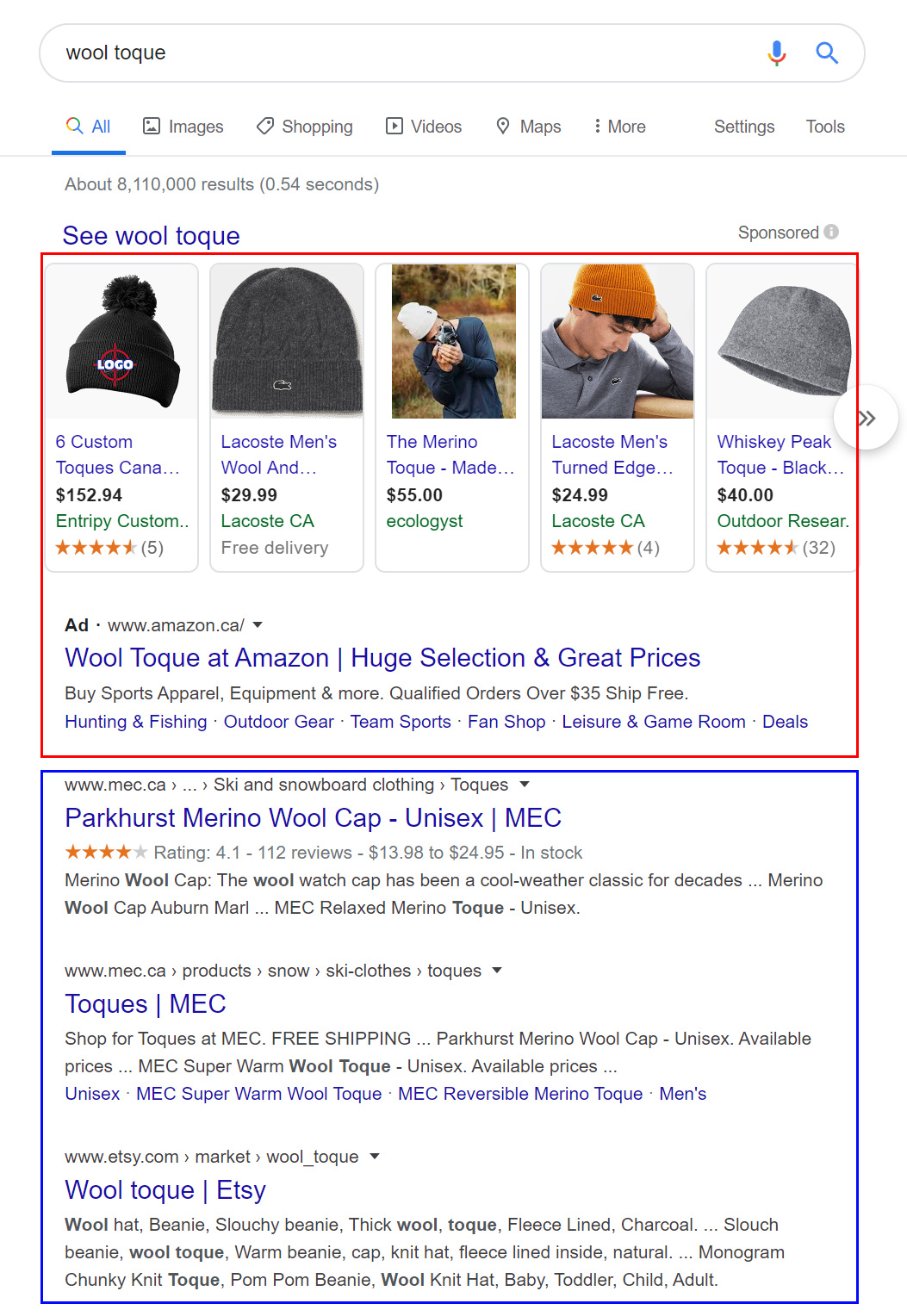
For example, let’s say that Sammy is selling winter hats online. Sammy’s store page uses the term “wool toque”—it’s a Canadian thing—which is indexed by search engine spiders and brought up in search engine results. See the BLUE box in Figure 1 for examples of organic results.
PPC, or Pay-Per-Click, is a type of paid search engine marketing in which advertisers pay a fee each time a prospect clicks their ad. Think of it as buying visits to a website.
For example, Sammy’s sales campaign includes paid advertising on search engines for the keyword “wool toque.” Sammy pays a fee, based on bidding, every time a prospect clicks one of the ads. See the RED box in Figure 1 for examples of PPC results.
Absolutely! SEO helps the performance of your PPC campaigns by improving your website; SEO optimizes the technical aspects of your site as well as the language. A good SEO campaign raises the authority of your domain, garners ever-important backlinks, and makes your on-site experience as frictionless as possible for prospects. SEO helps remove barriers blocking your customers from converting.
Raising the profile and authority of your website, as well as the experience, usually decreases your ads’ CPC and lowers your overall CPA. SEO campaigns often yield improved results in PPC campaigns, but it is far from guaranteed.
Paid search does not directly help SEO. Which is to say, PPC campaigns are not an organic ranking factor.
However, indirectly, there may be some SEO benefits to PPC campaigns. For example: it’s common for users to click on an organic result after seeing a PPC ad, because the organic result is considered more authentic. This results in a better CTR for organic traffic.
Likewise, customers may become aware of a brand through viewing, but not clicking, paid advertising. They then convert later through an organic search result when ready to buy.
Peanut butter and jelly. Green eggs and ham. SEO and PPC. They all go together. But how do SEO and PPC work together? In a word: authority.
If you can get the holy search engine grail of a paid ad AND organic position on page one, they reinforce each other in the mind of your prospective customer. There’s a “wait, where have I seen this before?” moment for the customer.
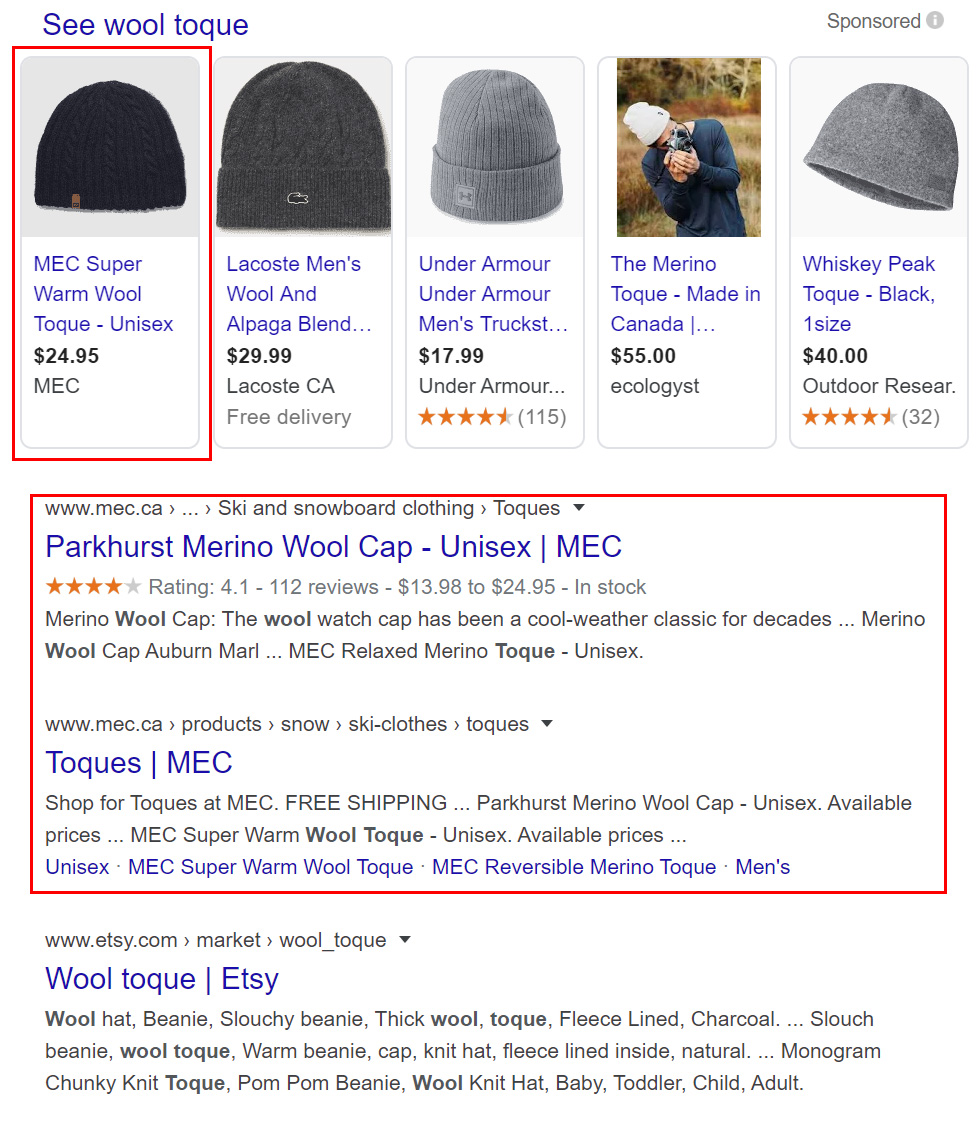
A page 1 organic search result indicates to searchers that the page is highly relevant, which makes it easier to trust that it’s what they were looking for.
SEO and PPC for the one-two punch!
Keyword data indicates how your target market uses search to find information, which should inform both your SEO and PPC campaigns to become more targeted and to align your brand message between the two channels.
Writing in the language of your prospects is a key to success in both organic and paid campaigns: instead of finding a new way to describe your products and services, find established ways that people already understand.
For example, let’s say that Sammy is selling winter hats online. Sammy’s brand clarity has distilled down to the term “wool toque”—it’s a Canadian thing—which is a specific style of hat.
This is where keyword research comes into play: by looking at key metrics like search volume and competition, Sammy can decide which keywords will bring the right traffic to the store and where there is an opportunity to compete from a SEO and PPC standpoint. Aligning everything is a two-step process:
The optimum formula is Brand Clarity + SEO + PPC = search engine success.
If you’re struggling with where to start, remember that keyword research informs SEO and PPC, streamlining the process. You should be reinforcing your brand messaging with your keywords, and both SEO and PPC will help.
Though it may seem like a pipedream to have the time and resources to spend on both SEO and PPC, the synergy between the two practices warrants the investment—especially when you factor bottom line improvements like CPC into the mix.
At Centro, we know that keeping up with the trade pubs and latest trends can be tough and time-consuming. To make that easier, we’ve compiled all the articles, reports, and other bits of awesomeness you may have missed, but should definitely read. Enjoy our latest list below!
The Cannabis Business Is Here To Stay [:05]
Many believe that cannabis is one of the largest vertical growth opportunities. For any publisher getting into cannabis, compliance is key if they’re looking to make 2020 a green year. This Q+A with Newsweek’s head of sales addresses some of the concerns publishers may have as they look to accept cannabis advertising.
The demise of third-party cookies could be a blessing in disguise for publishers. In this article, one publisher talks through how they are not seeing the disaster scenarios that experts predicted. Instead, they're seeing that advertisers will always find a way to get their message out there.
The IAB Tech Lab Has a Campaign Strategy to Educate the Public About Ad Tech [:03]
As the ad tech industry reels from seismic changes, an initiative is being put in place to downplay notions of ad tech players invading privacy and stealing data. The initiative will instead articulate the benefits advertisers bring to the public, especially how they help fund quality journalism.
Mobile Device IDs Will Be The Next Ad Tracker To Bite The Dust [:05]
Mobile advertising IDs are probably not long for this world. While Google & Apple plan to kill third-party cookies, they have not yet taken concrete steps to eliminate device IDs. It's likely that Apple’s IDFA will be the first to drop, with Google following the lead.
Programmatic Now 85% Of All U.S. Digital Advertising [:01]
Programmatic media buys now account for 85% of all digital ad spending, according to estimates released in a new report from the Interactive Advertising Bureau. The finding is important, because the IAB to date has eschewed official estimates for programmatic in its regular ongoing tracking of digital advertising spending in its quarterly Internet Ad Revenue Report.
How Programmatic Advertising Must Adapt To A 5G Future [:04]
The transition from 4G to 5G is being promoted as a monumental leap in speed and user experience. But even with all of the promise of high-speed, low-latency connectivity, 5G won’t do much to improve load times experienced by consumers. To work at 5G speeds, the ad industry will need to update beyond the cell tower to meet consumer expectations.
Back to the Future: Why This Classic Measurement Tool Is Making a Comeback [:03]
Advertisers are always searching for new ways to engage existing customers and attract new consumers. But industry professionals face a host of challenges, including increased regulation and the growing fragmentation of marketing channels. One of the most exciting developments to come out of this shift is that buyers and sellers are moving away from the cookie and refocusing on individual households. Here’s a look at the key factors influencing this change and what advertisers can expect as they (re)enter a new era of digital marketing.
Walmart Developing A Membership Program To Amazon’s Prime [:02]
Walmart is challenging Amazon Prime by launching Walmart+. This service will expand on their existing grocery delivery subscription service. Additional perks will include discounts on prescription drugs and fuel. Amazon has taken steps to lure lower-income shoppers into Prime memberships by offering monthly membership rates rather than to pay annually.
Amazon Is Making It Easier for Brands to Connect With Consumers Through Alexa [:03]
Amazon announced that it's allowing brands to develop proprietary voices to connect with consumers on Alexa, creating a new engagement tool to grow voice-based commerce. Amazon indicated that it would work with companies to help them identify a persona for their brand, select someone to record speech for that persona, and then build a vocal model that could be reproduced on the Alexa platform.
Uber’s New Digital OOH Unit Brings Location-Targeted Ads to Car-Top Screens [:01]
It was inevitable that Uber would get into advertising. Yesterday, Adweek first reported that the ride-sharing platform had partnered with Adomni to create Uber OOH and bring digital screens to its drivers in three cities: Atlanta, Dallas, and Phoenix.
Every year there are new marketing strategies and approaches to start investing in. It’s challenging to keep up with what they all are, why they’re effective, and how to adopt them. An omnichannel marketing strategy is one of the latest on a long list of options for marketers to consider. Those who understand what omnichannel marketing is all about know just how it drives key business goals. Once you understand what the strategy is and how it works, it’s easy to see why it represents the future.
Before laying out the benefits of developing an omnichannel marketing strategy, it’s important to define what it really is. Marketers today often confuse omnichannel marketing with multichannel marketing. They’re actually quite different.
Multichannel marketing involves reaching out to audiences on a number of different channels with the same marketing message. The goal is to reach as many potential customers as possible by targeting a wide range of channels. Say, for example, a business is promoting a summer sale. With a multichannel marketing strategy, they would send out the same sale announcement through email, social media, and on their website.
Omnichannel marketing likewise involves reaching out to audiences on different channels, however, the goal with this approach is to engage and interact with the same audience members in various places around the web. Rather than delivering an identical message to everyone, an omnichannel strategy adapts to insights about audience needs and their point in the customer journey. Let’s pretend that a business promotes a summer sale to their audience through email. With an omnichannel marketing strategy, they wouldn’t deliver the same marketing message on social to audiences who already saw the email promotion. Instead, they would adapt their message to upsell or encourage other behaviors related to the campaign goal.
With omnichannel marketing, you need extra tools, tracking technology, and an advanced strategy to succeed. It takes more time, money, and resources than simpler marketing strategies. That said, the benefits greatly outweigh the costs when used the right way. Here are a few:
1. Better data analysis
In order to effectively execute an omnichannel marketing strategy, you need to be able to track the behavior of individual audience members across disparate platforms on the web and offline. Such platforms include:
Doing this effectively will allow you to build a complete view of the customer journey. By tracking and then collecting both online and offline behavioral data, marketers are empowered to pinpoint customer behaviors and better understand their interests and intent.
2. Nuanced segmentation and targeting
A great many marketers don’t realize they need a better picture of their customer journey until they start investing in omnichannel data collection. Once they do, it’s possible to gain more accurate and nuanced insights than originally thought possible. Segmenting your audience based on deep funnel intent data opens up many new targeting possibilities. Businesses can design more effective marketing campaigns that truly speak to the demographics, interests, and needs of audience segments.
Say, for example, a furniture store is delivering remarketing ads to someone who previously browsed baby cribs on their eCommerce site. The customer then goes into their physical store and purchases a crib. Without online/offline data integration, the company would continue showing ads for cribs, which isn’t relevant to the customer anymore. With an omnichannel marketing strategy, the business could switch to marketing other baby-related products to upsell and increase customer lifetime value.
3. Improve brand visibility
The online shopping experience has changed considerably in recent years. Twenty years ago consumers used one or two touch-points to make purchase decisions. Now, it’s common to have four or more:
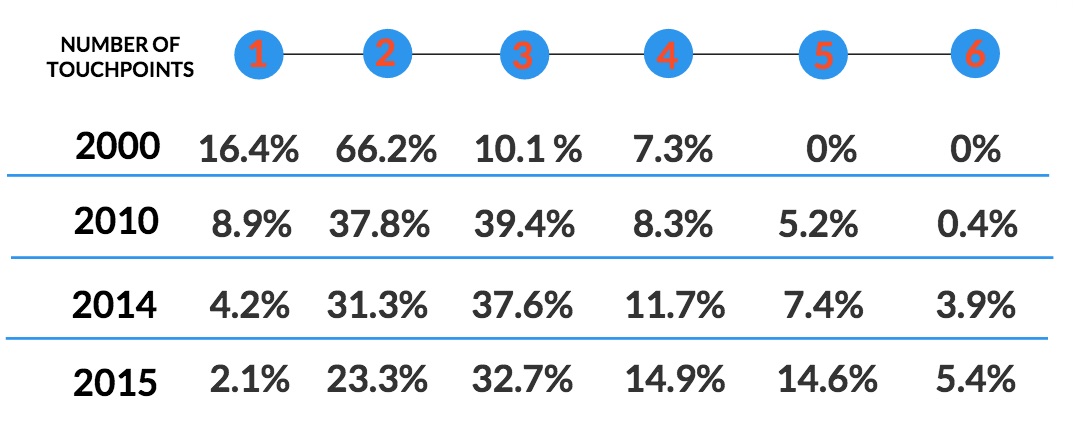
Investing in omnichannel marketing makes it possible to share your brand message consistently online, offline, in-store, and on mobile. Creating a seamless experience across all of these relevant channels gives your brand more visibility and offers the opportunity for audiences to interact with your business wherever they prefer. This can help drive other important goals like engagement and sales.
4. Create better engagement with your audience
Improving customer engagement has a plethora of benefits for businesses, such as moving leads down the funnel, driving sales, and increasing customer loyalty.
It goes without saying that reaching your audience on more channels provides more opportunities for engagement. Omnichannel marketing does more than that, though. Providing a consistent and relevant marketing message that traverses multiple platforms encourages audience members to engage more than traditional multichannel marketing. Since the message is fluid and changes based on interactions on other platforms, it becomes more relevant. This increases clicks, shares, form fills, and other important engagement metrics.
5. Improve collaboration across teams
Sharing data insights from cross-channel marketing can help businesses improve cross-team collaboration in a lot of ways. Look at sales and marketing alignment, for example. Understanding how individual consumers interact with your brand across touchpoints can help sales teams improve the in-store shopping experience. Tracking a customer’s previous interactions online and offline can also help customer service representatives solve problems and complaints more quickly.
6. Increase sales
All the benefits of an omnichannel marketing strategy can work together to drive one key goal: sales. Plenty of research has shown that adopting an omnichannel strategy encourages people to make purchases and then repeat purchases. According to Omnisend’s 2020 Marketing Automation Statistics Report, the purchase rate of campaigns using three or more channels is 287% higher than single-channel campaigns:
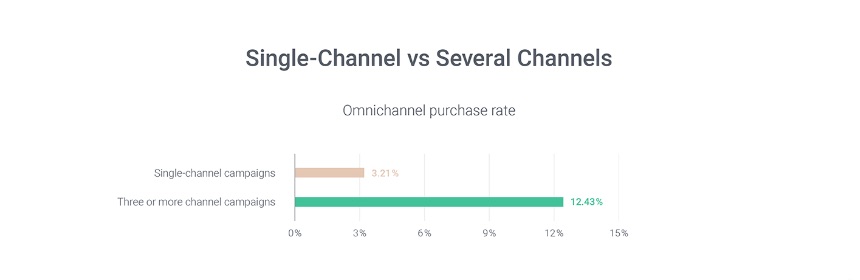
Increasing brand awareness, engaging your audience with a targeted message, and providing better customer service all work together to help a business drive more sales. Offering a seamless experience also makes it easier for customers to find the products they need and buy them, regardless of the platform.
7. Improve customer retention
A recent Aspect survey found that businesses adopting omnichannel strategies achieve 91% greater year-over-year customer retention rates compared to businesses that don’t. There are many ways businesses can improve customer retention through an omnichannel approach to marketing, sales, and customer service. A great example of this in action is the Starbucks Reward Program.
People have masses of choices when it comes to places to buy a cup of coffee, but Starbucks has a great omnichannel marketing strategy that keeps people coming back to their locations. They offer a free rewards card to use when you pay, but you can also refill it via phone, website, in-store, or on the app.
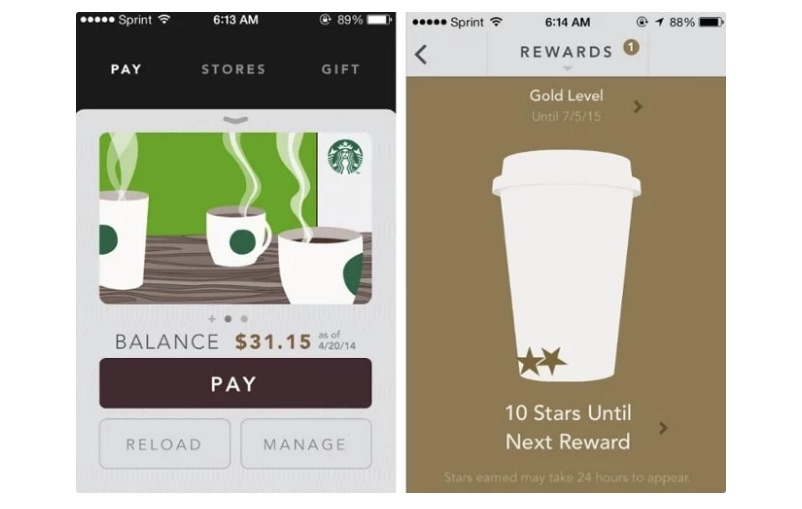
Whichever platform you prefer to use, your card balance updates in real-time. You can also order your custom drink from the app, order and pay ahead, and collect points for special rewards every time you use it. Comparing that to a traditional reward punch card shows what a real omnichannel customer retention strategy is all about.
8. It’s cost-effective
On the surface, it might seem like developing an omnichannel marketing strategy is expensive. You have to invest in the right tools and approach to collect your audience data, analyze it, and then surface insights to deliver a consistent marketing message across channels. However, when you do it the right way, all the investment more than pays for itself.
Developing more accurate performance insights helps businesses allocate their marketing budget more effectively. Having a full picture of the customer journey can empower you to understand which channels are most valuable in driving sales and improving customer retention. This way you can make informed decisions to invest more or less in certain channels, targeting strategies and marketing campaigns. Improving marketing spend efficiency and effectiveness makes omnichannel marketing a very cost-effective business strategy.
While most brands will undoubtedly invest in multichannel marketing in 2020, few will prioritize building a seamless, relevant experience for all audience members across different platforms. That said, adopting marketing intelligence technologies and strategies that allow for true omnichannel operations is on the rise and the approach is well on its way to becoming the standard for businesses both large and small.
Early adopters of an omnichannel strategy are set up to outperform their competitors in a lot of ways over the next few years. Soon it will become mandatory for businesses to update to a modern strategy if they want to stay in the market. Beyond that, there will be a few key strategic factors that allow businesses to keep up with audience expectations and outperform their competitors with omnichannel:
Data Quantity and Quality Management
As online marketing channels continue to grow, so does the digital foot of consumers. The more relevant data you can incorporate into your performance analyses, the better insights you can garner, and the better optimizations you can make. Competitive omnichannel marketers should invest in technologies with the capacity to analyze first party, second party, and third party data to help paint a clear picture of the marketing landscape.
Managing data quality is another important success factor. Data checking and validation can help reduce noise in performance analytics, making insights more accurate and valuable for businesses.
Nuanced Modeling and Attribution
While data quality is important, it doesn’t matter unless you’re prepared to analyze it properly. Once you have a full picture of the customer journey, you need to be able to decide which touchpoints are most valuable for driving key business goals.
Simple models like first and last-click attribution aren’t detailed enough for an omnichannel marketing strategy. Businesses need to invest in tools that can effectively attribute value to all relevant touchpoints. Thanks to artificial intelligence and machine learning technology, it’s also possible to project future performance based on past data insights. Businesses that make full use of their audience data can make informed decisions based on historical performance as well as the current marketing landscape.
Operationalizing Insights at Scale
Lastly, creating accurate performance models is only valuable if you can make quick optimizations based on insights. Lots of businesses today have a wealth of performance insights to inform their marketing decisions, yet few have the capacity to act on these insights at scale.
For example, day-to-day changes in the PPC landscape offer opportunities for advertisers to change bids and outrank their competitors in search results. However, it's just not possible for marketing managers to make hundreds or even thousands of micro-optimizations per day. The solution is to invest in paid search management software that can make bid optimizations for you in real-time.
An omnichannel strategy isn’t a radical new way of marketing. It’s just an attempt to consolidate your approach in an increasingly complex marketing landscape (online and off). Consumers are beginning to demand an omnichannel customer experience because they know it’s possible. Businesses that want to please their audiences and keep up with the competition need to start developing a more integrated approach to marketing. Once you accept an omnichannel marketing strategy as the standard, then you can focus on optimization tactics like improving data quality, predicting performance, and operationalizing insights.
The new year has brought new laws and regulations for cannabis in even more states. As of January 1st, 11 states have legalized recreational marijuana, 33 states have legalized medicinal marijuana, and nearly every state allows for CBD (per 2018’s Farm Bill).
Whether for medicinal or recreational purposes, cannabis is at its highest level of interest among consumers and marketers in the United States. This market segment will only grow in coming years, and with better defined regulation, the opportunity looks strong for cannabis brands.
In this webinar, we share expertise on the evolving cannabis market while focusing on key opportunities available to marketers today.
Have you ever wanted to pursue an executive leadership role, but didn't know where to start? This month's episode features seasoned advertising veteran Sean Finnegan, who has years of fearless leadership experience to share.
Whether it’s climbing the ladder at an organization or founding a new business, Sean Finnegan has led teams of all sizes throughout his tenure in the ad industry. After climbing the ranks at agencies Starcom MediaVest Group and OMD, Sean set out to found a variety of his own businesses. Listen in as he shares the story of how he got to where he is today by betting on himself.
Today, PPC advertising is the best way for travel marketers to reach and convert new target audiences. With revenue opportunities only continuing to grow, digital travel sales are expected to exceed 800 billion dollars in 2020, according to Statista data. Investing smartly in effective travel and tourism PPC tactics can help an array of businesses earn their share of digital travel revenue this year and beyond. This ultimate guide explores the strategies with the most opportunity for growth.
Most travel and tourism PPC tactics revolve around promoting hotel rooms and travel bookings. However, there are lots of other opportunities to earn revenue from PPC in the travel niche. Tourists today spend $129 billion on travel-related activities. That’s a huge share for travel companies to tap into.
Expectations and preferences surrounding travel have changed a lot in recent decades. 67% of high-income travelers would rather spend money on activities and experiences than an expensive hotel room. Travel marketers can take advantage of this trend by promoting tours and activities with their PPC ads:
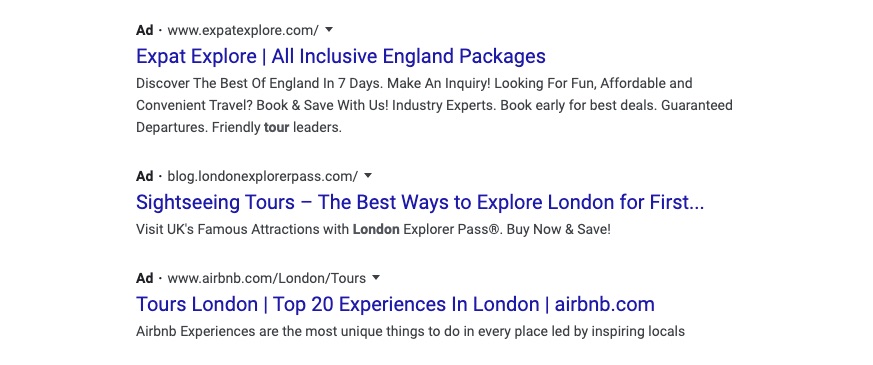
Travel companies that don’t traditionally focus on offering experiences can also adapt to this new trend by creating new services. That’s exactly what Airbnb did by launching AirBnB Experiences last year (which they now promote heavily through PPC ads).
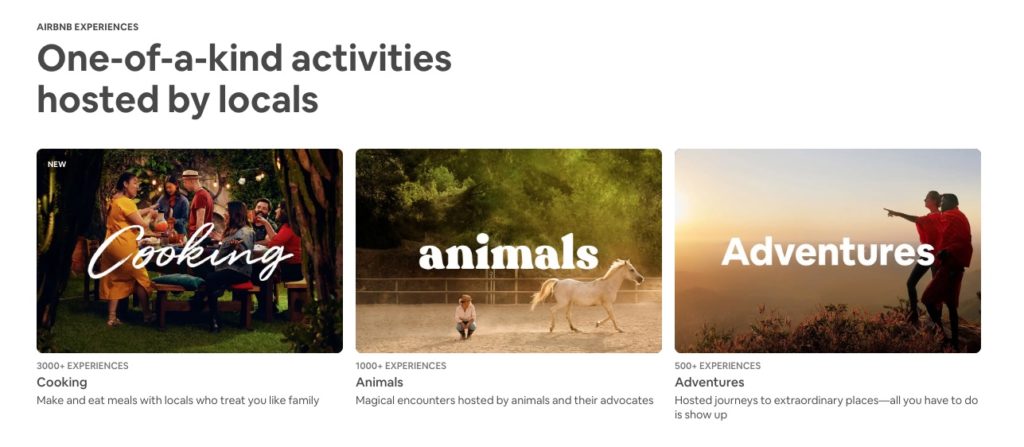
The travel space has become massively competitive over the past decade. When budgets are limited, it’s a challenge to outpace PPC competition and reach audiences at critical points. In order to stay competitive, travel and tourism companies need to focus their spending on keywords that drive more conversions.
All sorts of relevant keyword phrases can be targeted to engage audiences at different points across the customer journey. Some have higher conversion value than others. For example, a travel company with destinations in Spain could target long-tail keywords like “best time to visit madrid” or “things to do in barcelona.” These are informational queries that show users are just researching. They’re not necessarily ready to purchase a ticket, tour, or hotel room.
Instead, it’s better to allocate more budget to target keywords that show users have high purchase intent, such as “buy tickets to barcelona” or “book costa del sol tour.” These queries suggest that users have done their research and are ready to buy.
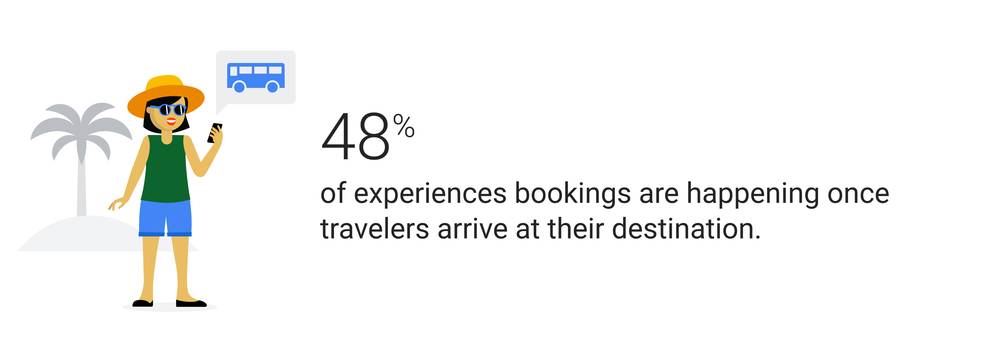
There are also lots of opportunities to reach people as they’re about to convert by targeting location-based queries. According to Google, nearly half of experience bookings happen after travelers arrive at their destination:
Your previous campaign performance can tell you a lot about what demographics are likely to convert on your ads, as well as when, and where. Use this information to create new targeted ads and landing pages to improve campaign performance.
There are numerous pre-defined reports in Google Ads that can give you insights into the performance of different dimensions. For example, you can look at impressions and clicks by geographic location:
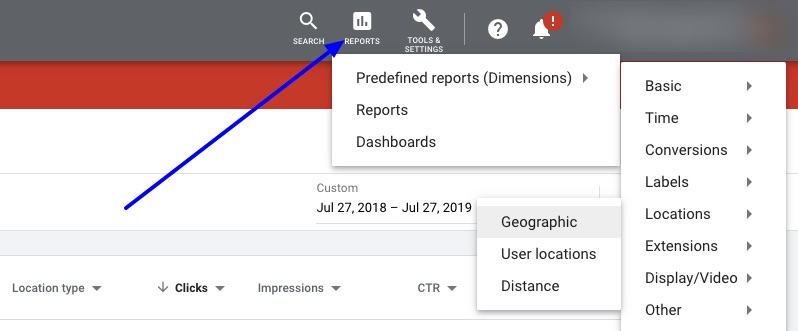
You may discover the people searching from a specific geographic region are more likely to click and convert on ads promoting a local tour. You can take advantage of this by increasing bids for audiences in that location. If there’s a major performance opportunity in a dedicated place, you could also create unique ads and landing pages tailored specifically to them. Creating more relevant content for your ads and keywords can also improve your Quality Score and Ad Rank.
Geo-targeting isn’t the only option to optimize your bids and targeting. You can adjust bids for different times of day or days of the week that tend to perform better as well.
Mobile optimization is important for any PPC campaign. However, it’s a particularly important travel and tourism PPC tactic. Consider these statistics:
As mentioned above, people also use their mobile devices to book experiences while traveling. Simply put, people use mobile devices when conducting searches related to travel more so than in other industries.
To invest more in mobile, marketers need to prioritize optimizing their pages for mobile and then consider bidding more on mobile to get visibility. Search results have less real estate on mobile devices. In order to ensure people see your mobile ads on tiny screens and click on them, you need to target positions 1 and 2 in search results.
To monitor your ad rank performance on mobile versus desktop, go to the Devices page, click Columns>Modify Columns. Then add Impr. (Top)% and Impr. (Abs. Top)% to your reports:
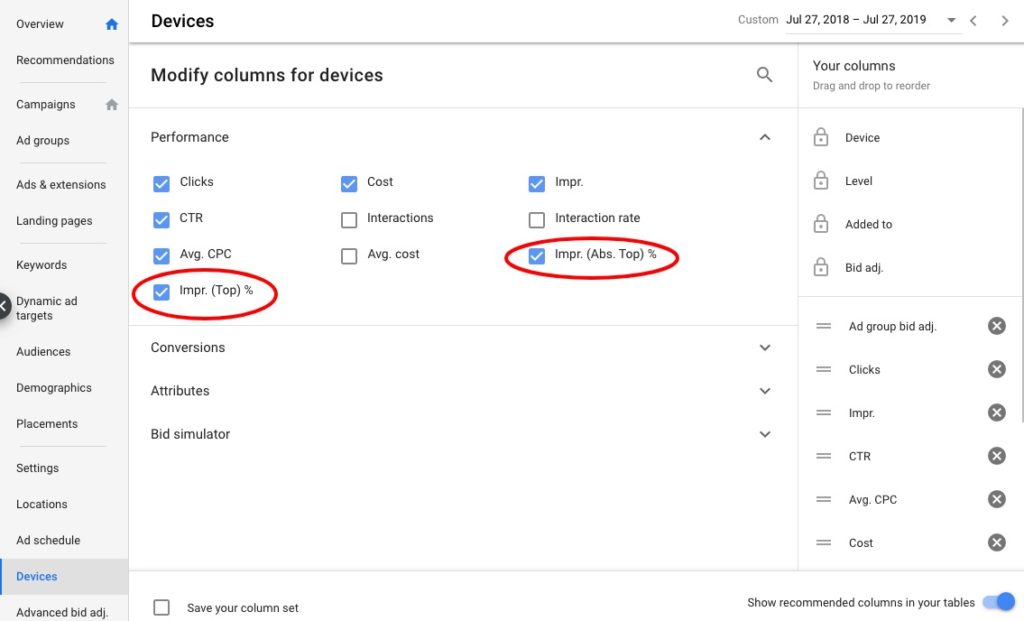
This will show you if you’re bidding enough on mobile devices to achieve an ad position that will get you visibility.
Travel and tourism PPC tactics should include personalization as much as possible. Personalizing your content can increase clicks and conversions considerably. People have also begun to expect it as part of a good user experience. According to a Travolution survey, 81% of respondents say delivering personalized experiences is very important to them. Best-in-class travel companies deliver this throughout the customer journey using accurate ad targeting and dynamic web content.
As an example, if you search “cheap london hotels” on Google, the headline of every ad listed speaks to that specific pain point (affordability).
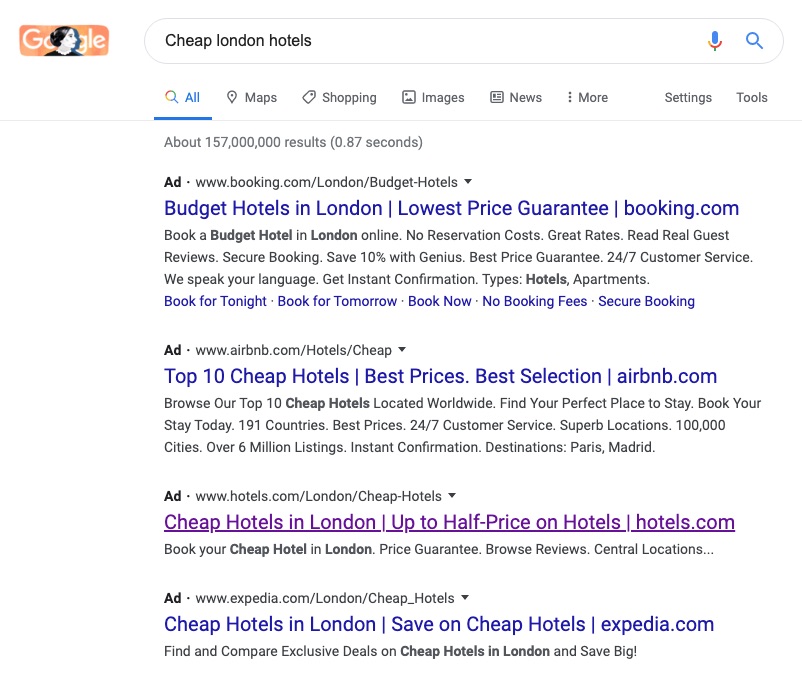
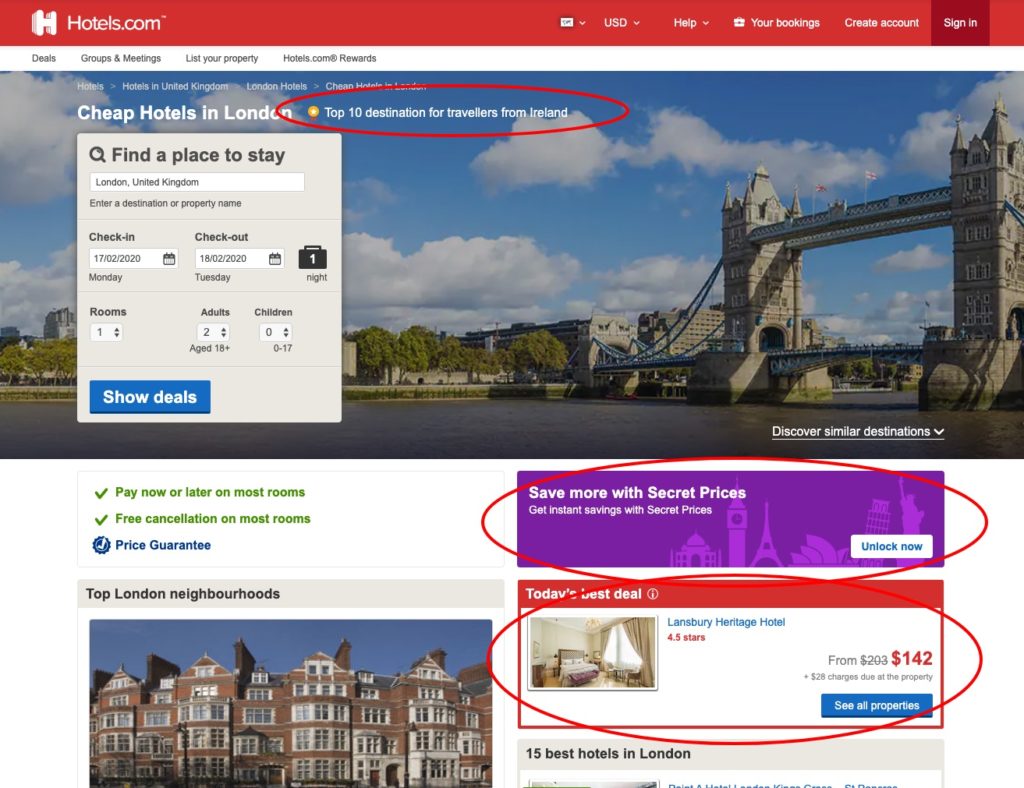
And, when you click on one of these ads, the resulting landing page is also personalized to this need. Hotels.com, for instance, shows offers for discounted hotels and special pricing options. They also adapt their landing page copy based on the location of the searcher:
Inherently, travel is about having new experiences in unique places. Few people are interested in trying new things without strong recommendations from others. When people look for travel information online, they rely on reviews and ratings from others to make decisions. According to Tourism Research Australia, people say review websites are the number one source that influences global travel decisions, ahead of travel agencies and tour operator sites.
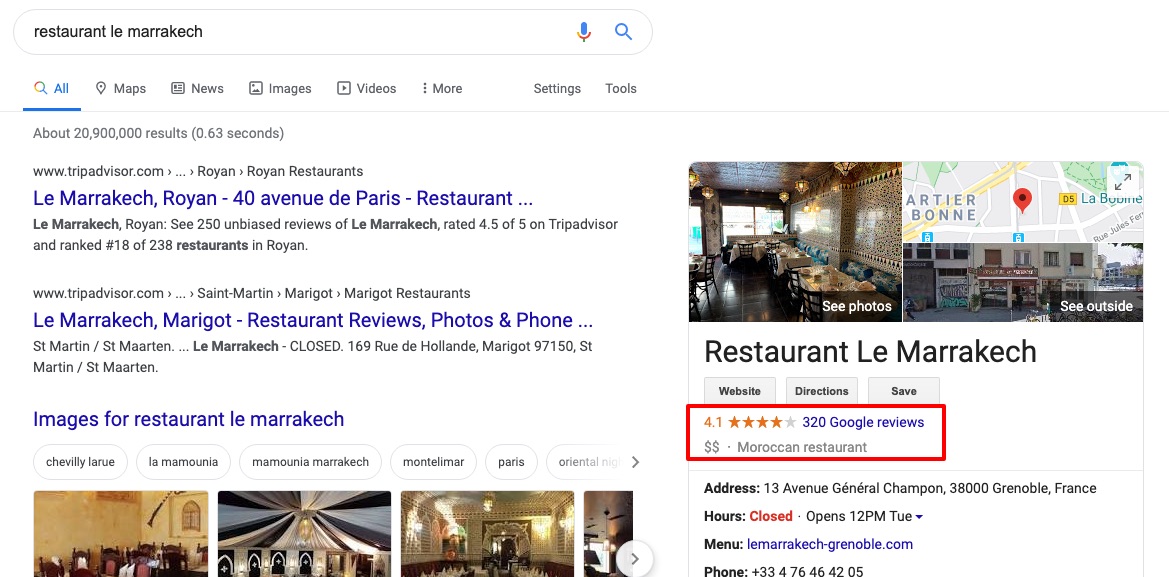
Google has made a lot of effort to include reviews right in search results. If someone searches for your brand by name, they’ll see reviews along with your information from Google My Business:
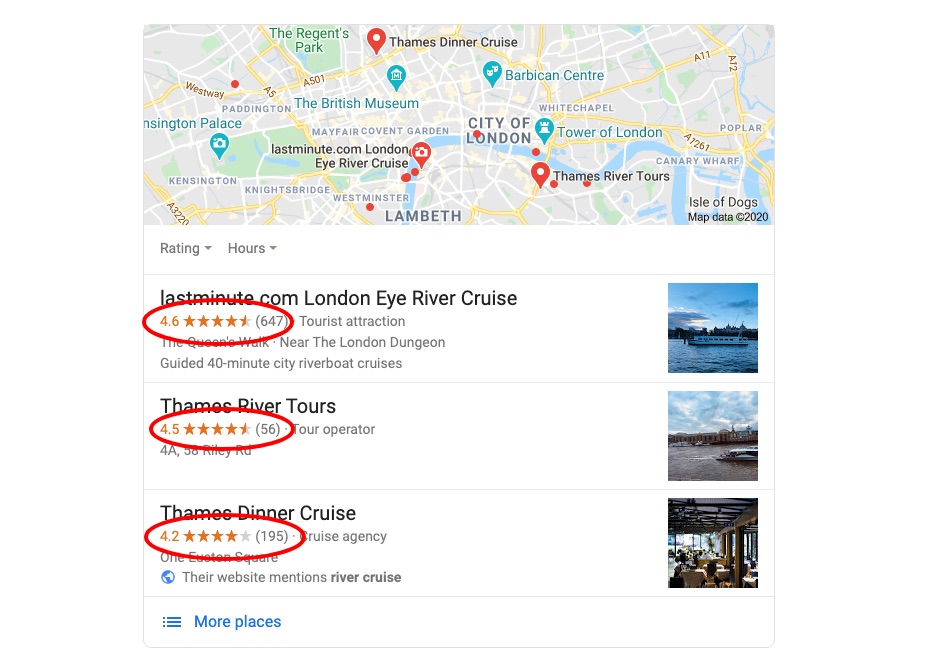
Reviews also show when your business appears along with other listings in local pack search results:
And even if people find your business through search results, they’re likely to turn to other review platforms (like TripAdvisor) to learn more before making a purchase decision. Reputation management, then, must be a priority across relevant platforms.
User experience optimization is one of the most important travel and tourism PPC tactics. You can invest a lot in creating your ads and optimizing ad targeting, but if your booking experience is difficult, you’ll get few conversions. People have many options for booking travel online. If your booking experience is confusing, they’ll simply go back and find an alternative option.
The first aspects to consider when looking to enhance user experiences are mobile-friendliness and site speed. Both of these are important Ad Rank factors for Google PPC. The next thing you need to consider is site navigation. Is it easy for visitors to find the content they’re looking for on your site, regardless of what page they landed on?
Lastly, you need to optimize the booking process itself:
Even small changes such as consolidating your booking fields or reorganizing a page can improve conversion rates. Whenever you make changes, flag the days in Google Analytics so you can understand their impact on performance.
Your PPC ads should largely be focused on driving conversions. Your advertising strategy as a whole, though, should also include techniques to build brand awareness. Keeping your brand name at the top of people’s minds is more important in the travel industry than in others. In a survey conducted by SEMRush, it was found that 52% of travel site traffic is direct, followed by search at 32.2%.
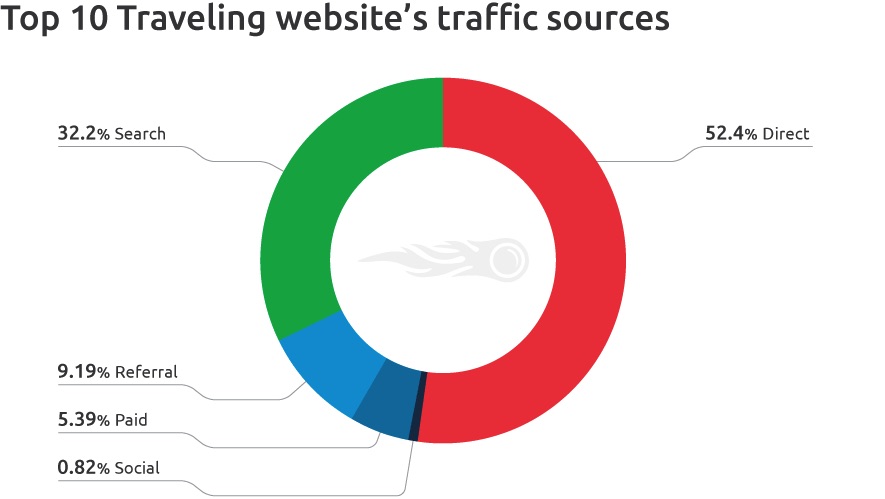
So, even if your ads don’t drive conversions directly, they can build brand awareness, encouraging your audience to revisit your site when they’re ready to convert.
One way to prioritize building brand awareness is by supplementing your search ads with Google display or Facebook Ads. You can use them to remarket to audiences that clicked on your PPC ads but didn’t convert, or target similar audiences to broaden your reach across platforms.
An impressive 79% of travel marketers already use Facebook Ads. The platform has an ad type specifically designed for the travel business, so you can get more bookings, show complimentary offers, and build your brand image on the web.

Once you start building a strong image for your travel brand online, it makes sense to start bidding on branded keywords. Users who are familiar with your business are much more likely to search for it directly. Even if your pages are ranking well in organic search results for branded terms, it’s worthwhile to double down with PPC ads. Research has shown that clickthrough rates are higher when a brand appears in both organic and paid search results.
As your online authority grows, competitors are also likely to bid on your branded keywords to get more visibility. As a result, bidding on branded terms is also necessary to beat out the competition, getting the clicks and traffic you deserve.
Seasonality data should inform how you set up your campaigns and optimize them to maximize the value of the travel season. Your previous Adwords performance data can show you which times of the year bring a higher search volume for different locations and experiences you promote. Create separate campaigns for the different destinations you’re targeting so you can easily start and pause campaigns throughout the year. This makes it easier to distribute your advertising budget to the locations that matter most.
You can also rely on seasonality trends to inform what kind of bid adjustments you should make. Even if you create separate campaigns for different destinations, there will still be micro-fluctuations within the busy season that you can take advantage of. The best way to do this accurately is with automated bidding strategies. For example, Google’s Smart Campaigns consider seasonality factors when automating bidding decisions.
Investing in targeted travel and tourism PPC tactics is essential to stay ahead of the competition today. The industry continues to grow year after year, as do the opportunities to target and reach travel audiences through PPC.
Start by systematically investing in each of the strategies in this ultimate guide. Monitor performance to see which are the most valuable at helping you reach your revenue goals.
Once considered a soft option for PPC advertising, Bing Ads now offers a wide array of opportunities for advertisers to reach their desired audiences and drive meaningful revenue. Last year we published some tips and secrets on how to expand your SEM strategy using Bing Ads. Since then, the platform has undergone a lot of changes. For one, Bing Ads rebranded as Microsoft Advertising, and that’s just the tip of the iceberg. They also launched a plethora of new features to help advertisers improve campaign performance and grow ROI. If you want to maximize the value of Bing Ads for SEM in 2020, here are 13 new tips and strategies to consider.
Bing allows you to import your Google Ads account and campaigns over to its platform. While this makes it incredibly easy to get started with Bing SEM, it does, however, mean that few marketers actually set about the task of optimizing their campaigns for Bing Search. That’s why it’s important to take advantage of Bing’s own research functionalities to generate targeted changes and get a head start over your competition.
For example, Bing Ads has its own Keyword Planner tool that marketers can use to build unique keyword lists. Bing’s audience is very different from Google’s, and so select search queries will be more or less relevant and elicit a different search volume on Bing versus Google. Bing’s Keyword Planner comes with some unique features, such as allowing you to build negative keyword lists. It also shows statistics and suggestions with up to six months worth of historical data.
Microsoft Ads just launched a series of new features that make it easier to manage shopping campaigns using Microsoft Advertising Scripts. Smart advertisers can utilize these functionalities to save time and optimize campaigns more effectively. The new “list view”, for instance, makes it possible to filter, sort, and pivot Product Groups to make bulk changes.
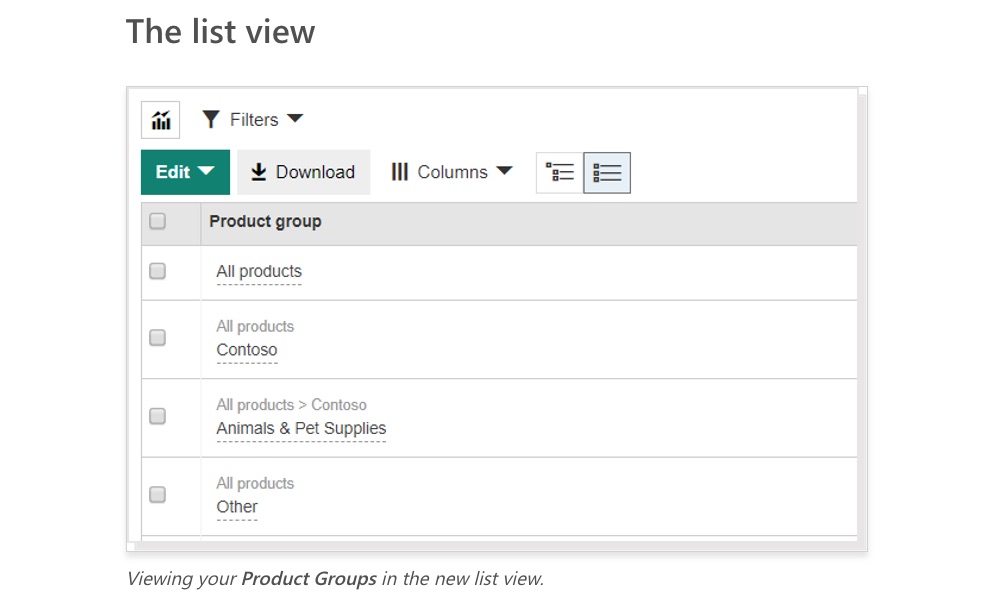
You can also easily view performance data side-by-side and enable percentage-based bid changes.
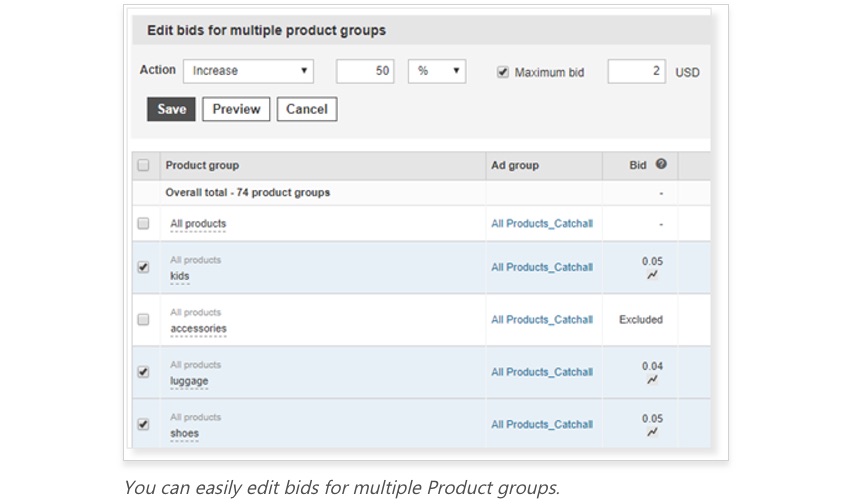
Microsoft Advertising takes a novel approach by displaying performance data alongside Product Group subdivisions. This makes it easy to see how different categories are performing so you can make smart decisions when setting up your groups. If you’re looking to enhance the performance of your Bing Shopping campaigns, this is a good place to start.
Bing has been making lots of changes to incorporate the same valuable feature sets into their shopping campaigns as Google Ads. Sponsored Products, as an example, came to Bing Ads last April, allowing manufacturers to increase the visibility of their products in search results and drive more traffic and conversions in the process.
According to Bing Ads representatives: “With this new capability, our clients can achieve better alignment of marketing efforts between manufacturers and retailers. Together, the connections they create with shoppers work harder to drive performance - clicks, conversions, and ROI.”
Microsoft Advertising Editor is a unique campaign management tool. It’s a desktop application that enables you to make changes to your campaigns online or offline, empowering you to save time by making bulk changes to your campaigns, ads, and keywords. You can manage ad copy, extensions, URLs, budgets, bids, targeting, and more.
It’s possible to manage multiple accounts from the interface and you can copy and paste elements from one account to another. It also includes keyword research tools so you can discover new keywords and add them to your campaigns quickly and easily.
Using negative keywords is a great way to ensure your ads don’t appear for irrelevant search queries. Often, advertisers compile negative keywords into large lists that they share across related campaigns. This can sometimes create problems when a negative keyword you add for one campaign could block ads from showing for relevant queries in another.
To help marketers address this issue, Bing created the Product Negative Keyword Conflicts Report. It shows you which of your product ads are blocked by negative keywords as well as their match type. The “Conflict Level” functionality will also detail at what level the conflict arose.
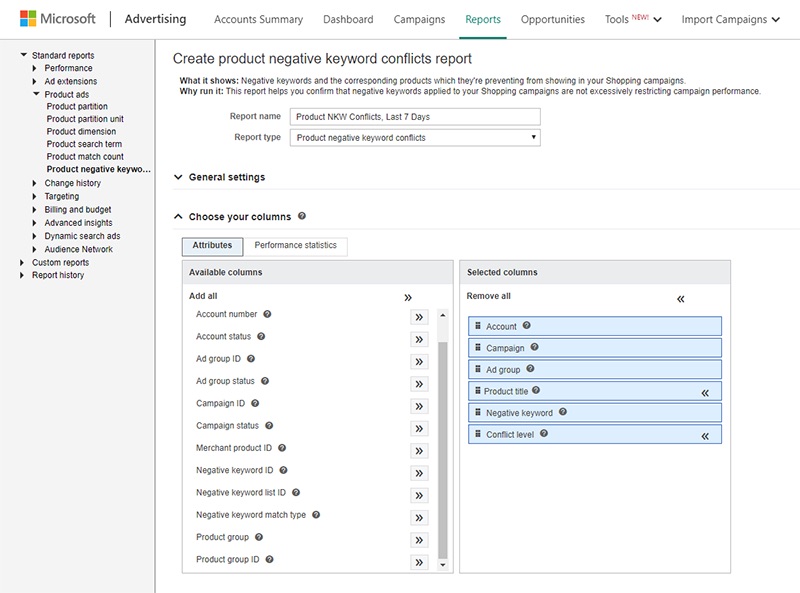
You never know when negative keywords from a shared list might be blocking your ads from showing for relevant queries. The Product Negative Keyword Conflicts Report can help you make sure your negative keywords are always working to improve the performance of individual campaigns.
After a few months of beta, Microsoft Advertising rolled out Responsive Search Ads for everyone in January 2020. They report that early adopters are seeing, on average, a 10% increase in volume, a 6% rise in CVR, and a decrease in CPA of 7%.
Similar to Google Ads, Responsive Search Ads allow you to set 3 - 15 ad headlines and 2 - 4 descriptions. Bing artificial intelligence will then automatically select the most relevant combination for each search query, ultimately ensuring you’re always targeting your audience with the most pertinent message for their interests, needs, and intent.
In April 2019 Bing Ads released a new ad extension format called Action Extensions. These are completely unique to Bing. Action Extensions allow advertisers to add 70 different calls-to-action to their ads, such as “Browse,” “Visit Store” or “Free Quote.” Advertisers can easily experiment with all the varying options to determine which ones generate more clicks and engagement. Here’s an example of what they look like on desktop search:

Local Inventory Ads are a new ad type that help brick-and-mortar businesses showcase their local inventory and retail store information within their ads. Bing uses local store inventory information and displays relevant product ads to users who are near a store’s location. Those who click on the ad are directed to the Bing storefront where they can view store location, product availability, and other helpful information:
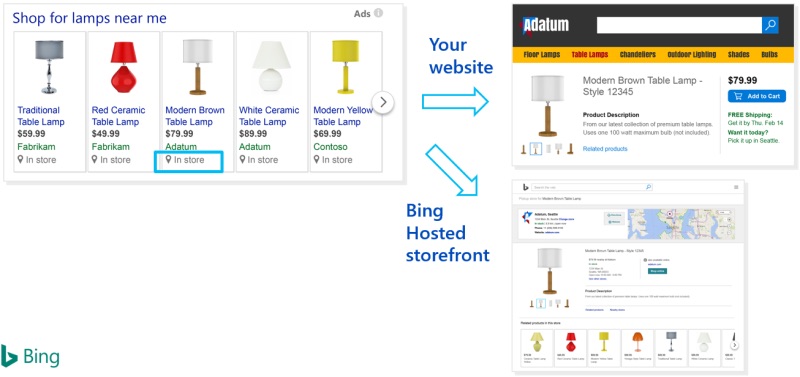
Local Inventory Ads are a valuable option because they deliver relevant information to potential customers. They also can help you get more clicks or foot traffic to your physical locations.
Copious busy advertisers tend to simply mirror their Google Ads optimizations on Bing. That’s a great place to start, but Bing has a unique audience and unique search features to employ if you’re looking to deliver peak performance. The new Bing Ads Recommendations tab can help with this. It has filters to narrow your focus on the elements that matter most, such as Repairs, Bids & Budgets, Keywords & Targeting, and Ads & Extensions. Here’s an overview of what it looks like:
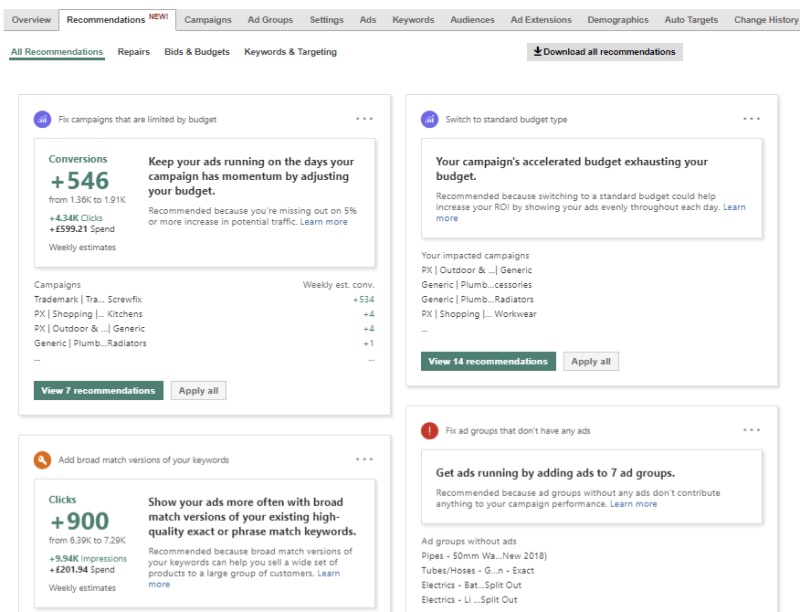
This tab doesn’t just offer suggestions, though; it also explains the reasoning behind specific improvements, making it easier for advertisers to make informed decisions about the optimizations they make. If you feel like you don’t have time to optimize your Google Ads and Bing campaigns separately, then these AI-driven insights are a great tool to utilize.
Like Keyword Planner, Auction Insights is another feature that advertisers pay attention to on Google Ads yet ignore on Bing Ads. It can help you understand how your ad performance compares to competitors. Metrics like impression share, average position, and outranking share show if you need to make improvements to your ads or bids to perform better in auctions. Tracking campaign changes and using Auction Insights metrics will help you understand if your content strategy resonates with your target audiences as well.
For a long time, Google Search audience targeting was very sophisticated while Bing trailed behind. In September 2019 that all started to change. Bing Ads released audience targeting solutions that empower advertisers to connect their own company data with relevant keywords and demographics.
Product Audiences is a new targeting option that creates remarketing lists for specific products you’re advertising. This feature dynamically pairs customers with products based on products they’ve looked at in the past. Using Product Audiences is extremely valuable as you can target people who have a clear purchase intent.
Similar Audiences is another option that automatically finds new customers who have similar interests to your existing remarketing lists. This allows you to expand your audience targeting to more relevant prospects, increasing conversions and ROI in the process.
If you’re advertising on Google and Bing simultaneously, you need to be very conscious of budget spending. Shared Budgets is a great tool that allows you to assign a single budget to multiple campaigns on Bing.
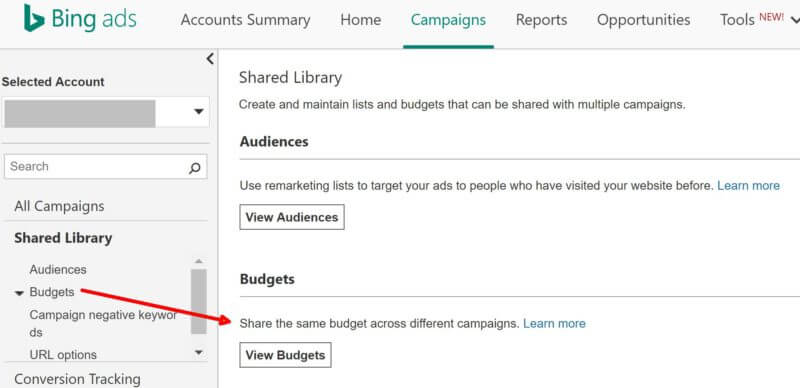
Why is this valuable? Different campaigns don’t utilize the same budget at the same pace or bring the same return. You need to strategically allocate your spend otherwise certain campaigns will finish their budget when they could have spent more, while others could end up with a surplus. This functionality automatically distributes marketing dollars to the campaigns that need it and ensures you’re always spending strategically across your entire SEM program.
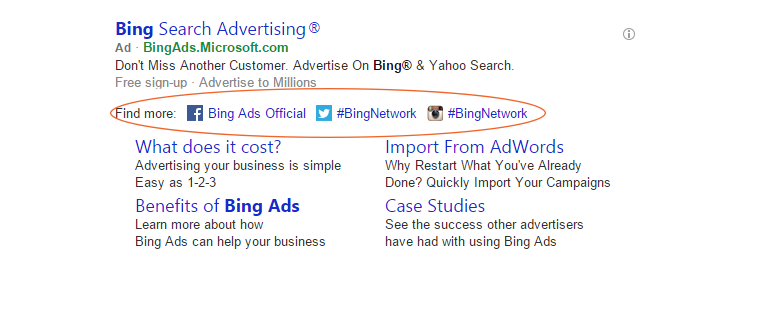
Social Extensions are another tool unique to Bing Ads. They’ve been around for quite some time, but still, only a few marketers take advantage of them. Social Extensions appear under your ad copy in search results, directing your audience to social conversions on platforms like Facebook, Twitter, and Instagram. They are a great option for advertisers who want to nurture leads and encourage engagement with audiences who might not yet be ready to convert. You can use social extensions alongside other ad extensions to increase engagement while also targeting other goals, like CTR.
Bing Ads has made a great many changes that have made it easier to expand your SEM strategy beyond Google Search. Now they’re starting to develop new features and capabilities that allow advertisers to maximize their revenue potential.
Mirroring your Google Ads strategy on Bing is a great approach when you first start out on the platform, but performance marketers should be prepared to develop a unique blueprint for Bing PPC using all the most valuable tools and resources. Start taking advantage of these 13 features today and keep an eye out for new opportunities to drive ROI with future developments from Microsoft Advertising.
Can you smell that? Smells like… change. As of January 2020, 33 states have legalized medicinal marijuana use, and 11 have approved recreational sales.
The cannabis industry is growing rapidly, with states across the country rolling out new regulations every week. No one is shying away from the massive economic opportunity available in this vertical, but evolving legislation and geographic nuances make cannabis advertising daunting for even the most seasoned media planners.
Luckily, there are ways to get ahead before even starting a campaign. Cover all your bases with our top three tips for cannabis marketers:
Because Cannabis is an ever-changing space, ongoing education is critical for agencies and brands. With new regulations appearing every week, advertisers must stay up-to-date in order to not be left behind.
To support our clients in this dynamic space, Centro maintains teams of subject matter experts who are dedicated to supporting our cannabis clients as they become industry frontrunners. For example:
Finding quality traffic for cannabis and CBD ads will continue to challenge advertisers. Publishers often block list cannabis and CBD ads as a default, which means that quality ad space is not a given.
Without access to vetted publishers, your ad campaign is compromised before it begins. That’s why in this vertical, it’s even more important to ensure that your DSP provides premium, cannabis-friendly inventory.
Basis provides this inventory at scale. Our integration with CannaVu's ad exchange is one way Centro clients can access the largest ad marketplace for curated, compliant advertising opportunities for cannabis and CBD marketers.
The opportunity in cannabis advertising means that a variety of new media platforms have popped up to meet growing demand. Choose a platform with proven impact to best serve your growing business!
An established platform like Basis can support a business through each phase of its growth—from start-up, to scaling and expansion, to maturity. Over $1BN of media has already run through Basis, and our team is nimble enough to meet the unique needs of the evolving cannabis vertical.
Check these three boxes and you’ll be well on your way to a good trip. Curious about cannabis or CBD advertising with Centro? Contact [email protected] to learn more.
‘Ask the Expert’ is a series that breaks down the tools, tech, and trends you’ve been hearing about in the trade pubs and around the office. We ask our in-house experts the tough questions and write up the answers in bite-sized pieces for your reading pleasure.
This month’s topic? Programmatic advertising expectations for 2020. We brought in Centro’s SVP of Product Management, Hiten Mistry, to give us the breakdown.
What will drive programmatic spending to grow in 2020?
Currently, CTV and audio are driving private marketplace spending. Audio buying via programmatic channels is fairly new, but we’re continually seeing growth in audio supply from our internal data. CTV has also experienced over 3x growth from our 2018 numbers.
In terms of advertisers, the effect of more ad budgets from segments like politics and cannabis will be good for programmatic channels. Ad sellers willing to accept advertising from these areas are well-positioned for 2020. Here in the U.S., we’re predicting that Cannabis spending will be long lasting with lots of room for growth.
What factors will affect programmatic video in 2020?
The interest in CTV and addressable TV will be the drivers of growth this year. As improvements in programmatic pipelines make it easier to activate campaigns, we expect to see budgets shifting fast to these channels and tactics. Market education and support will be a major factor in how much is spent on programmatic video.
Another important factor is mobile video. We’re going to see more adoption of 5G networks on the major carriers, and this will drive video content consumption. Naturally, that will open more opportunities for programmatic video advertising on mobile devices.
What other factors will influence programmatic in 2020?
The market is moving towards more automation in bid optimization for first-price auctions. The algorithms in DSPs are constantly learning more about the optimal bids for a first-price auction world. Advertisers will have to rely on these types of optimization tools to automate programmatic advertising.
Generally, we expect to see automated programmatic buying in all forms (DSP, social, etc.) alongside automated buying via direct, search, and others. By “others,” I’m referring to the automation of set-up, management and reporting of campaigns. This is especially needed with the increased complexity of digital media, plus the individual nuances of vendors’ programmatic platforms (DSPs, SSPs, publishers).
I also expect Digital Out-of-Home (OOH) to make a leap. There is more work to be done to create infrastructures that support the supply, but there’s certainly interest from buyers to access audiences on this channel via DSPs.
Are you interested in learning how Centro can boost your programmatic advertising capabilities in 2020? Learn more about Programmatic Advertising with Centro.