
Technology
Basis Platform
Advertising Operating System
Communication Portal
Intelligent Collaboration
All Channel Activation
Activate Media on Every Channel

Consulting
Resources
Retargeting need not be merely a tactic for B2C companies to reach consumers. Done right, it can be an incredibly effective way to reach future clients, as long as you combine the right retargeting tactics with strong and tailored messaging.
To illustrate the effectiveness of B2B retargeting, I want to call attention to a case study on an insurance client of Centro’s. What this example illustrates is that if you know your audience, pay close attention to the right benchmarks, and are willing to test a number of approaches, retargeting can work very well in a B2B context.
Overview
For this insurance company, Centro ran a two-month campaign whose initial objective was to target small business owners and decision-makers interested in purchasing small business insurance. The primary objective was to increase applications and, in turn, boost its lead generation effort, while recognizing a positive ROI.
We had a few challenges to address out of the gate. First, the client historically had seen a fairly long pathway to conversion, including a large number of site visitors who would start, but not complete, the application for insurance. They held us to a relatively challenging CPA benchmark. Since this was the very first Centro campaign for the client, we had no historical data to use in for campaign optimization.
Strategy
Setting up the insurance company’s first campaign with Centro meant we were to build a user pool to increase the scale we’d get with retargeting small business owners. We also tested multiple data and content partners right out of the gate to improve efficiency, gain insights and increase scale. Specific campaign approaches included:
Results
Due to Centro DSP’s multiple integrations with data and content providers, and its ability to create tiered retargeting through advanced pixeling strategies, we were able to target application starters more aggressively to come in at about one-half the client's cost-per-action goal, with strong overall numbers.
As a result, the insurance company expanded its retargeting efforts considerably, extending into multiple, specific small business industry campaigns and testing a variety of messages against each audience.
Learn more about retargeting with Centro.
From the revolutionary Tasty videos to the recent roll-out of Instagram TV (IGTV), video as a social media marketing tactic has become, “the new black.” The mad rush of businesses incorporating video advertising into their digital marketing and advertising strategies may have you in a panic, but before you dump a ton of dollars into video advertising production, take a step back. It’s best to approach social video marketing with a cool and collected mentality. Dive into these tips to determine how you can incorporate video advertising into your digital strategy.
1. Know your audience
Knowing your audience is a key piece in any marketing plan. Establishing your target audience early on will help you determine what type of content to plan and post later. Whether you’re implementing video ads or still imagery, make sure it’s relevant to your target audience and true to your brand. Stick to useful, engaging content, that doesn’t stray from your brand’s look and feel. Consistency is key.
Make sure your visuals compliment post copy. For example, if you are promoting a blog post about technology trends, a cat picture for the header image probably isn’t the best idea. When the post copy and visual element are related, it ensures success and avoids confusion in the long-run.
If you decide to use video advertising to promote a blog post, or explain a product, try to not give everything away at first glance. The point of creating a video ad or using a captivating image is to encourage people to click through to your website or landing page. If you tell the viewer everything they need to know in one sitting, the chances of holding their attention after the video ends are slim-to-none. Images and videos can be the first point of contact with your potential new customer. Keep them coming back for more!
2. Images should still have a place in your heart—and on your feed
The heavy focus on video these days almost makes still images seem like the MySpace of content—outdated and obsolete. Know that not everything on your feed needs to be video. Still images also play an important role when it comes to visual communication. In order to create a balanced strategy, it is important to recognize that some content lends itself to video advertising, while other content is more enticing with the use of an enhanced image. Informational videos are a great way to promote new products, features, or services by highlighting value points in a concise and entertaining way. However, using an image to promote an upcoming event or program can also be successful.
Post subject matter and topics that create audience engagement, but avoid overwhelming them with too much of one type of content, or worse—boring them by not posting enough. As you dive into the world of digital video advertising, keep a well-rounded approach to your strategy. Too many videos may cause your audience to lose interest. Keep them on their feet by adding in variation, and don’t be afraid to mix it up!
3. Test, test again, and keep testing
The rise of digital video advertising has encouraged many businesses to incorporate videos into their social strategy, but how do you know if it’s right for you?
The answer? Tracking and testing.
A/B testing content on social platforms is an ongoing process in any marketing initiative. Remember to take it slow, before putting a big budget towards video production.
Here are a few A/B testing suggestions to get you started:
Track all of your efforts. A/B testing will provide you with more data and knowledge on what your social media audience likes and dislikes. Knowledge is power! Use your findings to give your audience what they’re looking for, on whichever platform you’re testing. Remember, you can never be too thorough when it comes to testing different types of content. Something that worked for another business, may not work for yours—and that’s OK. Try new things! Yes, some ideas will flop, but others will fly! Make sure you learn from all of your results and apply new knowledge to future initiatives.
4. Utilize platform insights and reporting
Monitor and report the success of each video ad. Notice how your audience reacts, and whether or not the video created conversations or engagement online. Did more people engage with your post than normal? Were engagement rates higher on certain platforms and lower on others? Did you gain any new followers?
Asking these questions will help as you build out your content calendar, and ultimately, create a robust social media marketing strategy. Defining and monitoring a variety of key performance indicators (KPIs) will determine what types of content to continue making and posting to your social channels. There are many KPIs to monitor but start with tracking follower growth, link clicks, and engagement metrics.
Digital video advertising is a powerful tool in the world of social media marketing. However, take precautions when adding social video marketing into your holistic digital marketing strategy. Be smart and strategic; get your feet wet with A/B testing and take the time needed to learn the likes/dislikes of your target audience. Last but not least, remember that images are still important to sprinkle into your overall strategy. Have fun with it, and take risks! Now, lights - camera - action!
People with Latinx identities make up one of the fastest-growing audience segments in the United States. As the growth in this segment shifts from immigration-based to U.S.-born-based, advertisers must look at the impact of language to market to Latinx populations in the US.
In this webinar, Sofía Escamilla shares Acento's insights on how to better reach bilingual Latinx people in the U.S. We review the U.S. Latinx bilingual population size, psychographic characteristics, and media insights as it relates to language and their user experience.
At Centro, we know that keeping up with the trade pubs and latest trends can be tough and time-consuming. To make that easier, we’ve compiled all the articles, reports, and other bits of awesomeness you may have missed, but should definitely read. Enjoy our latest list below!
Visualizing the Future of Marketing and Work With Publicis Vet Rishad Tobaccowala [:05]
Since leaving his post as Publicis Groupe’s chief strategy officer in March, Rishad Tobaccowala has been busy advising companies, promoting his new book, and looking to the future of advertising, technology, and media.
P.S. This interview from AdExchanger is a great complement to Tobaccowala's AdTech Unfiltered podcast interview.
Connected TV Connects with Voters During COVID [:04]
The health emergency of COVID-19 has forced political advertisers to accelerate the adoption of digital channels. Not only is there more of a need to make up for lost opportunities to meet voters in-person, it’s inevitable as people consume more content on digital channels. As more viewers adopt streaming, political advertiser now must enter the CTV realm to reach younger voters.
How To Solve for Scalability of Publisher First-Party Data [:04]
With the clock ticking on the demise of third-party cookies, it’s time for publisher first-party data to take center stage. Buyers will now lean back on publishers and their data to create better, more customized alignment. With that, however, comes a loss of scalability. Setting up and managing custom programs will take time and effort. One solution is to move publisher first-party data upstream from the ad server.
Why Platform Changes are a Bigger Deal than GDPR [:03]
The ad industry is facing major changes. When a platform like Google or Apple comes in with decisions on the fly, millions of people who use those platforms have to comply. A policy change within Google and Apple has potential to completely change the industry. For example, with Apple’s more recent IDFA announcement. The good news is that the outcry of the tight timeline allowed more time for developers to prepare.
It May Seem All Quiet on the CCPA Front, But Don’t Get Complacent: CCPA Enforcement has Begun [:04]
The California Consumer Privacy Act (CCPA) has been mostly out of the headlines since enforcement started in July – but that doesn’t mean businesses can take their eye off the ball. On July 1, the California AG’s office sent a series of warning notices to businesses for alleged violations of the CCPA. Under the law, businesses have 30 days to cure their violation before the AG takes any action, but it seems unlikely that ad tech companies will be part of this first wave of enforcement.
Report Reveals Independent Voters Most Expensive to Target Via TV, Republicans The Cheapest [:02]
Independent TV voters are the most expensive ones to reach, while Republicans appear to be the most cost-effective voters to target via local TV advertising, according to a MediaPost analysis of data contained in a new report Nielsen and Advertising Analytics. The report is based on public data compiled for political advertising buys made on local broadcast stations in four markets, but the researchers say it is representative of the relative costs of political ad buys on local TV stations.
How Publishers are Getting Around the Branded Content Slump [:07]
2020 was supposed to be the year that publishers cracked branded content and diversified their revenue streams, but that hasn’t happened. As the pandemic cuts into publishers’ revenue streams from every angle, branded content divisions have gone from prize products to problem children. The Drum talks to major publishers to see if this is just a short-term slow down in branded content, or if this is the end.
Pandemic Spurs Journalists to Go It Alone via Email [:04]
A slew of high-profile journalists have recently announced they are leaving newsrooms to launch their own, independent brands, mostly via email newsletters. Leveraging a loyal audience with a desire for in-depth reporting, journalists who focus on business, technology or politics are offering newsletter subscriptions ranging from $60-$100 annually and free of ads. See also Digiday’s recent take on this trend.
Computer-Generated Realities are Becoming Ubiquitous [:10]
From concerts to graduation ceremonies to wedding nuptials to happy hours, we are spending more time congregating in virtual environments that were unthinkable just a few years ago. This article from The Economist explores how the rapid adoption and technical framework may open the door for a very real future of virtual and augmented mixed realities.
Driving quality customer engagement is now more important for marketers than ever before. Effective engagement helps to better nurture leads through the funnel and consequently drive increased conversions, retention, customer lifetime value, and more. A massive 54% of consumers, however, say that companies need to fundamentally transform how they engage. There’s much lacking in modern consumer engagement tactics, and creating a single source of truth is an important key to changing this.
A single source of truth (SSOT) was a term first coined for use in information systems design, yet it’s just as relevant to a number of different fields today, including marketing. By definition, a SSOT means keeping your data in a single location and managing it from there. Employing one centralized location for data management makes it easier to analyze channel performance, create accurate reports, and make informed decisions.
Large brands that have branches and teams located in different places benefit considerably from having a SSOT, which allows them to access and use the same data profile regardless of where they are. Now that marketing is becoming increasingly multifaceted and complex, maintaining a SSOT is essential for businesses of every size, particularly when it comes to tracking engagement.
Key changes in the marketing and business landscape in recent years are the driving force that make a SSOT so important today. Here’s why:
The number of valuable marketing channels continues to grow, and so, therefore, does the amount of business data that comes with them. Consider online channels like social media platforms, websites, online ads, email, as well as offline channels like in-store interactions, call centers, text messages, TV and print advertising, etc. Businesses need to track such metrics as impressions, engagement, and conversions across each channel to stay on top of their marketing strategy.
The more channels there are, the more tools you need to manage them. Each tool has its own analytical features to help brands track their performance. That makes it very challenging to get a full picture of your marketing efforts as a whole. How can you determine how different audience touchpoints across channels work together to drive a sale?
Today, marketing data is so numerous and disparate that marketing teams simply can’t manage it manually. Few have the expertise to aggregate all data, assess its quality, and analyze it effectively. Even enlisting a full-time data manager isn’t enough to keep up with the ongoing stream of highly relevant engagement data available.
Establishing a single source of truth is a challenge for modern marketers. Once implemented, though, a SSOT offers so many benefits that it becomes difficult to envision how you once worked without it.
When managing your marketing engagement data using a number of different platforms, it is difficult to ensure each source delivers accurate and updated data. Each platform may track different data sources. Some may update in real-time while others pull data that is hours or days old.
When you aggregate and validate data in a single source, you can ensure uniformity with regards to how and when your reports are updated, improving data quality and analysis in the process. This, in turn, helps marketers increase their confidence in data analysis conclusions.
Introducing a single source of truth into your marketing set-up makes it possible to fill gaps in your understanding of the customer journey. Analyzing social media engagement, email engagement, website engagement, and offline interactions in isolation tells you very little about how these channels work together to influence purchasing decisions. With unified data, you get the full context pertaining to how different audience touchpoints influence consumers’ decision-making.
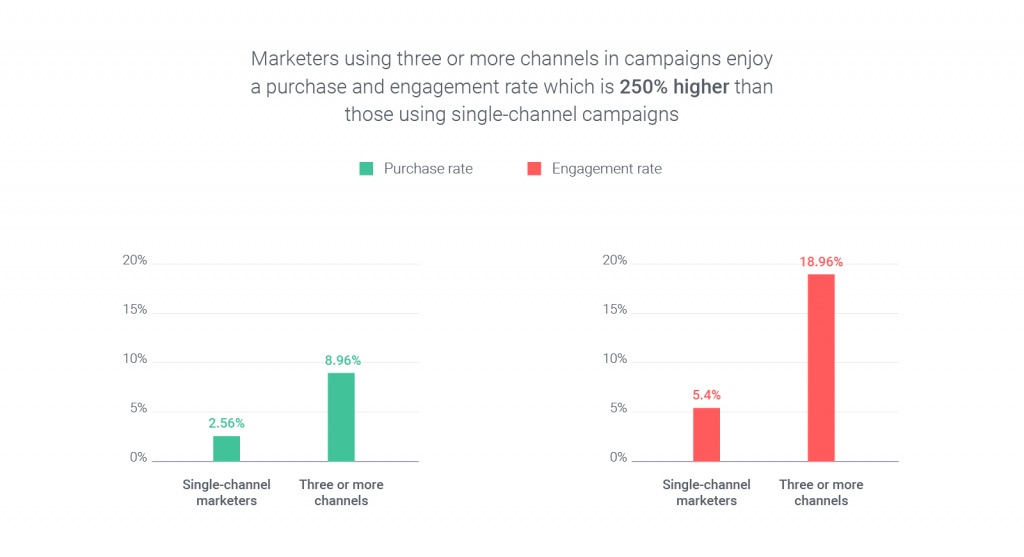
Marketing and sales teams can then take advantage of these new insights to create content that is more relevant and timely for their audience. They can also use cross-channel marketing with confidence. In a recent report conducted by Omnisend, it was found that purchase and engagement rates are 250% higher for marketers that use three or more channels. If you’re not investing in cross-channel marketing, you’re undoubtedly falling behind.
Each social media platform and monitoring tool has different ways to measure audience interactions. This creates challenges in effectively conducting any form of comparative analysis. And, to make it even more complex, these independent platforms also use the same terms to categorize data that is inherently unalike. A great example of this issue is social media impressions. Twitter, Facebook, and Instagram all define impressions their own way. Facebook impressions count the number of times an ad appears on a screen. Twitter counts an impression whenever a user sees a tweet. Third-party analytics tools can categorize them in other ways also.
Using a single provider to report these metrics makes it much easier to understand the difference between data types and see their relative impact accordingly. Considering how engagement performance metrics vary across social platforms as well as how they’re defined in the first place offers much more accurate and valuable insights.
There is a plethora of performance data relevant to various teams within an organization. Creating a single source of truth for all relevant data helps teams to derive new insights that they wouldn’t have otherwise. For example, factors related to PR efforts or customer service could impact marketing engagement. Once all teams understand how their efforts are interconnected, this encourages more cross-team collaboration. Empowering everyone with access to the same information helps them understand what impacts various business divisions and how to optimize collaboration efforts.
Exposing insights into the customer journey not only helps marketers deliver a relevant marketing message, but it also helps you serve your customers better. When sales, marketing, and customer service teams all have access to the same engagement data, it’s easier to identify what factors drive upsells, cross-sells, and churn. You can then adapt your overall strategy to fix any standing issues and optimize efforts that turn people into repeat customers. Having a complete picture of audience engagement data also makes it easier to segment and offer them a personalized customer experience, catered to their unique interests and needs.
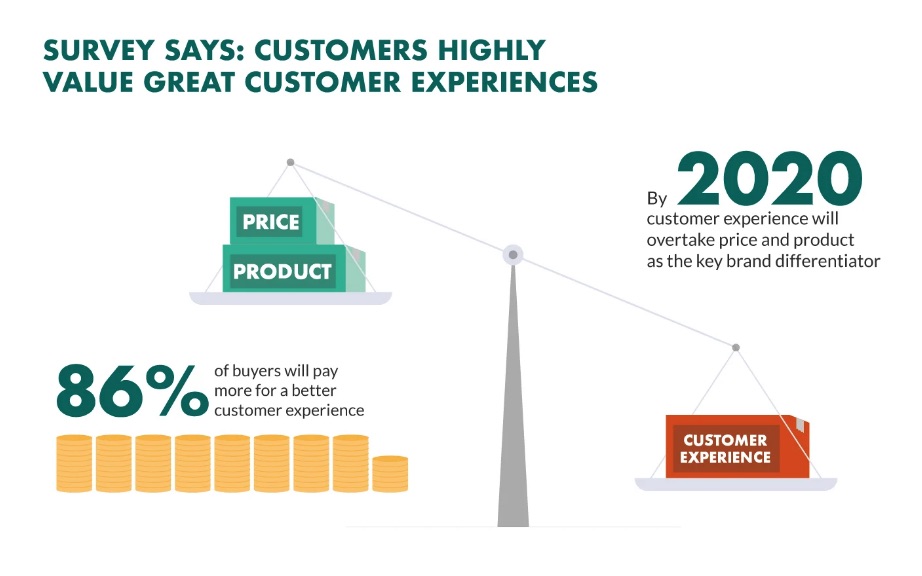
This optimization can drive more revenue as well. In fact, 86% of buyers are willing to pay more for products when there’s better customer experience:
Creating a SSOT for engagement data makes it possible to analyze and learn exactly what kind of marketing message helps turn leads into paying customers. Having all your engagement data in one place helps you fill in gaps in the customer journey, especially with cross-channel interactions. For example, using the right marketing intelligence platform, it’s possible to see how leads discovered through Google search converted into paying customers through a Facebook ad.
Using insights like these to optimize your cross-channel marketing investment, deliver a more relevant message, and improve customer service overall can help drive your bottom line significantly. Creating a single source of truth will require a financial investment in terms of software technology, but it’s always worth the ROI it brings.
Once you understand what establishing a SSOT really means for your business, you need to set up an effective system to make it happen. With the amount of relevant business data out there, this is no simple task when done manually. You have to collect data from each marketing channel, unify it into a single system, store it, and analyze it. You also need to be able to update your data feeds quickly to keep up with the latest insights.
All these things considered, investing in marketing analytics software is the best way to move forward. Rather than just adding another tool to your arsenal, the right software can serve to replace tools you already use for storing and analyzing data from different marketing channels.
There are many options out there for marketing analytics software. Here are some factors to consider to help you choose the right option for your needs:
Most importantly, you need a tool that can collect data from all relevant sources. There are many tools that can pull together all your social media and advertising engagement data. However, you likely have other data that is relevant to your business, such as call center interactions, offline revenue data, or historical performance data.
How often does your analytics tool pull data? Weekly, daily, hourly, etc? Having up-to-date engagement data is incredibly valuable, especially if you’re investing in PPC advertising.
Make sure your software has all the features you need to analyze your engagement data the way you want to. Some solutions can create customized metrics based on what’s most important to your business. Make sure your solution also provides access to historical performance so you can use these insights to optimize future campaigns.
Best-in-class marketing analytics tools provide AI-driven automation features to help you get the most out of your data insights. Automating analytics reports is one example of this. Before investing in a tool, make sure it has the automation capabilities you need to maximize the value of having a single source of truth.
Most marketing analytics software solutions are self-service tools. However, some businesses may want and need guidance from professionals about how to maximize the value of their data insights. In that case, consider investing in a software solution that offers additional agency services to help you with your strategy.
The vast majority of marketers today work with disparate tools to analyze campaign performance. In the future, creating a single source of truth will become the standard for any organization that wants to invest in cross-channel marketing. The technology needed to create a centralized location for their data is already readily available and marketers that prioritize implementing it now will set themselves up to benefit the most in the long-term.
Staying on top of the tricks of the trade has become increasingly complicated for media buyers. Many factors make it difficult to maintain an updated knowledge base in the industry—from the emphasis on programmatic buying and self-service ad tech solutions, to the ever-changing nature of the advertising landscape.
As the leader of industry-recognized adtech client education program Centro Certified, Christine Kim finds ways to help clients stay on top of it all. In this episode, she shares why curriculum-based education programs are so important for ad tech professionals, how she brought Centro Certified online when COVID-19 hit, and where she sees the program going once social distancing is no longer required.
Can advertisers still meet goals in a cookieless future? Centro is ensuring it.
Even when third-party cookies are being blocked by major browsers, Centro is creating solutions for advertisers to find audiences. Agencies and brands have been relying on Centro and its technology platform to place the right ad at the right time in front of a user based on interest, context or topics. This process is activated using Centro’s Basis, the industry’s most comprehensive, automated, and intelligent digital media platform—and the only software solution of its kind to consolidate digital operations across programmatic, direct, search, and social campaigns.
Much of digital advertising today relies on cookies (both first-party and third-party) to find audiences and measure effectiveness of campaigns. Major browsers are already blocking third-party cookies and Google Chrome will do the same within two years, making marketers justly nervous about the effectiveness of their campaigns. Yet, Centro’s partnership with Adstra to combine technology tools and privacy-compliant audience data demonstrates what cookieless advertising could look like.
Adstra delivers unique audience segments. It absorbs any form of identity (individual or household), assigns a persistent ID connected to attributes data, and actions against any other media or form of identity. Its segments are based on real-world deterministic, validated data – location/fact-based data – and are anchored to real people at real addresses with hundreds of individual attributes. Adstra allows safe, compliant and economic access to any form of data, with any form of identity and any form of applied analytics, for use in any medium, to make decisions in real-time or periodically. Primarily built with multiple offline sources, these people-based audiences provide superior accuracy for precise targeting while ensuring privacy compliance. Adstra audiences are used for B2B and B2C campaigns in retail, health, luxury, pharma, education, auto, finance, political, travel, and many other industries.
The following show the success Centro clients have had on campaigns targeting Adstra audiences.
Healthcare
Adstra’s healthcare segments have been one of the highest performing for audience targeting. In a recent campaign, the average CTR of Adstra segments in this space was 12% over the industry benchmark, and delivered 75% of daily impressions for the tactic. The granularity of Adstra’s segments in healthcare is a valuable trait. Adstra provides niche segments with scale, allowing marketers to reach people who are being affected by very specific conditions or diseases. It shows which audiences are resonating best with the brand’s media. In one hospital network campaign, rather than targeting a broad audience of people likely to seek medical attention, Centro’s client began the campaign with over 12 Adstra segments, all very specific to different conditions/diseases. Within a few weeks, the campaign showed the top performing audiences were New Parents and propensities for Cardiovasular, Gastrointestinal, Asthma, and Arthritis related issues.
Automotive
The granularity of Adstra’s audiences showed its value for a car tire campaign seeking to reach a very specific customer – people in their mid-20’s to mid-50’s who owned a car from 2018 or older – all within a very small demographic. Adstra delivered a custom segment that matched these exact requirements, that has both scaled and performed throughout the course of three campaigns for the brand. This specific segment produced one-third of total conversions for the campaign, and the second highest CTR for the campaign.
According to Keith Sklar, Adstra’s sales director of data and identity solutions: “We are extremely proud to partner with the great team at Centro in providing quality data, solutions and service. As the industry continues to change with data, privacy and technology, we recognize the importance of speed, flexibility, cost and restriction-less ease across all media, and are continually adapting and ensuring that our partners are prepared.”
Interested in understanding how Centro can help you find customers with precision and scale? Learn more about our tech solution, Basis, here.
Centro has been positioned as a Challenger in the recently released 2020 Gartner Magic Quadrant for Ad Tech. Gartner is one of the most influential analyst firms for the technology industry and offers unbiased views and evaluations.
The Magic Quadrant is a report Gartner publishes for specific industries. Gartner provides the following definition, “Magic Quadrants offer visual snapshots, in-depth analyses and actionable advice that provide insight into a market’s direction, maturity and participants.”
The reports focus on transformational technologies or approaches delivering on the future needs of end users. According to the report, “Gartner defines the Ad Tech market as technology for managing digital advertising across channels, including display, video, over-the-top/connected TV (OTT/CTV), mobile, social and search with functions for targeting, campaign design, media buying, analysis, optimization and automation.”
According to Gartner in its report, “Challengers in this Magic Quadrant perform as well as (or better than) Leaders but tend to focus more narrowly on certain channels, strategies or nonenterprise buyer profiles. Challengers are positioned close to the Leaders Quadrant and, in many cases, their specialization is an advantage to some buyers.”
Companies enter a rigorous evaluation process for the Magic Quadrant designed to qualify the technology providers in our market. Centro’s technology platform, Basis, is cited in the report as having multi-channel and multi-process ad orchestration capabilities, thorough programmatic fundamentals and wide-angle perspective on analytics and performance. The report is available for Gartner subscribers at: https://www.gartner.com/doc/3990727.
But wait, there’s more!
There’s a reason why Centro’s SaaS solution, Basis, is the industry’s most comprehensive, automated, and intelligent digital media platform in the industry. We’ve packed in a wide breadth of tools, features and functionalities—Basis is the only software solution of its kind to consolidate digital operations across programmatic, direct, search, and social campaigns. These are designed to handle the most important aspects of media organizations and media teams. Basis’ triple digit percentage growth this quarter is a testament to its utility for agencies and advertisers of all varieties.
A sampling of our recent product additions showcase how we drive users towards success. Among the most notable developments this year are:
Other enhancements are coming soon for connected TV, audience targeting, user interface, and more! Interested in a preview of our product roadmap? Please don’t hesitate to reach out directly at [email protected]. Visit our site to learn more about how Basis helps manage your digital advertising and business.
Gartner Disclaimer
Gartner does not endorse any vendor, product or service depicted in its research publications, and does not advise technology users to select only those vendors with the highest ratings or other designation. Gartner research publications consist of the opinions of Gartner’s research organization and should not be construed as statements of fact. Gartner disclaims all warranties, expressed or implied, with respect to this research, including any warranties of merchantability or fitness for a particular purpose.
Centro’s Candidates and Causes team has been at the forefront of political advertising in digital media since 2006. In our Election Advertising 2020 series, they share insights for advertisers ahead of the U.S. 2020 General Election.
Programmatic
Centro forecasts the impact of election ad spending on programmatic demand primarily in the final five to six weeks leading up to the election. Rates are expected to increase by 15-20% or more during this timeframe, particularly for video inventory and in key battleground states.
Social
With many social platforms restricting or limiting political advertisers, increased demand and rates will be most seen on Facebook’s family of apps (Facebook, Instagram, WhatsApp, and Messenger) due to the large scale, targeting capabilities, and overall performance.
Search
Google prohibits political advertisers from targeting voters outside of geography, age, gender, and contextual alignments across search, display, and YouTube.
Despite these regulations, we don’t expect to see a decrease in ad spend within the Google Properties based on the high visibility of these platforms. Due to the specificity of keywords that can be applied within paid search, the increased traffic should not affect rates for advertisers outside of the political sphere.
Site Direct
Site direct investment has been decreasing steadily since 2012, largely due to programmatic technology and the availability of high-quality targeting at scale. Despite this, there are site direct partners that have seen significant ad dollars for political messaging.
Hulu, for example, was a standout partner for Centro in 2018 and is expected to be a big player this fall. Local advertisers should anticipate inventory constraints in these final two months across key battleground states. National advertisers are unlikely to see much impact given the scale of these platforms (Hulu, Pandora, YouTube, etc.)
Video is the preferred format for political messaging, due to its storytelling ability. TV will continue to have the bulk share of ad spend in 2020, with broadcast networks and cable TV expected to account for 53% and 17% of total political ad spend, respectively1. Online video is expected to be the primary format within digital, with connected TV spend expected to be as high as $720 million in 20203.
According to a recent Nielsen study, while traditional TV usage is beginning to normalize post-shelter-in-place restrictions, connected TV usage remains above pre-COVID-19 levels. It’s estimated that approximately 40% of ‘persuadable’ voters do not subscribe to traditional TV services5, further illustrating the power CTV will have in reaching voters during this final stretch of campaigning.
Whether through direct partnerships (i.e. Hulu, Roku) or programmatically in the open exchange and private marketplace deals, non-political advertisers running in battleground states or key congressional districts should expect to feel increased competition and demand. Centro recommends padding desktop and mobile video rates by 10-15% and further cushioning CTV by 15-25%.
Read Part 1 and Part 2 of our Election Advertising 2020 series to learn more about how this election season will impact advertisers.
Learn more about Video Advertising with Centro.