
Technology
Basis Platform
Advertising Operating System
Communication Portal
Intelligent Collaboration
All Channel Activation
Activate Media on Every Channel

Consulting
Resources
It’s Wednesday and while you enjoy that dark-roast coffee, you read the morning news from your tablet. An hour later, you are listening to your favorite songs from your phone as you ride the commuter train to work. When you arrive at the office, you fire up your laptop, and continue working on a research project you started earlier in the week. You look back at your phone to check the time, and do a quick scan of your social media accounts. Back to work! 11:40 am has arrived and you’ve been switching devices back and forth since you woke up. At the end of the day, once home, you buy tickets for a show on the weekend – you can’t recall how you know about the show, just that you want to go.
While you’ve been focused on information of interest all day, you’ve also been seeing ads and engaging with products along the way. And doing so from your phone, tablet, laptop, and sometimes from more than one device at the same time. As advertisers, it’s imperative to understand how to properly maximize the amount of exposure consumers have with our brands.
Cross-device targeting and tracking gives advertisers the ability to reach individuals on multiple touch points, providing a seamless experience across all devices. Centro has teamed up with Tapad to facilitate this in Basis. With the assistance of machine learning algorithms, Tapad’s technology uses probabilistic and deterministic data such as proximity, IP addresses, and app logins to help classify different devices as belonging to the same person. It collects over 250 billion data points per month to create these models so it can be as precise as possible!

By powering on this feature you can experience four key benefits:
In a world where users are constantly switching between devices, it’s imperative to be able to show them the right message in the right screen at the right time. Experience the benefits of cross-device targeting now in Basis!
One of the greatest areas of optimization opportunity when it comes to AdWords campaigns involves tweaking the Geo-Targeting Settings based upon performance. For example, many campaigns are set to target only “United States” with a 0% bid modifier. It's a common practice for account managers to bid at the state level with seemingly random bid modifiers based upon perception of performance or perception of need, instead of actual performance. In today’s hypercompetitive ad marketplace, such a strategy shortchanges your business performance. We can show you how to do better.
First, assuming you’re in the new AdWords UI, go to the following location:
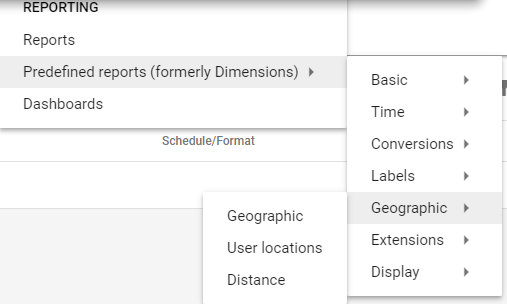
You’re going to see a Geographic Report of your data based upon the dates you’ve selected. Looking at the data contained in your report, you might see something along the lines of:
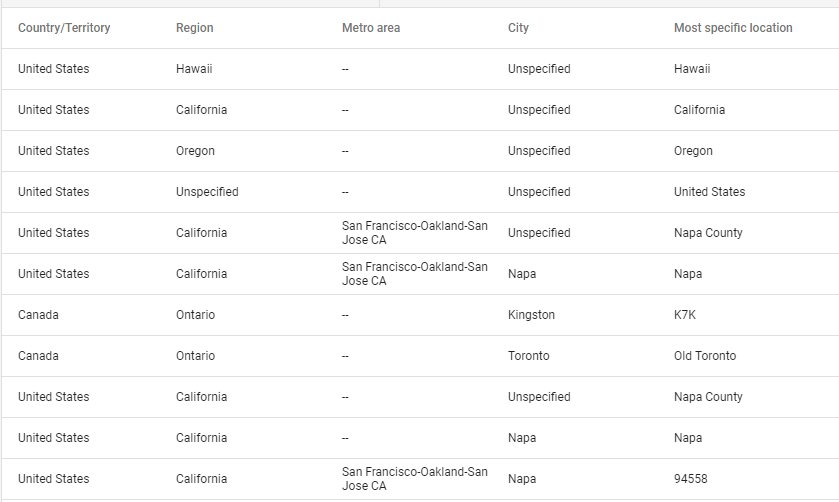
Within this little report snippet, we can see how deep Google can segment the data geographically. We can get data at the Country Level (e.g. US); Region / State (e.g. Hawaii), Metro Area (e.g. San Francisco metropolitan area), City (Napa), Neighborhood (e.g. Old Toronto), US Congressional Districts, or Zip Code (e.g. 94558).
Next, create a quick pivot table counting the number of conversions at the “Most Specific Location” Level. What is the deepest level of specificity that you’re seeing sufficient conversion volume? If you’re seeing individual neighborhoods or zip codes getting batches of conversions (as opposed to lots of 1’s and 2’s), you can successfully bid to the most specific levels of AdWords geography. If the Neighborhood / Zip Code data is sporadic, then, you might eliminate the “Most Specific Location” column from your data and bid to the City or metropolitan area Level. Unless you have low conversion volume, you should be able to increase the efficiency of your campaign by geo-bidding to the City or metropolitan area Level (as opposed to the state or country).
Here’s another thing useful tidbit of information: AdWords isn’t able to track 100% of its users to the most specific location levels. For example, if you click on an ad while on your cell phone while on the Interstate in a rural area (hopefully not while driving), Google might just be able to track you just to the State that you’re in (or perhaps not even that). Therefore, even if you decide to implement a very specific course of geo-bidding, you’ll need to include Countries and States as part of your structure as a catchall for all your traffic that will get missed with the most specific geo-targeting.
When you decide on how deep to segment your data, pull a report that contains the geo-segments, cost, conversions, and CPA (including Total CPA). We need to figure out what bid modifier to use for geo segment.
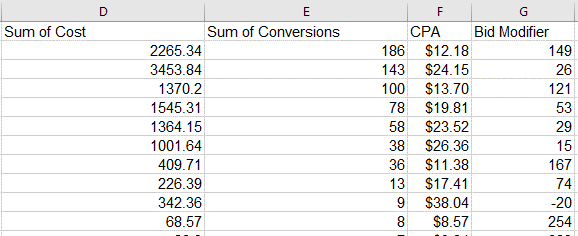
In our example, our account CPA happens to be $30.33 and as you might expect, the top Geo’s for the account tend to have better than average CPA’s. We calculate the bid modifier for each of these Geo’s by taking ($30.33 – Geo CPA) / Geo CPA * 100 which gives us some pretty large numbers in the bid modifier column.
However, experience tells us that having bid adjustments greater than 100 or less than -70 isn’t a good idea. Super high bid modifiers lead to unpredictable results and super low bid modifiers tend to quash traffic. So, for the geographic locations that fall outside that range, we make some manual modifications…
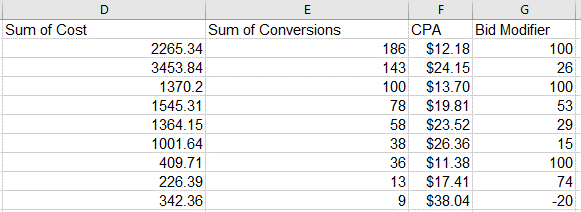
Now, we need to get the data ready to upload to AdWords. You are going to upload your data into the locations tab for every campaign you wish to adjust. AdWords has a check locations functionality, but it’s far from perfect if, for example, you just decide to upload your geo as “Napa”. So, you’re going to want to do the following with your data spreadsheet:
Arrange all the remaining data columns from left to right in the order of most specific to least specific (e.g. Most Specific Location / City / Region / Country).
Merge the fields into one with commas separating each data point. We usually do this by pasting the data in Notepad, making the adjustment, and then pasting the altered data back into Excel.
Then, upload the data into AdWords (and validate the data with tools or other platforms).
Manually check your locations for errors. I’ve found that Google fails to distinguish Washington / Washington DC, Kansas / Kansas City, Oklahoma / Oklahoma City, Indiana / Indianapolis, and New York / New York City, among others. You may need to do some manual tweaks.
Then, upload your data.
We’ve seen as much as a 15-20% increase conversion yield from a thorough bidding modifier scrub / update. We also see the overall spend trend slightly higher, so make sure you adjust your budgets accordingly. Account dynamics change over time, and we recommend period reviews and adjustments of bid modifiers in all AdWords Accounts.
It’s easy to miss all the opportunities available for optimization in AdWords, especially given all of the work on your plate as an SEM professional. But you simply can’t afford to miss them because by finding the time to fine-tune your targeting and bid adjustments, you can make huge improvements in your overall program performance.
How would you determine the best demand side platform?
Demand side platforms (DSPs), digital campaign management software that provide advertisers features for buying ad placements on digital channels in real time, are plentiful in the market. Determining the best one depends on who you ask, what problem they want to solve with a DSP, and how they evaluate success. Asking an analyst – who is basing their answer off of specific criteria, reports, and data – might yield a different opinion than an actual user, such as a media buyer.
And so the better question to ask may have to be specified even further: How do you determine the best demand side platform that exceeds user needs and the needs of a digital buying team? To measure that accurately and objectively, you’d need feedback from actual users based on a criteria important to the person operating the software, like how easy it is to use the software, do they get ample support from the vendor, and what features are the best.
A trusted research tool for software, G2 Crowd is a review site for business technology. G2 Crowd continually collects, aggregates, and analyzes user reviews, where its analysis is captured in the G2 Crowd Grid Reports. The Grid is developed from a combination of robust algorithms that pull in data points from product reviews shared by validated users and data aggregated from online sources and social networks. Users ranking and reviewing DSPs are basing their criteria off a number of factors, including DSP functionality/features, ease-of-use, quality of support, and ease-of-working with the vendor. The report plays a critical role in the evaluation process of thousands of software buyers globally, who use the Grid to help them quickly select the best DSP products for their businesses and to find peers with similar experiences.
The latest Grid Report for Demand Side Platform Software was released this month, and the report ranked the top DSPs based on satisfaction and market presence.

Centro’ Basis is the Leader in Demand Side Platform Software
Based on the chart above, you’ll see the leaders category is populated with software solutions and tech companies that exceed client happiness in both market presence and satisfaction. Basis received the highest G2 Score (92) among the competition. Furthermore, 98% of Basis users rated it 4+ stars, 90% would likely recommend it, and its ‘Quality of Support’ received a 95% rating.
Also worth noting is the Net Promoter Scores (NPS), where Basis received a ‘69’ out of a range from -100 to +100. As a comparison, the average score of all the DSPs in the report is ’27.’ The concept of NPS highlights the link between profitable growth and customer loyalty. For most industries, the best indicator of customer loyalty could be measured by asking people how likely they would be to recommend a particular company to another person. A company’s NPS is the percentage of promoters minus the percentage of detractors. A high NPS indicates that a company delights its customers and will, therefore, endure.
Why does this matter? When you invest in a software solution, it’s important to know the product will be there for the long haul – with regular updates, consistent and quick support, and the stability to deliver on its promise of growing your business and driving revenue.
Impacting the Future
Without our customers using and loving Basis, we wouldn’t be able to celebrate this win. Customer success is the driving force behind our product and our continued innovation:
Read user Lisa W.’s review on G2 Crowd.

G2 Crowd’s report gives Centro an objective and honest look at where we can improve Basis, how the competition stacks up, and what users want from the digital marketplace. It benefits potential buyers by allowing them to crowdsource information and hear from industry peers on what works for them, what doesn’t, and why.
If you are in the market for a media planning, buying and analytics solution, we encourage you to read the results. Download the report and contact us at [email protected] to get a demo of Basis, the No. 1 demand side platform!
If an ad appears on a website but users don’t have the opportunity to see it, was the ad really shown?
Every year billions of dollars are spent in display ads. Advertisers are consistently developing more creative units to attract and engage customers, while publishers continue to improve their sites so ad placements can be seen by visitors. However, not all ads have the chance to be looked at by humans, resulting in an unfortunate waste of ad dollars.
One of the mechanisms that has surfaced to address this problem is the introduction and standardization of viewability. The Media Rating Council (MRC) deems viewable an ad for which at least 50% of the pixels are in view for at least one continues second, to ensure that they can be seen by the human eye. Media-tech and mar-tech companies have developed two strategies to achieve this goal in the form of pre- and post-viewability solutions, both available in Basis.
Pre-bid viewability uses historical observations and measurements about an ad placement before making a bid on it. If the technology determines it meets the criteria chosen by the client, it will bid on the placement, otherwise it won’t. These are available as segments provided by some of our partners including: comScore, Double Verify and Peer 39.

Post-bid viewability is the true measurement of an impression, informing you if an ad was viewable or not. To introduce this in Basis, Centro has partnered with Pixalate – the first and only data platform with a comprehensive suite of products specifically built to bring transparency to programmatic advertising. They are a MRC accredited vendor for display ad viewability, and Sophisticated Invalid Traffic (SIVT) detection and filtration for desktop and mobile web traffic. Unlike other vendors, they provide a higher degree of transparency, supplying Basis users with information on viewability down to the placement level. Tracking viewability results can be done by enabling the feature in the campaign editor.

So which one should you use? The good news is you can implement both technologies at the same time to evaluate if you are achieving the goals you desire!
Applying a pre-bid segment with a viewability rate greater than 70% means that your ads will only bid on placements that have been categorized to have a high viewability rating, however you may want to know what these inventory sources are and what their exact rating is. Enabling post-bid viewability measurement will let you know exactly how many impressions purchased were measured, and viewable. Having this insight allows you to optimize inventory accordingly, or make changes to your campaign’s settings. Is a particular ad size or creative type having a better response than others? Is a placement in a site relevant to your product not performing the way you expect it to? Is web traffic on certain days higher, thus creating too many distractions for customers to see your ads? You can use all these data points to make the improvements in the way your campaign is set up to attain your end goal!
If you want to see our post-bid viewability in action, contact us today.
At Centro, we know that keeping up with the trade pubs and latest trends can be tough and time consuming. To make that easier, we’ve compiled all the articles, reports, and other bits of awesomeness you may have missed, but should definitely read. Enjoy our latest list below!
Kantar Millward Brown found that 71% of U.S. internet users believe ads are more intrusive than they were 3 years ago, and nearly 80% feel they are seeing more ads in more places now. U.S. adults spend an average of 12 hours and 5 minutes a day with media (and 6.8 hours sleeping). If we make sure all the ads they’re seeing during the day are awesome, will they dream about them?
While the vast majority of internet users (88%) believe the internet has been a mostly good thing for them, this number has declined slightly over the last four years. The proliferation of fake news and realization of spending too much time with their devices can be attributed to the decline. Also, noteworthy in the report – 1 in 5 Americans don’t have traditional internet service in their home and are smartphone only.
Four out of the five digital display ad dollars spent in the U.S. today happens programmatically. Mobile, Native, Video, and Social all continue to contribute to the rise and shift to programmatic buying, along with the increased ability to streamline the buying process and more smartly target audiences.
During Q1, Ads.txt adoption increased 269%, according to a new report that features data and insights collected by Pixalate. This report also shows which exchanges and top sites show up most often on ads.txt files.
P&G kept ads off YouTube for more than a year due to concerns about brand safety. But over the past year, P&G has been working with YouTube and feel the right measures are now in place for their brands to advertise. Part of the measures include exclusively running on video content that has been reviewed and approved by their teams, something not scalable for most advertisers.
Guidelines for Identifier for Advertising on OTT Platforms was released by IAB Tech Lab with recommendations on how to maintain a high-quality advertising experience with OTT, which is the second most popular method of video consumption after linear TV.
Just prior to a recent underwhelming earnings report, Snapchat has increased their push of Augmented Reality (AR) ads. Snap is considered an AR innovator based upon their launch the sponsored lenses back in 2016. Business Insider breaks down some of the ad variations available to advertisers today.
May's DIAL is also available as a PDF.
The customer journey is changing quickly, and it’s not all because of technology. Big data and the necessary legal regulations that follow have a huge impact as well. The General Data Protection Regulation (GDPR) is a new regulation that’s changing the way marketers can advertise to EU citizens. It’s the biggest regulatory change in data privacy in decades, and the deadline for compliance is fast approaching. Companies that don’t comply by May 25th, 2018 can face fines of up to 20 million Euros or 4% of annual global turnover.
Despite these threats, many businesses have done little or nothing to comply to GDPR. Hubspot did a survey in November and found that only 15% of companies had done anything to become compliant.
That’s likely because they don’t know anything about GDPR (36% of marketers hadn’t even heard of it in November) or they think it doesn’t apply to them and their business. That’s why we created this guide, to detail exactly what GDPR is, how it affects advertisers, and what changes you need to make to be in compliance.
|
Disclaimer: The GDPR is a 200-page document that covers data privacy reform for companies in a variety of contexts. Our guide is meant to illustrate how it can impact advertisers, but it’s not meant to be a complete resource on GDPR compliance. Use this guide as a starting point, then enlist the help of legal professionals to ensure your business is in full compliance. |
The GDPR is a regulatory act adopted by the European Parliament in April 2016. It’s aimed at protecting data and privacy for all individuals within the European Union, and addresses the export of personal data outside the EU.
Many advertisers make the mistake of thinking the GDPR doesn’t apply to them if they don’t have a business presence within the EU. But if your business processes any personal data of European residents, the GDPR will affect you.
Here are some of the main points businesses will need to address when managing the data of EU citizens:
Businesses must comply to strict record keeping requirements when handling personal data
Businesses must conduct privacy impact assessments
Personal data can only be used with the express (not implied) consent of consumers
Consumers have the right to be forgotten and a right of data portability
Businesses must adhere to communication protocols if consumer data is breached
Essentially, businesses need to get consent to collect personal data from their audiences, then take steps to ensure they handle it properly.
GDPR’s definition of personal data is very broad, including a number of online identifiers for profiling and identification that advertisers use. Here’s their own wording on the topic:
“Natural persons may be associated with online identifiers provided by their devices, applications, tools and protocols, such as internet protocol addresses, cookie identifiers or other identifiers such as radio frequency identification tags. 2This may leave traces which, in particular when combined with unique identifiers and other information received by the servers, may be used to create profiles of the natural persons and identify them.”
For your purposes, you can assume personal data to include:
Broadly, any information that can tie to a person’s identity is personal data. This includes information advertisers use to segment audiences based on interests, political leanings, ethnicity, etc.
Marketers are no longer allowed to use passive methods that imply consent for data use. Now consumers must take an action indicating that they are okay with their data being collected and used.
That means:
You can’t bury consent in the Terms & Conditions. It must be up front and center so consumers understand they’re giving consent.
No more pre-checked opt-in boxes that consumers can overlook. They must take action to opt in.
No more “By continuing to browse our site you accept our use of cookies” notices.
Consumers must be able to quickly and easily revoke their consent at any time.
Businesses must also be prepared to provide individuals with their personal data upon request.
For advertisers, GDPR impacts the personal data you can collect on consumers for ad targeting, how you store and use that data, and how you get permission to use it in the first place. Advertisers who use data science for search engine marketing need to take special care to ensure they’re in compliance.
The GDPR assigns responsibility for compliance to three main roles:
Data controller — Responsible for defining how and for what purpose personal data is processed.
Data processor — Groups that maintain and process personal data.
Data protection officer (DPO)
The data controller is responsible for ensuring outside contractors comply with GDPR when handing data, while the data processor is also liable for non-compliance with GDPR guidelines. Essentially, both you and the advertising platform you work with have obligations for data protection. For companies that store and process large amounts of personal data (e.g. banks or hospitals), a DPO is also necessary within the organization. This doesn’t apply for most advertisers.
Whether your organization is considered a data controller or processor depends on where the data came from. It’s an important distinction to make as it affects your responsibilities under GDPR.
If you’re advertising through Adwords or Facebook using data they collected from consumers for ad targeting, then they’re both the data controller and processor, and you have no additional obligations to protect data under GDPR. What changes is when you use your own consumer data with these platforms for ad targeting. When using conversion tracking cookies, remarketing ids, Customer Match and other data collected from your site, the responsibility lies on you to obtain consent and explain what the data will be used for.
Let’s look at an example for Adwords advertising. If you tag your site to build remarketing lists for search ads (RLSA), then Google’s the data controller, not you. If you upload a email list to run a customer match, then you’re the data controller and all responsibility lies on you to comply with GDPR requirements.
If you use Facebook for advertising, your obligations for GDPR will also depend on the kinds of ads and features you use. Facebook has its own guide for GDPR consent you can refer to. If you use the Facebook Pixel to collect additional consumer data for ad targeting, Facebook is both the data controller and processor. They’re responsible for protecting the data, all you need to do is clearly explain your cookie policy and gain permission from visitors to use their data.
If you upload a Custom Audience to Facebook, you have responsibilities to properly collect and protect data. They’re actually in the process of developing a Custom Audiences permission tool so advertisers can provide proof that they obtained proper consent.
Luckily, if you’re already GDPR compliant for Facebook ads, you won’t need to do anything additional for Instagram, since Facebook owns it.
YouTube ads work in a similar way. If you’re using remarketing ads, affinity audiences, in-market audiences, similar audience, etc., then you need to get consent to use consumer data. If you’re using YouTube’s internal targeting features, the responsibility is on them.
Even with an explanation, your obligations can be confusing. Just remember that if you collect any data from your audience for advertising or otherwise, you need to get permission, fully disclose what you plan to use it for, and take proper steps to ensure data management and security. Adwords, Facebook and other advertising platforms will do the same.
Even if you’re not currently using personal data for advertising, it’s best to be proactive and create a framework for compliance with GDPR standards. After all, transparency with your audience is a good business practice all around, whether they’re located in the EU are elsewhere.
Here are 5 steps you can take to start on the road to compliance before the May 25th deadline:
1. Audit your existing data
The first thing you should do is perform an analysis of your existing data to see how it’s already being used. Use this audit to develop processes to gain compliance for existing data and establish new practices to capture data.
Your audit should answer questions like:
Who are our data subjects?
Where do we keep their data? Who has access to it?
For what legal purpose do we have their data?
How are we processing their data?
You’re going to need to disclose to your customers how you plan to use their data and what third parties you might share it with. Therefore it’s important to start by mapping out where their personal data is held so you can be as transparent as possible.
2. Establish new practices for data collection
Next you need to change how you collect personal data from your audience. Start by changing the way you collect cookie data for site visitors. Be very transparent about what the cookies are used for, ensure your site visitors must take action to approve the use of cookies, and make it easy for them to opt out.
Do this the wrong way and you can end up ruining cookies as a data source for advertising. Many visitors will blanketly opt out if you present them with a binary consent option (cookies or no cookies). Instead, illustrate how cookies are helpful for their user experience and give them options for what kind of cookie data you can use. Here’s a good example:
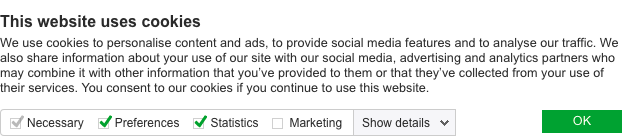
There are tools available, such as Cookiebot, that can help you create custom GDPR compliant cookies.
You may also need to rework the opt-in forms you use on your PPC landing pages for lead generation. Say for example you use display remarketing to direct users to a gated lead magnet on your site. You may want to put an un-ticked opt-in checkbox at the bottom of the form allowing users to choose if they want to receive future marketing emails from your business. Or you could explain at the bottom of the form that by signing up, they agree with your privacy policy.
3. Create a data protection plan
If you’re collecting consumer data (not your advertising platform), then GDPR requires that you have a data protection plan for internal business processes. Draw out a clear data security plan for your business that’s in line with GDPR requirements. Here are some important points to consider:
The right to be forgotten
Under GDPR, users have the “right to be forgotten,” which means they can request their personal data to be removed from your databases or cookie pool at any time. Procedures should be in place to properly purge data if and when users want to be removed from your databases.
Requests for personal data
Users also have the right to request personal data they’ve provided to your company. You’ll need procedures in place so you can easily provide personal data “in a structured, commonly used and machine-readable format.” A CSV file should be sufficient.
Procedures for handling data breaches
Include procedures for addressing data breaches, so you can report necessary information to involved parties in a timely manner. GDPR mandates that data breaches should be reported to all consumers and respective bodies within 72 hours.
4. Review/revise your privacy policy
Your existing privacy policy may include clauses or language that aren’t in line with GDPR standards. Review your privacy policy and look for changes you can make, such as eliminating language related to implied consent.
In order to be fully compliant with GDPR requirements, your privacy policy should fully disclose to consumers what you plan to do with their personal data in a clear, concise, and transparent manner. It should address important areas like:
Who is collecting data?
What kind of data are you collecting?
Your legal basis for processing the data.
Who you plan to share the data with.
How you will use the information.
How long you plan to store the data.
What rights the data subject has.
How data subjects can raise complaints, request their data or request its deletion.
To get an idea of how to word your privacy policy for GDPR compliance, you can refer to templates provided by the EU GDPR Documentation Toolkit.
5. Seek Privacy Shield certification
Privacy Shield is a framework developed by the European Commission, Swiss Administration and the US Department of Commerce to develop a mechanism to comply with data protection requirements when transferring personal data for transatlantic commerce. Seek out and obtain certification under their standards. Do this before GDPR comes into effect to ensure you’re in compliance.
On the surface, GDPR can seem like a marketing challenge that hinders your ability to collect and drive advertising insights from consumer data. But fully complying with GDPR mandates actually helps ensure you’re marketing to the highest value leads when they do opt-in.
It may be by force of law, but advertising platforms and advertisers alike are making positive changes to ensure they market to people who really want to be targeted with advertisements. While these changes might reduce your pool of marketable leads, it does improve the quality and effectiveness of your advertisements immensely.
Now that you’re targeting a smaller base of engaged users, ad costs are bound to go up. That leaves even less wiggle room in advertising budgets for wasted ad spend. Artificial intelligence and bid automation tools to accurately allocate ad spend will become even more essential as advertising becomes more expensive.
There’s an endless number of options for creating a digital media campaign, but rarely does your client’s budget afford the luxury of an endless bankroll. So driving performance is key and the key to driving performance is optimization. Optimization is defined as the action of making the best or most effective use of a situation or resource and in the case of your campaign that resource equates to money.
In the generation of evolving technology, making guesses in order to optimize your campaign is no longer a viable option. There are too many risks involved, too much time required with manual analysis and the chances of success cannot be guaranteed. You want to achieve your campaign KPI as efficiently and effectively as possible. Enter machine learning optimization.
Our model-based technology leverages machine learning and a unique algorithm to maximize a tactic's performance. Basis collects data from more than 30 tactics parameters, at the brand level, to dynamically create models in real time to optimize towards a desired CPC goal. And it is constantly refining its model to best achieve that goal. By determining a unique price per impression based on the likelihood of meeting goals, the optimizer maximizes spend and saves time for buyers.
The optimization capabilities in Basis started with algorithmic optimization and with the introduction of machine learning optimization, media buyers can now opt for optimization with granular control or they can put intelligence in the driver’s seat.

With two cool optimization options in Basis, how do you know which to use?
| Algorithmic Optimization: Want the option for granular control? |
Machine Learning Optimization: Want to put intelligence in the driver’s seat? |
| Ideal to help you monitor the inventory in which your campaigns are buying. | Ideal for campaigns where you need multiple variables to be evaluated. |
| Choose from five different options to optimize against: CTR, eCPC, eCPA, eCPCV, and VCR. | Let the technology evaluate over 30 different targeting parameters to create an ideal optimization model for your campaigns. |
| Determine how the algorithm will work for you by setting the objectives and advanced control values. | Allow the optimizer to submit smart bids based on the probability of the impressions won, giving you the results you expect. |
| Work with the optimizer by modifying individual domain, exchange, or placement bids or status. | Permit your campaigns to learn from each other and aggregate success results to increase performance. |
There is an incredible amount of data available to media buyers and this level intelligence wouldn’t be possible for humans to produce on their own, let alone in real-time. Machine learning delivers a greater depth of knowledge and the ability to make buying and placement decisions instantly. The most significant benefit of machine learning for media buyers is its ability to continuously learn from data produced by any campaign. This allows the programmatic technology to react to changes in campaign performance and continuously improve results.
No matter how we’ve described machine learning optimization and Basis here, the best experience is to see it in action.
Today’s marketing and advertising leaders have more data than they know how to manage. Over the last five years, advancements in machine learning have equipped marketing teams with the ability to reach customers with on-target, precise messaging. But these same strides have the potential to bring chaos to the martech industry. Around the world, data regulations are becoming more stringent. In response to heightened needs for security and privacy, ad platforms are revamping their core technologies. Rising retail fragmentation makes it tougher for brands to strengthen and fortify customer relationships.
With this challenge comes the need for disruptive leadership. It is this reason why 50% of CEOs see their CMO as the primary driver of growth for their organizations, according to Accenture Strategy: “If CMOs focus on disruptive growth, rather than on traditional growth avenues, they have a chance to impact the bottom line in a heretofore unseen way—earning the key to that corner Chief Growth Officer (CGO) office.”
But only 36% of marketing leaders surveyed rank launching new business models as important priorities. This stat likely stems from a general trend, according to Accenture, that marketing teams are also likely to take blame if targets aren’t met. Even though marketers have a wide open door to unlock new growth channels for their organizations, they’re gridlocked. One way to overcome this challenge is to capitalize on deep funnel data which can help better predict a buyer’s intent.
Reach the right customer with the right message at the right time in the buyer journey. This goal is fundamental to all marketing—and the primary driver for how companies choose effective advertising channels. Deep funnel intent data tells marketers what their buyers are searching for and how to develop tailored, high-performing campaigns. At the same time, intent data “causes a great deal of perplexity for many marketers,” writes Sean Zinsmeister for MarketingLand. “Simply put, intent data is information collected about a person’s or company’s activity.”
Deep funnel intent data, also known as first-party data, “contains highly predictive buying signals, since the content is relevant to the purchase decision — for instance, which pages a prospect touched, links they clicked on and how long they spent on each page.”
External intent data, also known as third-party data, comes from publishers, social networks, and other data aggregators such as Bombora, The Big Willow, IDG, Connexity, and TechTarget. This information helps marketers gain contextual information about their audiences.
Deep-funnel intent data enables enhanced prioritization and outreach. With an understanding of an audience’s needs, marketers can develop systems for prospect prioritization, outreach, nurture programs, and more effective measurement.
But these frameworks only scratch the surface of what is possible in marketing. Intent data also enables personalization and targeted advertising. According to Viktor Mayer-Schönberger and Thomas Range in their work in the Harvard Business Review: “To compete against digital champions, [most business leaders] will have to overcome not just scale and network effects but especially new, data-driven feedback effects.” In other words, deep funnel intent data is more than a targeting tool. It provides a mechanism for building in-depth customer profiles through data-driven attribution. Intent data helps marketers distinguish between rudimentary clicks and the buying decisions that those clicks represent.
While it’s easy to collect a variety of data points from different sources to inform your bid strategy, deriving actionable insights from them is the real challenge. Online advertisers and search marketers need to be able to quickly merge and analyze downfunnel data from various sources, such as call tracking or CRM.
Despite these challenges, the value of deep funnel data to identify and better target high quality leads is simply too high for online advertisers to continue ignoring. Using a blanket strategy to bid equally on all kinds of keywords using a simple CPA model can lead to lost opportunities and wasted ad spend. A simple portfolio strategy can cause search marketers to overspend on cheaper keywords or overspend on expensive keywords. Instead, they should be using a customized strategy to reallocate funds to target the most valuable leads.
The information leads provide after they click through to your site can tell a lot about their value and better inform keyword bidding strategies. For example, businesses typically capture good indicators of quality in their lead capture form that can be used to identify trends in where the best qualified customers come from. Businesses can derive insights from metrics like company size, address, etc. Finance or insurance companies can use credit rating, income, address, and other indicators of lead quality, for example.
While most marketers capture this information to inform lead nurturing strategies, the same data can be used to improve ad targeting. Every data point represents an action from a human or machine. The future of marketing precision is built on an ability to make sense of it all, tying signals to user behavior. In this way, deep funnel intent data can help bridge connections between digital and physical touchpoints, allowing marketers to better understand their customers and increase their relevance so they can market to them better.
AdExchanger’s PROGRAMMATIC I/O conference was held in San Francisco on April 10th – 11th this year. It’s a time that advertising, media, and tech companies come together to learn about buying, selling, and executing all things programmatic.
My favorite topics and themes from my two days were:
Along with these themes were a handful of enlightening sessions, below:
According to a study done by Ad Perceptions, DMPs are having a moment where advertisers can’t recognize who they are. When shown logos of popular and the most recognizable DMPs in the industry, only 30% of respondents were able to identify them. What’s surprising is the same study showed agencies and brands work with an average of 4.3 DMPs. The larger the client, the greater number of DMPs they tend to use. This was rationalized by advertisers feeling they had to do their due diligence, or because of dissatisfaction with their current partners.
The top 5 criteria that advertisers want most out of a DMP are:
Presenter Joanna O’Connell from Forrester brought together the data to build a story that drives insight. According to Joanna, if you find your consumer one-to-one and don’t understand the context of which you are finding them, you’re not doing a good job. It’s no longer about finding your consumer one-to-one but rather about ‘one-to-moment.’ Every moment of a consumer is different than the one that came before. It’s not simply about finding the consumer, but rather about finding them in the moment AND understanding them. What that looks like for one person will look different for another. Find your consumers wherever they need you – whether that be online or in store.
Make your DSP work for you. Jounce Media says, “Your DSP does what you tell it to do, so tell it to do what you want it to do.” Its philosophy for training your DSP were around two main ideas of choreography and coaching. The core concepts of each are:
It’s no secret that Connected TV usage is growing per day. As an industry, we have seen connected TV grow by 10x in 2017. Traditional viewership has declined and people are not watching cable TV as much as they used to. The time for Connected TV is already here as 1 in 5 hours of TV consumption is done on a streaming device, and by 2020, half of all viewing will be via a Connected TV. But, it’s not as simple as saying that people are moving from one device to another, as many people are consuming on Connected TV and cable because while we are seeing a rise in Connected TV usage, 80%+ of US households still have cable (and many people are using both). The bigger story here is that for many advertisers, it justifies a bigger spend investment in this category.
There were many more insightful topics from the conference – some with a more immediate application (PMPs, issues with third-party data), and others more conceptual (blockchain). If you are a digital media professional, I highly recommend attending the Programmatic IO conference – the next one is in New York! It’s always valuable for me to hear from other industry experts and get to talk programmatic advertising.
Learn more about the Connected TV advertising opportunity with Centro.