
Technology
Basis Platform
Advertising Operating System
Communication Portal
Intelligent Collaboration
All Channel Activation
Activate Media on Every Channel

Consulting
Resources
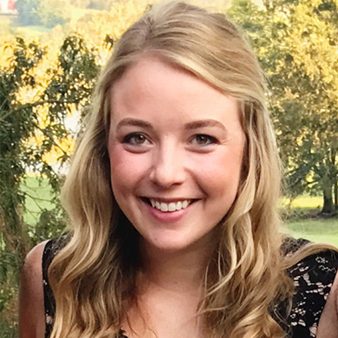



For years, market research and advertising operated in separate worlds. But as media grows more fragmented and marketers face greater pressure to prove every dollar, those worlds are beginning to merge.
On this episode of AdTech Unfiltered, Noor Naseer talks with Laura Manning, SVP of Measurement at Cint, about how advertising research is evolving. They explore how consumer insights can inform campaigns while they are still live, why first-party research can be more valuable than modeled assumptions, what AI and synthetic data mean for the future of measurement, and why the post-campaign report may finally be on its way out.
Noor Naseer: Hey, this is Noor Naseer for Adtech Unfiltered. For years, market research and adtech lived in pretty separate worlds. Research told you what consumers thought, and adtech told you what they did. And by the time the research showed up, the campaign was usually over. But that model is starting to change. Today, consumer insights are moving closer to the media decision itself, with advertisers looking for faster signals, better first-party data, and a much clearer connection between media exposure, brand impact, and business outcomes. So what happens when research becomes something you can actually act on in real time? I'm talking about that with Laura Manning, SVP of Measurement at Cint. We get into brand lift, AI, synthetic data, data quality, and why the pressure to prove every media dollar is changing what marketers expect from research. Let's get into the episode with Laura now.
---
NN: Laura, I find myself not having enough conversations about research and ad tech, so I'm excited to chat with you and learn a little bit more about Cint today.
Laura Manning: Great, thanks for having me.
NN: I'll kick things off with this question. For so many years, market research and adtech, they really lived in separate realms. Today, they're converging in new ways and you guys are playing a part in that. What is it that has allowed for this change? And why are advertisers suddenly treating consumer insights as a core part of their media strategy?
LM: Yeah, absolutely. So Cint actually is really interesting because we're a market research study company who started doing media measurement. So I started at Lucid, actually on the market research side of our business. That's kind of where I got my feet wet in this industry. And then as we build our ad effectiveness products, moved over. So I think what really is powerful about Cint is that we're able to kind of combine the power of that market research, huge set of consumer data with advertising data that we get from our partners like Basis. So we're able to see kind of like exactly how ads are moving these consumer opinions by harnessing kind of that market research backbone of the company. So it's a little bit different than somehow others in ad tech play in the space. We kind of have the power of all those consumers, but we also are able to sort of layer in advertising data, other media partners data, sales data, conversion data, whatever it might be to tell like a bigger story. I think for advertisers and for brands, it's really important those functions have been very separate at those companies. You'll have a consumer insights team who's researching the brand name Coca-Cola, and if it has 98% or 99% penetration, and then they'll have a totally different division focused on media, and we're seeing those converge as well. It really is very similar. It's just like measuring a different experience for those brands. So I think we'll see that kind of continue to shift, and I think we kind of stride against that at Cint as well.
NN: You hinted at some market signals as far as what's happening inside of organizations, but I'm curious, what has the receptivity been to offerings such as your own? And also, has there been a demand and an interest for this that signaled to you all that this is a necessary offering?
LM: The reason that we, and we started in this space in sort of ad effectiveness and brand lift probably 10 years ago now, but really what we'd heard was we went to pitch kind of this consumer insights product, the market research side of the business to a big ad agency in New York. And they're like, no, no, no, no, actually what you need to do is build a pixel and start doing brand lift. So it actually was consumer driven or customer driven rather from the start. And it was so interesting because their whole positioning was this side of the industry is very legacy and very dated. Everyone was kind of like doing research after the fact, you were getting insights about your campaign six weeks after it ended. So you're already into the next campaign, you haven't learned anything. And so we've been trying to tighten that window to sort of make it easier for customers to make a decision in real time about, is this publisher working, is this ad play working, is this creative working, to hopefully better use their media dollars.
NN: Yeah. I think back to my agency days, and sometimes we look at these post reports.
LM: And 50 pages, years later.
NN: This sounds so terrible to say, I guess I'm going to say it. This belongs in one place.
LM: Yeah.
NN: The trash can. Where am I going to use this? And there really wasn't an application opportunity. So I do love the momentum and the capacity and opportunity to optimize, actually optimize in a way where we're leveraging this type of information. So since it's in a unique position between brands, agencies, researchers and media platforms, as we've just discussed, what does that vantage point allow you to see that most companies in advertising cannot?
LM: It's so interesting because we work across such a swath of the industry, we start to see trends a lot faster. So I think one thing that was really interesting is in the pandemic, a lot of the billboards in New York City, for example, became digital. All of a sudden, everyone's asking us about measuring digital out of home. We had probably never received that question until like one minute, it's everywhere. I think it's easy for us to pick up on those industry trends because we see the full scope of the industry. We're working with the big DSPs, we're working with SSPs, we're working with premium CTV platforms, we're working with big agencies, we're working with brands, and we're able to piece together that pattern recognition of, oh, we're shifting this way. I think probably a year or so ago, we started hearing from all customers across the swath of, we need to be able to justify our media dollars up to that CFO level, at a much higher rate than we have in the past. Brand isn't enough, we're running a brand campaign, but they also want to know, did it do anything else? And so we're able to kind of pick up on those trends because we sit across such a swath of the industry and decide, oh, we should add this to our product or we should do this. And it's a very cool spot to be in, I would say.
NN: Yeah. Laura, it also feels important for me to ask you about first party data. Everybody's obsessed with first party data, but not all first party data is equally useful or we can apply it in different ways. What makes consumer insights data uniquely valuable compared to transactional or behavioral data?
LM: I think what's interesting is we have so much first party data at Cint. So things like age or gender, household income, we're collecting every time people are coming into our platform. And we'll get on calls with media platforms and they'll be like, well, where are you getting this data? And we're like, we asked them. And they're like, what? I'm like, this is real. This isn't like modeled, this isn't assumed. This is actually what people are telling us about their real lives. And I think that's really powerful because so much of the industry, even if you think you're buying a hot moms who love yoga and live in San Francisco segment, a lot of that is just assumptions made about a person that have then been modeled out to create an audience, whatever it might be. I think it's so important to hear from people themselves that you can see where those trends are, what things are happening in their real lives, and how that's driving how they react to ads. We do find a lot of data, behavioral data, purchased data, that's all very valuable too. And what we have the power of at Cint is being able to connect our identity graph and our real people into those datasets to be able to say, okay, this person told us they live in New York, they told us they love yoga, they told us that they live in an apartment, but next year they want to have a home, and they saw this ad. And then they took another action. And I think being able to tie that story together is really powerful for marketers. And that's something that I think having like a strong first party do is that allows you to do.
NN: Adtech in general is a lot of the data is based on extrapolation, right? Even cookie data, there's a predictive element to it. We just make so much presumption. I'd like to ask you, obviously, you all fall on the other side of things where you're asking, but even with this asked data, I'm curious how you're marrying that with this world of AI that's happening out there. Is there some sort of superpower data where you're leveraging AI? What does AI look like when you're marrying it with your consumer insights and data?
LM: So on the measurement side of the business, the main places we're looking to use AI are to make our customers lives easier. Instead of having to download seven different PowerPoint reports, can they speak with our chatbot Lucy to get a better export that delivers exactly what they need for their client presentation in an hour? I think those are the use cases we see immediately. We do have a division at Cent working on synthetic data which is the new world of taking a big training set of known data and then trying to use AI to create new respondents that are modeled. That's probably where the market research on the business is going, is like digital twins, like being able to see, okay, we had this core data set, we want to extrapolate that out, but we haven't heard as much about synthetic play and measurement, because I think people are so interested in making sure they are true actions that were monitored, observed, and deliver brand outcomes.
NN: I just imagine there's a lot of curiosity in that area, because everyone hears about synthetic data, but if your synthetic data is being pulled off of this high-quality first-party data, which you all are in the business of, and again, we have so much proxy data or presumption-oriented data that there's inevitably people knocking down the door wanting to know what your synthetic products are. Even if there's still a work in progress today.
LM: Totally. And there are a lot of AI companies that are also using our data to train models. So even things that aren't for research, other types of use cases, other interests, there's a lot of companies popping up who need tons of real human answers to kind of guide what their products are going to look like. So there's really a lot of interesting plays in the AI space. And I think we're early, but we're participating, would be my description.
NN: I want to ask you some more questions about application. How are brands using research data earlier in campaign planning, rather than simply measuring effect in this after the fact?
LM: Yeah. So I'd say like a year or so ago, we kind of kept getting the question of like, what's next? A partner I was meeting within New York was like, brand lift is cool, but then what? This kind of got our heads jogging a little bit. I think there's two different ways we're kind of striving to tackle the like, and then what happened piece. One is our new outcomes product, which is pulling in purchase data to be able to say deterministically this brand campaign, maybe it drove ad recall 8 percent, it drove favorability 2 percent, and then it also drove conversions and average order value increases. So being able to kind of like a full funnel journey for retailers is one way we're looking at that. The other way is optimization piece, and I think the power of our data set is that it is in real time. So we're giving daily stat tested weighted data all available via API, and we're working with platforms who can take that API and say, oh, we're running dynamic creative optimization. There's a hundred different creatives. A week into the campaign, these four are driving brand awareness. And that's something that's not really existed before. So I think that's a really powerful tool to be able to optimize and choose based on something other than a click or acquisition. Really still focused on those upper funnel metrics, but more actionable and more able to be chosen and adjusted. I think all of that is happening in this big push toward what's next is because people are getting tighter on media budgets. Everyone's answering to the CFO. You have to prove that what you're doing, even if it is a brand campaign, is helping the full funnel of your business. We're trying to fit into that as well.
NN: Are there any particular verticals or industries that have really leaned into leveraging some of the solutions that you bring to the table?
LM: The great thing is we work across the industries. So we really can do anything from like pharma, it's a big CPG, financial services. It really isn't a limitation for us. I think one use case that's really interesting, especially like in the US this year, is the political play. The political campaigns are making decisions so fast. Like your average carbonated beverage campaign doesn't need to decide in the next hour if it should spend another 100 grand or not, whereas political campaigns are like tweaking minutiae every day, all day. Some of those clients have even asked us if we could go faster than daily data. Like they want it powerfully, minutely, you know. But I think the political space is so interesting because those campaigns really need that data to help guide them. They're trying to move the message on. We worked with ad council during the pandemic on a big vaccine campaign. They're trying to decide right now, how do we reach this person and shift their perception? So there's so many interesting things you can do with that data and I think that's kind of like the next step.
NN: It's interesting to hear you say that because so often someone being a service provider or a solution provider will talk about real time optimization or will just talk about things being available real time or quickly. And then when we really start to ask questions, the speed with which we can actually access that and apply it isn't quite what we were actually hoping or wanting and it sounds like you guys are really putting a lot of time and energy into making it accessible and then applicable as fast as possible.
LM: Absolutely. I mean, we built our API with a DSP partner probably five years ago, six years ago now at this point. And so from the jump, we've had that mindset of like it needs to be fast enough for them to make actions. And at that time, it was very much like the trader is going in and making little tweaks manually. The future is obviously that's going to be done by AI, that's going to be done by agents. And so we're meeting that moment, making sure our tools can kind of plug in to the next steps, too.
NN: Laura, I want to ask you a question about trust around data. Sure. What separates high quality, trustworthy data like yours from the flood of lower quality or synthetic data that's currently entering the marketplace?
LM: Yeah, I think one thing that if you're not involved in the research space, you wouldn't know about is how much fraud targets that industry and how, I mean, we have a dedicated entire team called Trust and Safety, that their entire job is to make sure that we are catching fraudulent behaviors in our safe, secure environment before it happens. So the idea that you're then asking a question in an ad or asking a question, who knows where, and just taking that as fact is tricky. There's definitely a lot more bad actors in this space, and it's usually people who are like a bot farm in the Philippines. It's not like a person who wants to give bad data or ruin your brand study. It's like a more targeted effort. But Cint, we have a really large team that's kind of entire focus is like, A, stopping bad actors before they even get into the platform, but B, if they do, tweaking our tools to make sure that going forward, these things can't happen. The AI front, of course, poses even more tricks there. If you have an open ends like Chad GPT could write that for you, you could probably create a cloud bot that can go through and take every survey. It could dream up. So it's really always a moving target. It's something that requires constant vigilance from companies to make sure it's accurate. If you think about when I first got into the space like 12 plus years ago, it was like, okay, we're checking their IP, we're checking that their cookies say they haven't taken this. It's so much more advanced than that now. And that's something that I think as a brand or as a marketer you have to think about. You have to think like where is this person getting this data? And are they doing all these other steps to make sure that this isn't actually just full of someone's cloud bot, chat agents taking surveys or taking or answering questions or just providing data?
NN: I also have to ask you about price. I don't usually ask and jump to price, but when I think of research and for an advertiser who doesn't traditionally invest in research, the immediate thought is, that's not a line item on the budget. I don't have money for this. What's your response in this case? When we're looking at and thinking about pricing, especially when you have offerings that are available in real-time biddable environments, how should a consumer who doesn't otherwise know, and by consumer, I mean media buyer, how should they be thinking about your offering?
LM: Totally. I think one of the great things about what we've built is we've also enabled the ability to buy on a CPM. So we are able to buy in the currency that media buyers are used to, and that way they can plan it in with everything else they're doing. With Basis, for example, we are rolling out an API integration where buyers, hands-on keys can just add us to their campaign, just like they'd add viewability or anything else in a data segment. So that I think has helped us in a lot of ways. It helps make things a lot more planable in the future. Beyond that, though, I'd say that it's really hard to make decisions without any data. So if you're running big brand campaigns, you're just trying to raise general awareness, but you're not figuring out what's working or not. You're wasting a lot of money that could have been used in a better way. Yes, research has a cost, but it also helps you make smarter decisions and really use those dollars in the best way.
NN: Laura, I'm going to end our conversation asking you about the future. Here's my question for you. If you were advising a CMO today, where would you tell them they're under-investing when it comes to consumer intelligence?
LM: Where I'd see the people under-investing is that they're getting maybe an added value study from their social media platform. They're getting something else from this other platform. They're getting something else here, and then they're not able to merge those together. And I think if you're a big brand and you're running these large campaigns, you really need to be able to tell a holistic story. It is very tempting when a publisher is like, oh, we'll do this. YouTube gives you something, somebody else gives you something else. And you look at them and then you're straight to the trash, as you said. There is a lot of value if you are sitting on that big campaign to be able to see which parts of it are working or not holistically. And I think not enough people are investing that way. That's just like a trend in the industry. We of course work with tons of folks who are doing an added value study because a brand asked them to. But it's like, I think they're missing the mark when they're not able to see a holistic journey. So whether that's running measurement off their DSP or other places they're buying media, I think being able to see that full story is really important, and especially important when the CMO is answering to the CFO. I'm like, okay, you spent $10 million, now what? You need to be able to have that data to be able to help guide that story in the future.
NN: I sense there's a lot of momentum in the research hybrid ad tech space and that many more buyers are going to be looking for solutions such as what Cint is bringing to the table. So I'm going to be very curious to follow up with you, hear more about Simplotic's audiences. So I'll have to keep my eyes open on what's happening in the trades, but maybe we'll have a secondary conversation.
LM: Love it, would love to. No, this is great. I think it's so interesting. People ask me all the time why I'm still here. I was at Lucid, then we were acquired by Cint. It's been 12 plus years, and I think my answer is that it's always changing. So like this space seems so, you know, research, oh, that's existed forever, but it's changing constantly, and it keeps us busy, it keeps us building new things, and I think it, for me at least, it's very exciting. So always happy to chat.
NN: Yeah, I'd say this side of research is me. There's a lot of sides.
LM: Excited to talk about it. Our research is changing all the time.
NN: Well, thanks for the time, Laura, and we'll be in touch.
LM: Thanks for having me.
NN: An interesting takeaway from this conversation with Laura is that the future of measurement may be less about generating more data and more about making all of that data tell one coherent story. Because marketers are getting plenty of reports, including those from platform studies, brand lift, behavioral data, purchase data, and more. The harder problem is connecting those signals to something that can actually guide the next decision. Laura made the case for moving beyond measurement that simply tells you what happened towards intelligence that can influence what happens next. And as AI accelerates the shift, the questions around data quality, trust in what counts as real consumer signals only gets more important. Thanks again to Laura Manning. I'm Noor Naseer, another episode of Adtech Unfiltered, out real soon.