
Technology
Basis Platform
Advertising Operating System
Communication Portal
Intelligent Collaboration
All Channel Activation
Activate Media on Every Channel

Consulting
Resources
CTR, short for click-through rate, is one key indicator of how a campaign is performing. Depending on the campaign and industry, there are different ways to understand the rate in which users are clicking on your ads. As large agencies try to move away from this performing metric, advertisers still try to get the most valuable information out of their campaigns. CTR can be calculated by dividing the number of campaign clicks by impressions followed by multiplying by 100 in order to get a percentage. CTR can always be adjusted mid-campaign by following a few simple steps but first let’s discuss what defines a “healthy CTR”.
There are different studies for marketers to determine if they have a healthy CTR. Usually, running a more conversion-based campaign can likely generate a lower click-through rate, while running an awareness campaign, can typically lead to a higher one. A high CTR indicates that your ad or web page is engaging and highly relevant, while a lower one could possibly be due to poor copy and/or creative. If you look at CTR across different industries, the numbers vary. According to Oberlo, for B2B search ads, the average CTR is 2.41%; for eCommerce, the average CTR is 2.69%; and for home goods, the average CTR is 2.44%. Percentages tend to dip a bit for display advertising—for B2B, the average CTR is 0.46%; eCommerce, the average CTR is 0.51%; and home goods, the average CTR is 0.49%.
There are different ways to improve your campaign’s CTR. For display advertising, make sure your creative catches the intended audience’s attention and that all copy/creative is relevant to what you’re marketing to consumers. Creating a thinner, or less broad audience can help as well. Make sure to layer each individual targeting parameter to narrow down your audience. Simply targeting people interested in an industry will not be enough to improve CTR performance. Another adjustment to make is by adding site links to every ad. According to Google, adding several site links that are related to your initial ad can vastly improve your CTR by about 10-20%. A simple, fine-tune can rapidly increase your CTR.
Making display advertising more specific may also help your click-through rate. This is especially crucial if you are selling a product or service where there is a more saturated market. In many instances, a simple creative refresh can easily improve campaign performance. For search campaigns, focus on audience and keyword targeting—find different keywords that coincide with your brand.
Questions on how to improve your CTR? At Basis Technologies, we have the knowledge and experience of our Media Services Organization, backed by Basis—the industry’s most comprehensive and automated digital media platform.
Learn more about Display Advertising with Basis.
In the Breakthrough 2020 webinar series, Centro features clients who have gotten creative in times of uncertainty. Our guests share the challenges they’ve faced, the tough calls they’ve made, and how it’s all played out against the backdrop of 2020.
These stories will show how leaders are expanding their services, winning new business, adopting automated processes, realizing the benefits of remote working, and more.
Part 2 features Mary Ellen Dugan, CMO of WP Engine, who discusses how digital experience creators need to quickly adapt to serve the masses and help businesses of all sizes press ahead.
Tracking customer interactions is one of the biggest challenges for businesses today. Especially as the number of relevant marketing channels continues to grow.
There’s no denying the value of investing in numerous marketing channels to find, nurture, and convert leads. According to the 2020 Omnichannel Statistics Report, campaigns using three or more channels perform 287% better than single-channel campaigns.
Most businesses understand the importance of investing in omnichannel campaigns. However, few businesses manage to track all of their customer interactions across these channels. Failing to do so makes it challenging to maximize the true value of omnichannel marketing.
If your company can’t track all customer interactions, you’re missing out on a lot of insights that improve sales, marketing, and overall business processes. Here are a few of the top opportunities you have when you can track all customer interactions:
The most immediate benefit of tracking all customer interactions is learning more about them. You’re able to track how your audience interacts with your website, products, social channels, in-app, across devices, and so on. With detailed behavioral data, you can get a deeper understanding of audience demographics, preferences, which channels they favor, and more. It’s possible to build accurate, in-depth buyer personas, then develop a more relevant marketing message and targeting strategy.
When you prioritize updating your customer information, you ensure your marketing and sales teams have the most recent and relevant information about leads to work with. They can utilize this information to adapt their strategy and convert leads more quickly. Missing even a single interaction in a lead’s profile leads sales teams to make sub-optimal decisions because they don’t have the full history for this lead.
Once you understand how audiences interact with your business across platforms, you can identify user experience issues that you might not otherwise notice. For example, you might discover that people who visit your website on their desktop are more likely to purchase compared to those that use your mobile app. With this information, you can identify potential UX issues with your mobile app and improve it for a better customer experience.
Tracking all customer interactions includes monitoring support tickets and complaints from unhappy customers. It’s common to send complaints to an array of customer service representatives. However, with a complete log of the customer’s complaints, representatives are better prepared to solve problems.
Improving customer service has the added benefit of minimizing negative reviews and publicity for your business. Solving issues before unhappy customers voice their frustration on social media or review platforms is better for everyone.
According to UCToday, 9 out of 10 consumers want an omnichannel experience with a business, no matter their channel of communication. In other words, if someone interacts with a chatbot and gets referred to a sales agent over the phone, they expect that agent to know all about the conversation they had with the chatbot.
Lots of businesses can't offer this kind of seamless experience, which frustrates consumers and makes them want to leave. However, when a business offers an omnichannel experience, consumers are much more likely to stick with the brand and become repeat buyers.
The best way to track audience interactions before and after they become customers is by using customer relationship management (CRM) software. CRM software helps you manage your customer database, regularly updating customer profiles with the latest information.
If you utilize a CRM tool for this purpose, it’s possible to automatically eliminate errors in customer profiles, fix double submissions, and fill gaps. Doing this manually takes a lot of employee time. Automating the process of tracking customer interactions frees up internal teams to work on other tasks, improving operational efficiency and productivity in the process.
Tracking customer touchpoints gives you a fuller understanding of the customer's path to purchase. This makes it possible to better measure and attribute sales back to specific types of content, campaigns, and marketing channels.
When you’re tracking every customer touchpoint, there’s no need to rely on simplistic attribution models like first or last click. You can assign unique value to every important touchpoint on the path to purchase, getting a better understanding of how they impact conversions. Accurate attribution brings key performance insights that can help you make smarter decisions to improve your marketing investment.
It’s possible to track all customer interactions using the right tools. Yet plenty of businesses don’t bother because they don’t have the budget or don’t think they need to. However, the reality is that competitors in every industry are taking advantage of tracking all customer interactions. They benefit from better audience insights, improved operations, better UX, better customer service, and better marketing campaigns. Businesses like yours need to do the same if you want to stay ahead of the competition.
If you don’t track customer interactions on even a small part of the customer journey, you’re missing a huge piece of the customer puzzle. There’s so much you can do to improve your business, marketing, and sales strategy when you have a complete understanding of the customer experience.
The business-customer relationship is so complex that you simply can’t effectively digest it without investing in a marketing intelligence platform. A comprehensive marketing intelligence platform surfaces important insights you can use to improve your business in a lot of ways.
Working from home has many benefits. However, it's common for remote workers to struggle with maintaining connections to coworkers. In an office setting, it's so easy to connect over small conversations in the break room or at your desk. In a home setting, you've got to get creative!
In my opinion, the single biggest thing you can do to is to embrace your webcam. It's very easy to simply turn off the camera and, but that will really prohibit your ability to connect with coworkers. Trust me—none of us care about the state of your hair, makeup, clothing choices, pets interrupting, or children jumping into the frame.
“Be available online at all times. Schedule 1-on-1s more frequently. Add your cell # to your signature. Ensure internet is working and if it goes out, have a plan to continue to stay productive!” – Alana Putterman
“I always chat my team first thing every AM to open that dialogue. Also, I like to pick up the phone and call about something that could be an email or chat, just to have that chance to actually connect.” – Alyssa Brown
"I really like having team meetings over FaceTime or Teams Video. This gives me the human connection with my team.” – Amanda Wallman
“Call your mom! Seriously. I think I talk to my mom more since WFH than before. I call and chat before work, during lunch, after work. It's a great way of engaging in social activity during the few minutes you have free and your mom will love it. Trust me (just be careful, if you forget to call during lunch you might get text spammed with 'Are you OK?').” – Andy Alvarado
“Say 'Good Morning' via Teams the same way you would walking into the office.” – Ben Smith
“Set up a group text with your work friends. Pick up the phone and call someone if it is going to take 5 emails.” – David Lempp
“Schedule daily status calls with your team, utilize IMs, phone calls and video conferences. Oddly enough when I listen to podcasts, I feel more ‘connected’ than if I just listen to music.” – Kami Lentz
“Check in with clients, managers and teams more often than you typically might to prioritize relationship building. Picking up the phone more often helps big time.” – Kelly Wittmann
“Feel free to pick up the phone and give someone a call! Whether that's your team, clients, etc., not only does it feel good to have an actual conversation with someone, but you'll be surprised how much quicker/easier it is to talk through something vs. go back/forth on emails!” – Rich Brown
“Schedule a 1:1 with a colleague or co-worker for a mental health break. Try to mirror what would be a walk to the kitchen (if in office) with a quick chat.” – Holly Maine
“Call your team!! Think about how much you chat in the office. That doesn’t have to go away just because you are home. Pick up the phone and have a real-life conversation.” – Alyssa Hamm
Interested in joining our team? Check out our careers page.
The world of online marketing can seem like it has a language of its own, with many terms that describe different types of advertising being used interchangeably. If all digital ads must be displayed on one device or another, what differentiates display ads other online ads?
Display ads, also known as banner ads, are visual ads that appear on a website or within a mobile app. In their simplest form, they are composed of an image, messaging, and brand messaging or a logo.

Display advertising can include animation, video, or audio. The most complex examples can expand or include interactive elements. For example, an animated display ad could expand to play a video. Display advertising comes in many sizes—some run on both desktop and mobile environments, while others can only run on one or the other.
Display advertising is highly flexible in terms of content—with so many options, it’s important to be sure your message is tailored to the audience you are targeting. Display ads are known to be an effective tool for raising brand awareness and driving site traffic, but can also be an integral part of any campaign.
Many of the display ads you see online are trafficked through an agency-side Ad Server, or a platform used to house display ads and the instructions for serving them. They allow you to set-up creative rotations and apply targeting parameters that determine who will see your digital ads.
Ad servers also house tracking tags (or pixels) that are placed on client websites to track campaign performance. They are incredibly useful as a centralized data source for campaign performance information across all elements of a multi-faceted campaign.
Advertisers rely on their reporting capabilities to monitor every aspect of the campaign, rather than having to depend solely on publishers for critical insights that inform their decision-making around how they reach the target audience.
Basis DSP is compatible with most ad servers—and Basis platform can help automate the ad server setup process via an API connection to ad servers such as Google Campaign Manager or Sizmek.
Learn more about Display Advertising with Centro.
In the Breakthrough 2020 webinar series, Centro features clients who have gotten creative in times of uncertainty. Our guests share the challenges they’ve faced, the tough calls they’ve made, and how it’s all played out against the backdrop of 2020.
These stories will show how leaders are expanding their services, winning new business, adopting automated processes, realizing the benefits of remote working, and more.
Part 1 features Matt Wilson, President/COO of Eastport Holdings, who shares how his agency network responded to the COVID-19 pandemic with focus and strategy to come out stronger.
The fundamental purpose of marketing intelligence involves analyzing all relevant internal and external data sources related to the marketing efforts and performance of a business and then using these insights to inform future strategic decisions. The majority of businesses track their marketing efforts using analytics tools and attribution strategies, yet few are tapping into the full breadth of insights marketing intelligence can provide.
Most marketers today still consider marketing intelligence to be an advanced tactic reserved only for enterprise businesses. However, while the technology may indeed be more sophisticated than most, it’s also quickly become an essential tool for just about any business that is looking to expose granular insights and boost ROI. Here’s why:
Omnichannel marketing is a must
There are undoubtedly more marketing channels than ever before. Aside from traditional offline channels, there are now numerous social engagement providers, advertising publishers, mobile analytics portals, and call tracking technologies, etc. There are also too many content formats to count and different device types to optimize for.
Marketers need to reach audiences across numerous relevant channels with a consistent message to move them down the sales funnel. Businesses that adopt an omnichannel marketing strategy have 91% greater year-over-year retention rates compared to businesses that don’t. The only way to effectively market across various channels is by using sophisticated automation tools that offer deep insights into which channels perform the best.
Competition is getting steeper
The global economy has made competition online tougher than ever. A decade ago many businesses only competed with regional or national markets. Now they have competition from eCommerce and service companies across the world, including Europe, China, and other emerging economies.
Today, it’s simply not enough to monitor local competitor tactics to inform your marketing decisions. You need to pay attention to the global landscape and adjust your strategy to earn your share of visibility online. This massive undertaking could easily become the full-time job of any data scientist. Marketing intelligence platforms offer an automated solution to optimize advertising efforts based on the latest market trends, including changes in competitor bid strategy and investment.
There’s too much data
With the exponential growth of marketing channels comes a significant increase in meaningful consumer data businesses can derive insights from. The sheer volume of data available to businesses now has grown exponentially throughout the past decade and a half.
At the most basic level, there are relevant signals from every social platform, website behavioral data, search engine performance data, email engagement data, and more. Third-party platforms can also offer valuable audience behavioral insights around the web, helping marketers identify if they’re in-market or not. New technologies have also made it possible to monitor location-based data to give insights for brick-and-mortar businesses.
Businesses that take full advantage of all the data at their disposal to inform their marketing strategy can outperform the competition even with a smaller budget. The more that businesses adopt this strategy, the more essential marketing intelligence platforms become.
Marketing is more complex
All the above factors combined make for a much more complex marketing scenario than five or 10 years ago. Increased data equals more potential insights, which is a good thing, but a great number of marketers don’t have the capacity or the tools to make it work for them. Meanwhile, higher competition and heightened consumer expectations relating to brand experience together mean that marketers must start taking advantage of relevant technologies to make it all happen.
Here are some key features the most effective marketing intelligence platforms have:
Data unification capabilities
If your marketing intelligence platform is going to tap into the wealth of data available, it needs to have key functionalities that make it easy for you to collect, consolidate, and analyze it in one central location. This means integrating with all your marketing technology vendors and common data sources, while marketing landscape data and other relevant information from third-party tools should also be incorporated. Once aggregated, all data types should be standardized into a format that can be easily processed.
A marketing intelligence platform should not only unify all relevant data but also perform quality control assessments. When relying on automated processes to make key marketing decisions, it’s important to know the technology can flag data quality issues just like a marketing manager would.
Sophisticated Attribution
Data analysis on a massive scale is only valuable if you can accurately and effectively attribute key audience behaviors back to the channels and content that moved them down the sales funnel. A marketing intelligence platform should be able to track and interpret the value of key behaviors like purchases, repeat purchases, app installs, and other factors that might have led people there.
Marketing intelligence platforms should also have the flexibility to allow marketers to use whichever attribution model makes the most sense for their business, including first and last-touch, as well as multi-touch with a customized value attributed to different steps in the sales funnel.
Actionable Insights
There are many marketing analytics tools out there that can aggregate all your relevant data. However, they often leave it up to marketers themselves to run analyses and derive insights. A sophisticated marketing intelligence platform can utilize machine learning capabilities to provide some insights for you. This is really valuable because they can find correlations between seemingly unrelated data sets, unlocking actionable insights that would have otherwise gone undetected.
Your technology should also have forecasting capabilities so you can predict future performance based on current data insights and trends from historical performance data. This way you can plan out your budget and expected returns to fit how things will actually play out each year.
Intelligent Automation Processes
Unified data analysis means gaining more relevant insights than ever before. These insights are only valuable, though, if they inform changes in your marketing strategy, not just when starting a new campaign, but also as micro-adjustments throughout it. That’s why a marketing intelligence platform with integrated automation capabilities is essential.
Another key to unlocking the highest potential ROI from your data insights is real-time data analysis capabilities. Market landscape and performance data change daily - you should be able to discover key insights from the latest pertinent data, then automate adjustments in your campaign to quickly take advantage of new insights.
A few years ago marketing intelligence platforms seemed like an advanced option for the most sophisticated performance marketers. However, the wealth of data available today and the new competitive landscape have changed that entirely. If brick-and-mortar businesses don’t start taking full advantage of location data to drive their marketing strategy, their local competitors will. If a Europe-based eCommerce company doesn’t optimize its search ad bids to minimize necessary spend to reach its goals, competitors in Asia will.
Now is the time for businesses of all shapes and sizes to seriously consider investing in a marketing intelligence platform. If they don’t, it will soon become impossible to keep up with competitors who are. The good news is, marketing intelligence is one investment that is sure to bring a huge return, as long as you choose and apply the right platform.
Working remotely does not necessarily mean you have to lose productivity or team collaboration.
When the COVID-19 pandemic hit in March, Centro employees, along with thousands of our software users, and so many others, were thrown for a loop and day-to-day business operations were turned upside down.
As a result, we have all found ourselves navigating new ways of working—colleague and customer partnerships became virtual overnight, and video calls, no longer an exception, but a norm.
For us in the advertising industry, this meant that the typical weekly status meetings, usually held in conference rooms across the country, or team catch-ups over coffee, were now no longer possible. However, all is not lost! Access to the right tools and resources to streamline workflow and facilitate cross-team collaboration can help your team stay effective while working remotely.
Basis, Centro’s software to automate and consolidate digital operations across programmatic, direct, search and social, was built with collaboration and efficiency as key tenets. Over the past few months, we have experienced the benefit of utilizing Basis first-hand, within our own 300-person, geographically dispersed services team, and have witnessed the positive impact first-hand. We also surveyed our customers in late March, and 95% of them said Basis “has improved their ability to work remotely” with 49% stating it “has significantly improved their ability to work remotely.”
No office? No problem!
There are numerous tools within Basis to streamline communication and workflow, making it notably easier to run to an agency and manage disparate media teams, no matter where you are.
The primary junction for all negotiations and communications within Basis, this tool keeps internal and external correspondence organized in one place. It’s a powerful resource, critical to maintaining and organizing planning and campaign information, including current and past messages. The Collaboration Center makes it easy to catch-up quickly and avoid miscommunication between teams, all while saving time. Click here to watch a demo.
Basis helps users optimize and prioritize their work. The dashboard makes it easy to highlight client and campaign activities by directing the user’s attention to proposals, insertion orders, line item pacing, campaign KPIs, and comments from partners and clients, and so much more. Click here to watch a demo.
Basis makes collaboration actionable and timely through the comments and notes feature. Users can create comments and notes for themselves or team members within the platform. This time-saving functionality directs individuals’ attention to comments specifically relevant to them for each campaign. Click here to watch a demo.
Basis offers helpful and time-saving optimization recommendations. Algorithmic optimization evaluates historical performance of inventory and will adjust bids accordingly based on that performance. Machine learning optimization analyzes multiple targeting parameters and finds the combination of factors with a high probability of achieving the campaign KPIs. Click here to watch a demo.
Basis enables a holistic view of all digital campaigns, making it easy to identify opportunities to adjust ad spending across campaigns and specific channels. As campaign performance unfolds, shifting budgets to maximize performance against KPIs has never been easier. Click here to watch a demo.
New Tools to Come
And there’s more. Users asked—and we listened. We heard our users’ feedback about what could help them the most—and as a result, we re-prioritized our product roadmap to develop something unique to help our customers manage their media operations workflow while working remotely. Details are coming soon, so stay tuned, and check our social handles for updates.
When thousands of Basis users go remote, we meet them where they are. Working remotely doesn’t mean you have to work harder—work smarter, with Basis. Increase your productivity and team collaboration today! Learn more here.
To enhance standard ads, Google allows marketers to add contextually rich information about a business, product, or service when their ad appears in search results.
Ad extensions can be a quick and easy way to enhance a call to action, add immediacy, and improve conversion, by reducing the number of steps for the customer.
Below are some sample applications of Google Ad extensions:
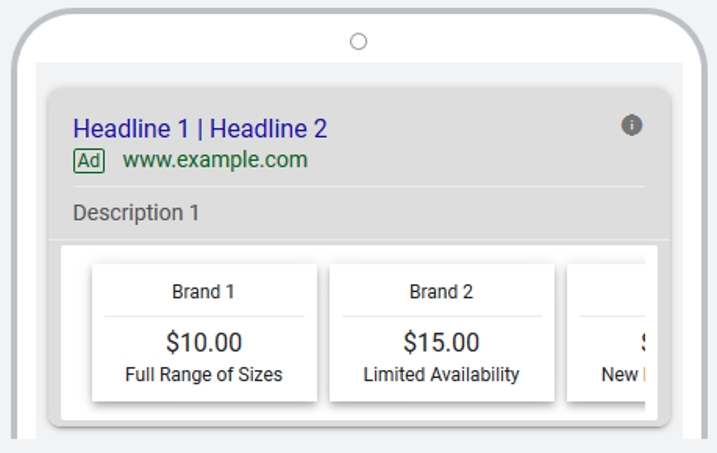
Include relevant price information for your product or service. Users can link to specific products relevant to their ad.
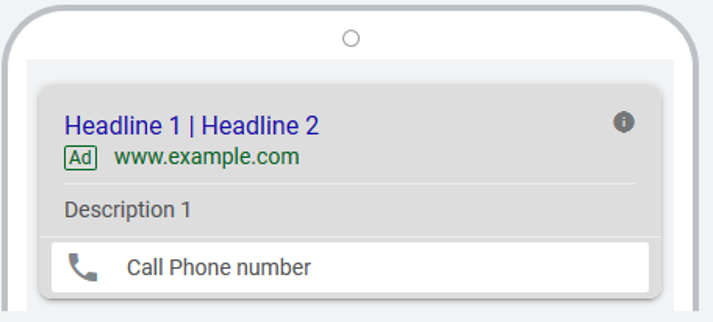
Add a phone number so customers can easily call your business. For mobile-focused campaigns, this can improve performance as users can convert with a simple tap.
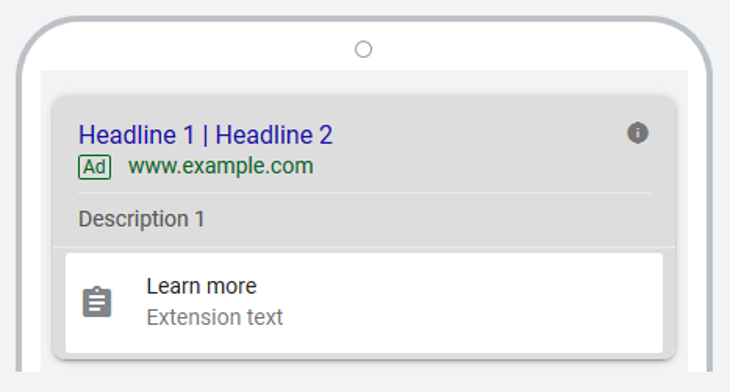
Prompt users to submit customer lead information directly inside of the ad.
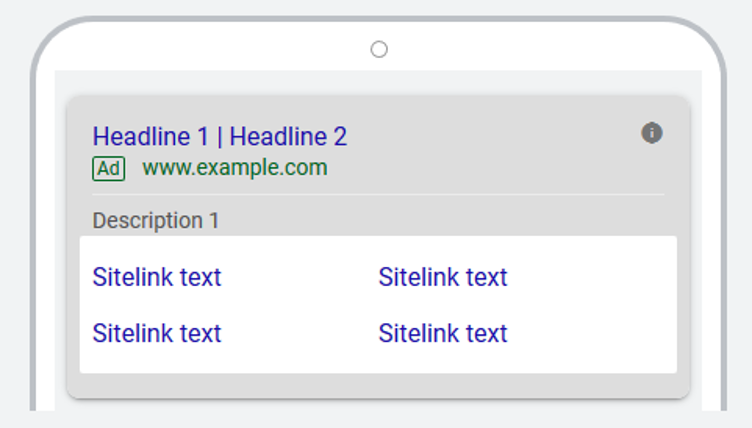
Display specific, contextually relevant pages from your website.
Include descriptive text about your product or service, such as “Free Shipping” or other information relevant to your ad.
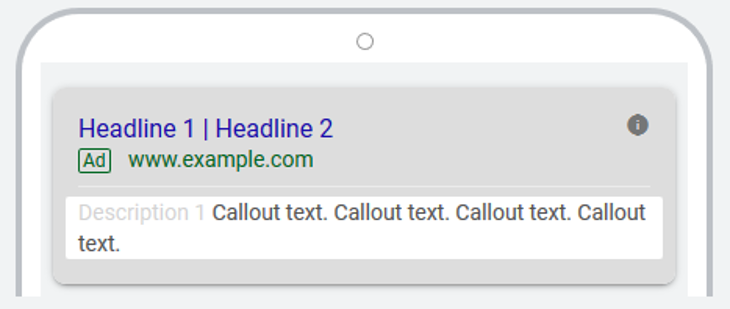
Provide users with an immediate preview of your product and services by including brief descriptions from text on your website.
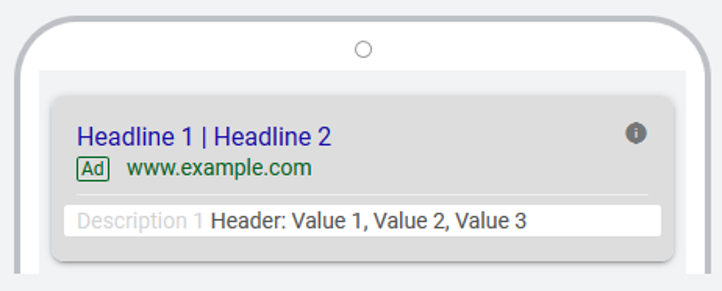
Include relevant business information, such as address and store hours.

Display affiliated locations including nearby shops where your product is sold.
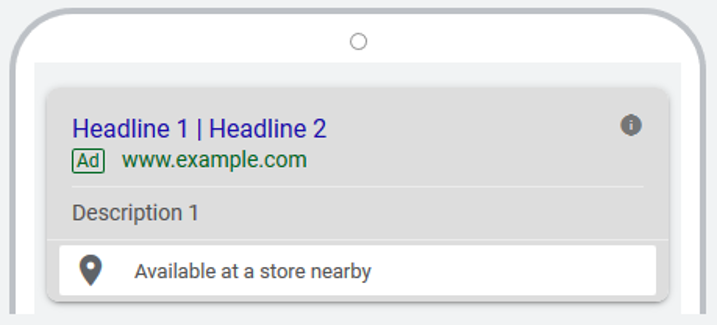
Encourage users to download your company’s mobile app.
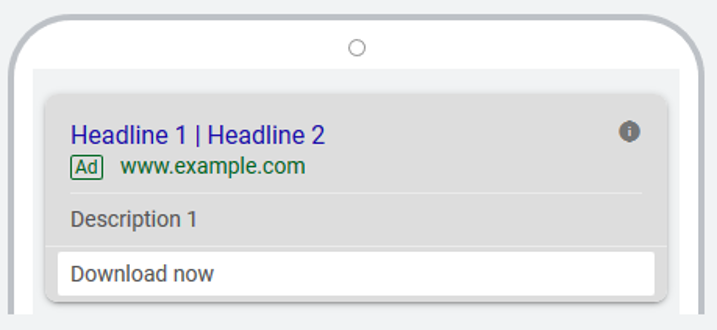
Showing promotional sales and offers inspires the user to learn more about the product or service advertised in your ad.
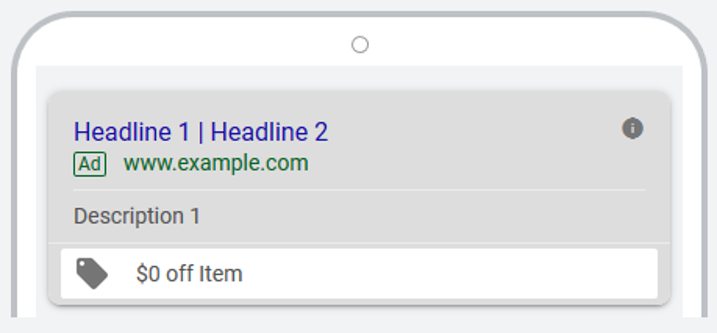
Google allows users to report on performance with and without ad extensions, so you can test and evaluate which ads are performing and how extensions are helping to drive campaign success. Google also allows users to enable automated extensions, which use algorithms to generate copy, location, phone numbers and other details dynamically from your website.