
Technology
Basis Platform
Advertising Operating System
Communication Portal
Intelligent Collaboration
All Channel Activation
Activate Media on Every Channel

Consulting
Resources
According to a study by New Vantage, 97.2% of organizations are investing in big data practices today. Just how valuable the intelligence you collect is, though, depends entirely on how capable you are of harnessing it. The first thing you need to do is consolidate your data effectively so you can easily process, analyze, and extract insights from the swathes of information.
Data consolidation can be challenging, time-consuming work. However, it’s easy to streamline your efforts by adhering to some key best practices. We delve into them below.
First, a quick summary of why data consolidation is critical in the modern marketing ecosystem. Combining your CRM, email, advertising, web performance, and other relevant intelligence in one place empowers you to do all of the following:
This is by no means a comprehensive list. Data insights can help you improve sales, marketing, customer success, and many other areas within your organization. Consolidating your data will ultimately enable you to maximize the value of investing in big data and artificial intelligence in the long term.
Effective data consolidation involves creating a system where your business data is regularly processed and uploaded to a single platform. You can manually consolidate data from various sources, but it will quickly become outdated and irrelevant as new, real-time business data comes in. Combining application programming interfaces (APIs) from your various data sources is the solution to this problem.
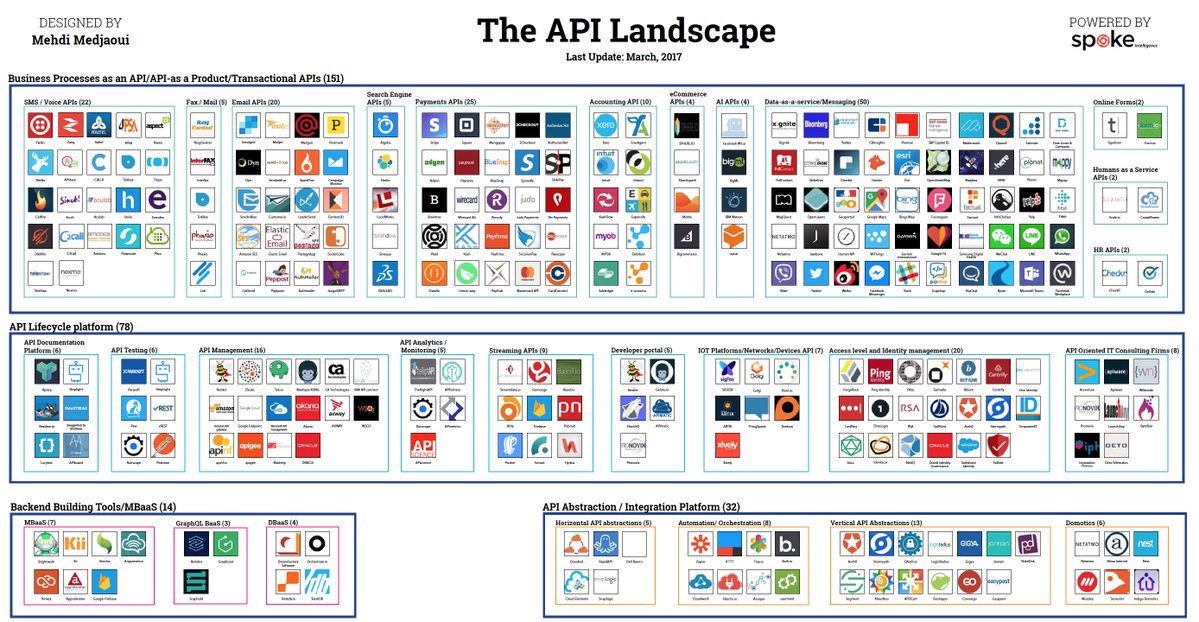
The most valuable marketing technologies today have features in place that allow them to easily communicate and share data between other software programs. You need to have flexibility and control over how your different tools share data, what format the data is in, etc. If you’re unable to combine APIs between your various tools, it’s worthwhile investing in new technologies that can.
Successful data consolidation means you must have complete control over your own audience data. This becomes challenging when you rely heavily on “walled garden” data environments. Platforms like Google, Facebook, and Amazon have a wealth of third-party data you can use to surface insights about your marketing campaigns. However, you don’t actually own this data, so you can’t control it or consolidate it.
While you can’t simply cease using Facebook and Google Ads, there are tactics you can adopt to minimize your reliance on such walled garden data environments. For instance, avoid using features that also allow these platforms to control your first-party data (such as Facebook’s tracking pixel or Google’s tracking tags). Instead, use your own technologies to capture your intelligence. This will make it easier to control, unify, and analyze your audience data the way you want to.
Utilizing technologies that can share and merge data is very valuable, but it’s easy to run into issues if the data you’re transferring is incomplete. Different tools use data points in different ways to categorize, tag, and sort consumer data. If you don’t have complete information about each of your leads or customers, this could lead to organizational issues later on.
As an example, some CRM platforms identify leads by their name, while others identify and categorize leads by their email address. If the data you transfer over is missing email addresses, then the tool will be unable to distinguish and categorize those leads properly. For this reason, ensure that all your fields are filled out before engaging in any kind of data consolidation activities.
It’s also vitally important that data types are consistent across these platforms. Different platforms will categorize and illustrate the same data contrastingly. You don’t want to discover this after your data is already merged. One tool may use a date/time format while another uses date only. Or one may denote currencies using symbols ($, €) while another uses USD and EUR abbreviations. It’s much easier to adapt your data to a new system before transferring it over, rather than fixing it after the fact.
As a result of globalization and the growth of the technology industry around the world, there are now a plethora of tools on the market that allow you to store single-byte characters (used for European languages) and double-byte characters (used for languages like Chinese and Japanese). However, if you merge your data to a platform that doesn’t have this flexibility, you could end up storing data with incongruent characters, making some fields impossible to read.
Regardless of whether or not you run an international business that uses multiple languages, it’s just good practice to use a character set that can express data in any language. Unicode is one popular option that can encode and represent text irrespective of the character set used.
Data consolidation can be a huge task, particularly for enterprise-level businesses with various distinct audiences, marketing channels, and campaigns. Since it will take a while to achieve full data consolidation, it’s best to start with the data sets that you can derive the most valuable insights from.
Cross-channel data is one of the best places to start. Consistently marketing to leads across platforms is now more important than ever. It can grow your purchase rate, conversion rate, and ROI. According to Omnisend’s 2020 Marketing Automation Statistics Report, Omnichannel campaigns that include SMS are 47.7% more likely to lead to conversions:
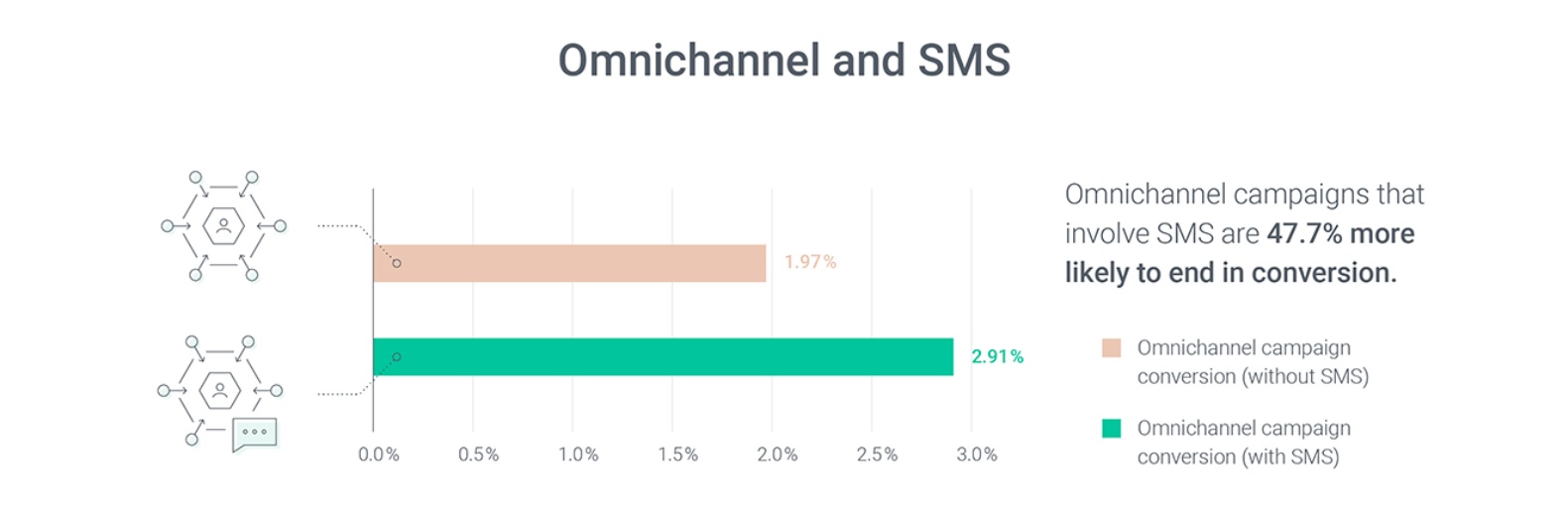
That said, omnichannel marketing is only possible if you’re able to track interactions across marketing channels. That’s a key benefit of data consolidation. So, start by integrating disparate data that will offer the most valuable insights into your marketing strategy, such as online and offline performance data and cross-channel interactions.
Even if you’re able to combine APIs to automatically share data between platforms, there’s still a lot of possibility for errors in your data. The worst way to discover data errors is after you’ve already consolidated it in a single processing platform. Then you have to fix the problems on multiple platforms rather than one. The majority of data management systems have safeguards in place to prevent people from accidentally corrupting or deleting data. However, mistakes can still be made. It’s best to review your data at the source before consolidating it.
Using the right data management tools, you can also use automation to double-check for data errors. Many automated bidding technologies have anomaly detection capabilities that can identify potential data errors, flag them, and notify marketing managers. In the case of PPC bidding, artificial intelligence can identify when campaign performance varies significantly from projections, then pause campaigns and give marketers the chance to determine if data anomalies are the cause.
Technologies that can help you streamline data consolidation are growing in number. Turning to technology for help is necessary for just about any sized business because there’s simply too much relevant business data to sift through by hand.
What kind of tool you should invest in, though, depends on what your goals are. Why is data consolidation important to you? Most businesses invest in data consolidation to gain insights to empower sales and marketing organizations. In that case, it makes sense to consolidate data using a tool that can also help you analyze it and act on new insights.
There are plenty of benefits to data consolidation, but there is also a lot of room for error. You need to take a careful, planned approach to consolidate your data accurately, minimize the time you invest, and maximize the value for your marketing and sales strategy. Ultimately, the effectiveness of your data consolidation efforts owes a lot to your MarTech stack. You should work with technologies that can share data with each other and look to employ a central tool that can process all your relevant data for you. Invest in technology that’s designed for data consolidation and you can’t go wrong.
There are three major advantages of streaming audio vs the terrestrial radio counterpart:
The growth of streaming audio has brought advertisers a plethora of options for ensuring that their most profitable consumer is receiving the message.
Below are the common ways we can target listeners via streaming audio:
In comparison, below are the ways terrestrial radio allows advertisers to target:
Streaming audio’s capabilities from a targeting standpoint allow brands to limit waste, increase their understanding of who is really reacting to their message and when, and enhance the listener experience through meaningful and timely communication.
Streaming audio is growing and has significant reach, but it shouldn’t replace a traditional terrestrial radio strategy entirely. As the points above demonstrate, the real mountain mover for brands is when both terrestrial radio and streaming audio are brought into the overall campaign.
While streaming audio benefits through advanced targeting options, stronger reporting and analytics, and a more engaged consumer listening and interacting with the medium, its greatest strength comes from the fact that it offers advertisers an immediate and actionable platform for listeners to engage with their :30s/:60s radio spots.
Native Advertising is sponsored content designed to be perfectly positioned within a publisher’s editorial content.
I know what you’re thinking. “Oh, so like an advertorial?” Well, yes and no. Because there isn’t an industry-wide definition or metric, some publishers are putting native into the “advertorial bucket.” The trouble with this definition is that native advertising can be so much more than that.
Publishers are defining native in more ways than one–sponsored infographics, tweets, and nonstandard ad units, to name a few. The US Federal Trade Commission, or FTC, defines Native Advertising as "blending advertisements with news, entertainment, and other editorial content in digital media." No matter how you define it, the goal is to drive engagement through what is considered a natural, organic environment.
While there could be better clarity around the actual definition, as a publisher, it might be time to start incorporating native options if you haven’t already. We already know that successful ad placement generally does not disrupt the reader’s experience. With native, that’s just the intention. It should not only feel like part of the editorial, but rather enhance the experience. When we enhance a user experience, we earn their attention–which then leads to (you guessed it) premium pricing. Earning a reader’s attention might be the most valuable action a publisher can ask for.
Premium content has always helped set the great publishers apart from the not so great. Integrating native should be a no-brainer for sites bursting with great editorial. No matter how you want to define it, eMarketer forecasts that advertisers will devote almost two-thirds of display budgets to native ads by the end of 2020. That’s enough to make both publishers and advertisers start paying attention!
Learn more about Native Advertising with Centro.
While most consumers are familiar with ads that promote the sale of products and services, many are less familiar with cause-based campaigns—campaigns that the market the missions and movements of cause-based organizations.
For some perspective on this topic, we speak to Jordan Ruden, Co-Founder of cause-driven ad agency Craft and Commerce, and Amanda Pyron, Executive Director of The Network, a membership organization that advocates against domestic violence.
Amanda shares her inside perspective on the unique challenges that non-profits face, while Jordan provides color on how organizations can approach mission-driven advertising in today’s world.
Ah, Election Day. An opportunity to participate in democracy, make your voice heard, and post that “I VOTED” sticker all over the 'gram.
In previous years, voter turnout in the United States has been less than stellar. In the 2016 general election, just under 56% of the voting age population showed up at the polls. Compare that to the other member countries of the Organization for Economic Cooperation and Development, where the U.S. ranks 26 out of 32.
Political scientists and survey researchers cite different reasons for low turnout relative to other democratic countries—dissatisfaction with candidates, political apathy, or not having the time to get to one’s polling location due to work or school commitments.
While there are many hurdles to voting, Centro aims to alleviate the major deciding factor of choosing between one’s commitment to their work, and their commitment to casting a ballot. Election day occurs on a weekday, and the process of voting in-person often takes hours. That’s where Time to Vote comes in.
Centro is proud to stand alongside a diverse coalition of 400+ companies that are committed to ensuring their employees have a work schedule that allows them adequate time to vote in the upcoming presidential elections.
The Time to Vote coalition is a nonpartisan movement led by the business community to contribute to the culture shift needed to increase voter participation in our country's elections. By offering our Centrons in the U.S. and Canada a paid half day off for Election Day, Centro is committing to making accommodations for workers that help enable them to vote.
Time to Vote is nonpartisan and there is no cost for companies to join. Nearly 400 companies with employees in every state in the U.S. have signed up. Members include Best Buy, Farmers Insurance, Gap Inc., Glossier Inc., Hewlett Packard Enterprise, JPMorgan Chase & Co., Levi Strauss & Co., Lyft, PayPal, Target, VF Corporation, Walmart, Warby Parker and more.
Time to Vote was started during the election season of 2018, in which fifty-three percent of the citizen voting-age population voted, making for the highest midterm turnout in four decades.
In comparison, the 2014 election had the lowest—only 21% of millennials voted, according to the Center for Information and Research on Civic Learning and Engagement. When 80% of young voters choose not to participate in the election process, business leaders should take more steps to encourage full participation by employees in exercising their right to vote.
I, myself, am among some of the eldest members of the generation that follows Millennials, Generation Z. As myself and my peers mature and enter the workforce, our values and goals are likely to change the way people approach work.
As a potential employee prospecting a company to work for, involvement in a coalition like Time to Vote is attractive because it tells me that this business truly cares about both its employees lives outside of work as well as the community and world in which it conducts business.
Centro’s membership in this organization aligns with our Guiding Principles, including Self Improvement and Believe Impact is Possible. In participating in Time to Vote’s initiatives, Centro is committed to continuous investment in the growth of our team members while, at the same time, requiring each person to actively take responsibility for their own self-development and well-being.
To learn more about Time to Vote, head to their website.
Want to learn about Centro’s other employee benefits and perks? Check them out here.
Meet the latest innovation in adtech: Basis Assistant, which was built for remote work.
Whether it’s running a programmatic campaign in the open exchange, buying impressions in a social media platform, or creating a report in a dashboarding tool—users can input notes from all of these sources in Basis Assistant, all without switching programs. This one-of-a-kind browser extension is compatible with any digital marketing platform.
On this webinar, Shawn Riegsecker, Founder and CEO of Basis Technologies, and Nick Saggese, Lead Product Manager for Basis Assistant, dive into the ins and outs of Basis Assistant, what it does, and how it's built for you.
Complete a purchase. Install an app. Sign up for an event.
Every campaign has a goal. And behind every campaign, there's a media buyer working diligently to ensure that goal is met.
Day after day, these superhumans evaluate campaign performance and make real-time optimizations to improve results. But when you're managing 20, 60, or 80 campaigns, it’s incredibly hard to keep track of all the changes made in a day.
Until now, optimization logs were the best solution the advertising industry could come up with to tackle this problem. These logs often show up as shared Google Sheets into which buyers input the date, time, author, platform, campaign, and other details about each optimization they make.
The flaw is that maintaining well-organized logs that include all those important details isn’t a clean process. Each time buyers log information outside the system they're working in, they must exit the task in order to add a note to their optimization log.
The process is disruptive, cumbersome, and time-consuming, which discourages buyers from tracking optimizations.
Centro created a browser extension compatible with any digital marketing platform. Basis Assistant is a one-of-a-kind tool that aims to help marketers grow their business by simplifying logging processes and facilitating knowledge sharing among teams.
Whether they're running a programmatic campaign in the open exchange, buying impressions in a social media platform, or creating a report in a dashboarding tool, users can input notes from all these sources in Basis Assistant without switching programs.
Basis Assistant provides members with access to contextually relevant information that explains why, when, where, and how a change was made. This equips members with the knowledge they need to carry out their activities without having to schedule another meeting, send an email, or coordinate a video chat to discuss a campaign’s status.
In an industry that's based on collaboration, ensuring that teammates have access to detailed information about the status of campaigns is fundamental to success. Internal communication shouldn’t involve filling 5, 7, or 12 rows in a spreadsheet so that you and your peers can know a creative was swapped, a bid was increased, or a targeting parameter was removed to boost performance.
Optimization logs aren’t just notepads. They contain a wealth of knowledge that can and should be used by teams to expedite communication, learn from each other’s ideas, and revisit the past in order to make better decisions in the future.
Built for remote work. Built for collaboration. Built for cross-channel media management.
Basis Assistant was built for you.
As the usage rate of mobile devices climbs annually, marketers may be wondering how they can best leverage mobile apps to boost their user acquisition via mobile advertising. While evaluating which channels will best capture an intended audience, I urge you to consider mobile gaming apps for your next mobile advertising campaign!
Advertisers looking to cater their mobile advertising to a large target audience will find that mobile gaming apps have a very wide reach. Globally, the number of downloads of gaming apps lead in the app download category, well ahead of downloads of social networking, tools, and photo and video apps.
The diversity of mobile games available to download, such as puzzles, shooter, and/or action games, contributes to a diverse audience of mobile gamers. Research from Jun Group found that the majority of U.S. mobile gamers identify as women, and 45% of U.S. mobile gamers are 18-34 years old. Advertisers should consider their target demographic when selecting a mobile game app type to target ads. The same study found that female gamers prefer puzzle/strategy games, while male gamers prefer sports/racing and adventure/story games.
Advertisers looking to promote their own mobile gaming app would do well to consider mobile advertising on other similar mobile gaming apps, as users who enjoy one type of mobile gaming app are more likely to install another similar game type. Some networks can leverage behavioral data in their targeting that will allow advertisers to target ads based on mobile device ID, operating system, or device type, but reliable, cost-effective third-party data tools are still in development, as of October 2019.
While mobile gaming apps are generally brand-safe due to the lack of user-generated content, rising ad fraud rates still plague the platform. In a July 2019 study by Appsflyer, most gaming apps measured below-average mobile app install fraud rates, relative to other categories like finance, social, and shopping. As new ad formats, networks, and exchanges are introduced, though, fraud rates will continue to rise.
Displaying mobile advertising on mobile game apps presents new challenges and ad formats for advertisers to try. Because mobile ads can disrupt gameplay and affect gamer satisfaction with the app, there are also unique challenges posed for gaming app developers who include ads in their product. Most global game developers offer a mix of rewarded video, interstitial, and banner ads in their mobile gaming apps.
The majority of U.S. millennials and high-income gamers prefer opt-in rewarded mobile ads, which are ads that can be launched within a game, in exchange for a benefit to the gamer, like a bonus life for example. While this format comes with a higher eCPM, it also delivers results. Video completion and install rates of rewarded video ads are high and the advertiser only pays if the viewer completes the action.
Advertisers looking for an engaging mobile advertising opportunity should also consider a playable ad, which is essentially an interactive, miniature version of the advertised game, or a branded mini-game.
Mobile gaming apps have enjoyed rapid growth in mobile advertising, due to their high number of downloads, wide audience reach, and contextual targeting capabilities. For gaming app publishers and advertisers—advertising on mobile gaming apps is a win-win!
Learn more about Mobile Advertising with Centro.
Social Media Marketing is a necessity for any business, new or existing. Having accounts like Instagram, Facebook, and Twitter isn’t just about being visible to potential clients. It also encourages engagement with your brand and can be a powerful tool in your marketing arsenal.
However, if you’ve never used social marketing before, it might feel a little overwhelming and confusing. Here are a few tips to help you get your Social Media Marketing strategy started.
If you’ve ever researched the best ways to start planning your marketing strategy, you’ll have encountered SMART goals:
However, just like you need a social media marketing strategy that suits your business and market, you also need a planning system that suits your individual goals.
Enter the DUMB goal system:
If you need inspiration or freedom to reach your goals, DUMB might be the best way. However, if you’re incredibly task-driven, SMART might be better.
You can also try combining them. Set lofty goals, but give yourself a few tasks to achieve it. Don’t be afraid to dream, but make sure you break it down into realistic, achievable metrics. You don’t want to be demotivated when you don’t achieve your dream of hitting the million-subscriber mark in six months.
Which metrics are the most valuable for your business? Do you need followers, shares and engagement, or comments and messages? It’s easy to celebrate vanity metrics, such as having 100K likes on a post – but how many of those likes converted to sales?
Decide which metrics help you track your progress towards your goal the most accurately, and then focus on those.
What is your competition doing? This question is essential for several reasons. First, you don’t want to replicate exactly what the competition is doing. Second, you can see what works in your industry, and what doesn’t.
A look at your competition’s social media channels can give valuable insight, but you can also use various online tools to get deeper insights.
Obviously, you need to create content to match your brand and engage your target audience. You should have a good idea of who you’re going to be targeting, and you need to adapt your content to your market.
You need to decide which platforms you’ll be posting on and adapt your content for each. Instagram is very visual, while Twitter is for short, quick, and eye-catching posts. You also don’t need to post new content all the time, either. Curated content can make up a crucial part of your social strategy.
You set metrics for a reason – now is the time to use them. Which of your posts achieved the goals you set, and which ones didn’t? Did you get the conversions you wanted?
Use the information and statistics you’ve gathered to work on your social media content strategy. You’ll continuously improve your posts, progressing towards achieving your goals.
Social media is a great way to market your business or brand, but it’s not just as easy as slapping a picture onto your Facebook account. It’s important to set goals and achievable tasks, but don’t be afraid to dream, either.
Remember to keep track of important metrics, so that you can use them to improve your marketing strategy later. It’s one of the ways you can see if you’re using the right methods to engage with your target audience.
With proper planning, sensible goals and tasks, and a dash of creativity, you can use social media marketing to your advantage.