
Technology
Basis Platform
Advertising Operating System
Communication Portal
Intelligent Collaboration
All Channel Activation
Activate Media on Every Channel

Consulting
Resources
The cannabis landscape continues to grow (pun intended!) with more holding companies, growers, and dispensaries being created each month. While there is a lot of opportunity within this vertical, keeping up with the latest regulations (whether that be at the state/federal level or within the cannabis lumascape) can be a full-time job.
Read on for a deep dive into cannabis, CBD, and the channels that can be included in a paid cannabis marketing plan.
In order to know what channels to tap into, we first need to understand the differences between cannabis and CBD. While both come from the same plant, cannabis sativa, the key difference is that cannabis is allowed to have THC levels of 0.4% or higher, while CBD must have a THC level less than 0.3%.
This subtle difference is the reason why cannabis brands look to programmatic and site direct partners for paid media opportunities.
There are scale implications when running both age-gaited and geo-exclusive campaigns, but programmatic advertising allows brands to access multiple inventory sources, including:
It also allows brands to layer on custom behavior personas, top-performing site lists, prescriptive contextual segments, hyper-local targeting, and hand-raisers who have begun their exploratory research.
We recommend adding site direct partner(s) to a media mix if the brand needs unique data, inventory, or has found a publisher who doesn’t offer programmatic inventory.
Some examples include:
The rest of the partners (local and premium sites, high impact creators, mobile-first partners, etc.) can be bought and accessed through a programmatic private marketplace deal (PMP). This allows cannabis brands access to premium inventory without having to pay a fixed CPM.
While there are other compliant inventory sources (ad networks and data providers, for example) there is more opportunity to create custom messaging and scale with programmatic and site direct partners.
As this the industry continues to expand, we expect other channels to pivot their restrictive guidelines in order to capture the growing ad revenue from holding companies and brands alike.
Want to know more about cannabis advertising? Check out Centro’s partnership with MyRemede and our performance with Pax Premium Vaporizers.
If you’re ready to start building your cannabis media mix, connect with us to learn more.
Marketers have been prioritizing the digital experience over traditional advertising channels for many years now, with most businesses today opting to pursue omnichannel marketing: the strategy of creating a seamless user experience across multiple channels simultaneously.
Omnichannel marketing drives all sorts of key business goals such as improving engagement and retention and driving more sales from your marketing investment. However, optimizing for digital experiences across disparate platforms and handling the massive amounts of data needed to achieve this is a huge challenge that limits these benefits for scores of marketers. That’s why many businesses are increasingly investing in a Marketing Intelligence Platform (MIP) as a consolidation solution.
The struggle to keep up with the demands of omnichannel marketing can manifest itself in countless ways across your business and marketing initiatives. Here are a few key signs that indicate a MIP is the answer to your problems:
If you’re having trouble keeping your data centralized and standardized, you’re among friends in the marketing space. There are so many different marketing channels, CRM systems, offline sales data, product information, and more to work with that most marketers struggle to keep up with data integration — or fail to achieve it entirely.
Ongoing data integration efforts can also sap huge amounts of time, so much so that you end up spending more time on integration processes than actually using them to implement better, more streamlined customer experiences.
A Marketing Intelligence Platform can help fix this problem by automating major aspects of data management. A strong MIP integrates with all your existing systems to gather relevant customer data, with features in place to help clean up your data by removing duplicate entries and organizing everything into uniform categories.
Getting all your data integrated and standardized in a centralized location using a MIP not only saves you time, but also increases your confidence in its accuracy. Being able to trust your data makes it easier to derive valuable insights and act on them to improve your campaigns.
Today’s customer journey is so complex that businesses can easily end up dealing with hundreds of touchpoints their audience takes on the path to purchase. Every marketer knows how important it is to track and understand audience experiences in the digital space, though doing so in any comprehensive way can be particularly challenging. Consumers interact with your business through numerous different channels and devices, not to mention third-party brands that can influence their purchase decisions.
If you feel like you don’t have a complete picture of the customer journey, you need a Marketing Intelligence Platform. If you’re missing key data points or data is difficult to access and analyze, you’re much more likely to make marketing decisions based on what you think the customer journey is like, as opposed to what you know.
Using an incomplete customer journey to make decisions for brand building, advertising, and audience communication can cost you significantly. When your customer journey isn’t optimized and your advertising message and targeting is even slightly off the mark, you can end up wasting a meaningful portion of your budget.
That’s what makes MIPs so essential for success. Better data management allows your business to avoid regular bottlenecks of gathering and interpreting data from different points throughout the customer journey.
Perhaps centralizing your data isn’t the problem. A great many businesses have more relevant consumer data than they know what to do with. They simply lack the resources, know-how, or capacity to derive actionable insights from it all.
If that sounds like your business, then a Marketing Intelligence Platform is the ideal solution. You need a tool that offers advanced analytical insights, but also helps you discover them within your own data. A top-of-the-line MIP harnesses the power of artificial intelligence and machine learning to analyze your data and discover valuable insights for you.
Not only that, but a MIP can summarize these insights into custom dashboards using data summaries and visuals to illustrate the most important insights for you. These dashboards are interactive, so you can get a closer look at data reports and adjust them using filters. They also update with the latest data insights in real-time, empowering you to interpret performance from large amounts of consumer and performance data with pinpoint accuracy.
Most businesses today work in industries where fast, regular changes to their marketing strategy can improve performance immensely and drive improved ROI. Depending on what tools you use to create data reports, it’s possible you’re just not getting insights quickly enough to make the optimizations you need to succeed. The challenge is even greater if you also have to wait on reports from different departments or your data analyst to expose and extract insights.
Marketing Intelligence Platforms with native dashboard features are the perfect solution for this. Data integrations combined with dynamic visualizations will help you easily keep up with all the important aspects of your marketing initiatives while simultaneously lessening your reliance on disparate teams to report on or analyze your data sets.
MIP dashboards also make it quick and easy to share performance reports with different departments and individuals within your company. Compare that to creating reports manually, where you have to handle data consolidation, preparation, analysis and presentation before anyone can see any insights. MIPs automate each of these steps so you can focus on the most important task: taking action to optimize your marketing campaigns.
The digital marketing landscape has changed massively in recent years. Now there are so many relevant channels to target that even enterprise businesses with substantial marketing budgets need to be careful how they allocate it.
If marketing competition in your industry has intensified and you’re struggling to keep up, inefficiencies in budget allocation could be to blame. Even minor oversights and inaccuracies in execution on different marketing channels or campaigns can make it very difficult to stay apace with competitor tactics.
A Marketing Intelligence Platform comes with many benefits that ensure you’re spending your budget effectively. The key to all of it is unified data management. Analyzing data from your entire suite of marketing tools combined with relevant product and business data will empower you to better understand what campaigns and customer segments are driving the most ROI. Customized reports can also be utilized to determine how increases in budget allocation can influence crucial marketing goals like revenue and retention.
Real-time reports also allow you to quickly understand how changes in the competitive landscape are affecting your campaigns. Armed with this knowledge, you can make swift and relevant changes to your investment strategy to improve efficiency and stay ahead.
94% of marketers and 90% of agencies say that “personalization of the web experience is critical to current and future success.” You know that personalization is important, but like many fellow marketers, you probably struggle to implement it at scale. Having a consistent and pertinent customer experience across channels and devices is a heavy task to take on.
MIPs can address this challenge in numerous ways, primarily by helping you understand behavioral patterns across platforms. Comprehensive data reports can, for example, make it possible to see how individuals who first engaged with your brand through Google went on to convert through Facebook. Exposing the complete picture of all audience touchpoints and behaviors across your program will make it much easier to segment audiences and optimize personalization initiatives at scale.
If you run an enterprise-level marketing program, there are likely many key players who work on your campaigns and drive performance, within and without the marketing department. While team leaders may understand what areas need to be focused on to improve performance, it can be challenging to keep all relevant players up-to-date on what to prioritize.
If your business struggles with this problem, a Marketing Intelligence Platform can help. Instead of keeping key data insights in the hands of analysts and team leaders, dashboards help you share them with all relevant team players. The same dashboard reports can be shared across devices and viewed by anyone who could benefit from understanding how different initiatives impact program performance. Including data from sales, marketing, and other relevant departments can help individuals from different teams understand how their work plays a role in overall performance.
Anyone can get a closer look at customized reports to see how their performance compares to your business objectives. The ongoing feedback these dashboards provide can also help guide their focus towards initiatives that can further key business goals.
The year 2020 created a lot of uncertainty for businesses, but it did make one thing very clear: the focus on digital experiences is more important now than ever. Businesses that haven’t started investing in omnichannel need to get started, while those that have need to optimize their efforts for success.
With so many business factors influencing marketing performance, it can be difficult to understand where your inefficiencies are. However, if any of the telltale signs in this post resonated with you, then a Marketing Intelligence Platform is a smart investment you need to stay ahead of the competition in today’s digital marketing world.
At Centro, we know that keeping up with the trade pubs and latest trends can be tough and time-consuming. To make that easier, we’ve compiled all the articles, reports, and other bits of awesomeness you may have missed, but should definitely read. Enjoy our latest list below!
IAB 2021 Marketplace Outlook [:09]
The IAB’s final impact study of 2020 showcases that buyers are optimistic about 2021 and expect a 6% overall increase in their 2021 budget (versus estimated actual spend in 2020). However, they have concerns about: 1) Preparing for a cookie-less future / loss of identifiers, 2) the need for 1st party data, and 3) cross-platform measurement solutions.
This Year, Next Year: Global 2020 End-of-Year Forecast Report from GroupM [:09]
Despite the grim realities of a global economy that will be the worst since the Great Depression, advertising weathered the storm relatively well and will end up at declining by “only” 5.8% on an underlying basis (excluding-U.S. political advertising).
This annual report examines the eight largest markets—the U.S., China, Japan, the U.K., Germany, France, South Korea and Canada, and predicts that the global advertising market for 2021 will see 12.3% growth.
8 Marketing Trends to Watch For in 2021 as Aftereffects of a Volatile Year Linger [:14]
While 2020 is *finally* over, it’s set to be another volatile year for marketers. One item which remains top priority is first-party data. As cookies and mainstay methods of in-app tracking change, developing the personal connection with consumers will become essential. While there is no shortage of options in picking partners, there will be fresh new opportunities with companies like TikTok, Walmart, Target, Walgreens and Kroger.
The Jig Is Up : The End of the Identity Workaround [:04]
Just because there are workarounds to online ad restrictions doesn’t mean they should be taken. Both Google and Apple are weeding them out in the name of customer privacy. Most post-cookie solutions have been in other forms of ID-based tracking like device fingerprinting. The biggest risk in pursuing some of the alternatives that have come out are the potential reputational and ethical risks that come along with it.
2020 Was All About Digital Identity – And Expect the Same in 2021 [:03]
With 2021–and massive change–on the horizon for digital identity, there's a lot of scrambling, with some marketers proactively preparing for the changes, others putting together plans, and some still trying to piece together what is changing and how it may impact their advertising.
What's the Fate of Location Intelligence in 2021? [:03]
Now that we’ve said goodbye to the dumpster fire that was 2020, it’s time to project what’s to come in the newly arrived year of 2021. Rather than rattle off a list of projected happenings, Street Fight zeroes in on one area that’s central to their coverage: location data.
The Year in TV: A Major Shift to Streaming [:07]
2020 was nothing short of transformational. Major media companies had to adapt to overcome huge problems from a content development and distribution standpoint across the board, including the elimination of sports, the shutdown of production, and originals being pushed back.
Those that were able to adapt successfully saw massive gains in streaming due to more at-home media consumption, solid growth in ad-funded video on demand (AVOD) as consumers looked to cut or minimize extra costs, and an acceleration of innovations with tech integrations.
Global OTT Subs To Grow 65%, to 1.9B, by End of 2025 [:01]
Growth will be driven mainly by broadcasters’ turning to streaming services to compete with Netflix, Amazon Prime Video and other online video giants. Streaming services need to keep their offerings competitive to retain subscribers.
In-game Advertising Is on the Up — Here’s How it Can Support Your Brand [:04]
Video games have become an important stage for players to keep in touch, interact, and celebrate creativity. While games have always had a social element, today’s leading titles are emerging as the “third place,”or a social environment that people turn to outside of home and work, and a great place to consider exposing consumers to brands.
How Does the eCommerce Experience in China Differ from the West? [:08]
Home to the world’s largest ecommerce market, two of the world’s largest online retailers (JD.com and Alibaba), and more than 900 million internet users, marketing and selling in China is a tantalizing prospect for any western ecommerce company.
But the ecommerce landscape in China, while it has its similarities to the west, is also a distinctive one, with a different set of consumer expectations, different trends, and different interactions with brands. Understanding these differences is the first step towards building a successful strategy for the Chinese market, and for learning what trends could shift west and impact advertising.
Centro was recently chosen by AdExchanger as one of The 2020 Programmatic Power Players. AdExchanger provides an authoritative and informed voice trusted by marketers and advertisers. They created this list of the best agencies, tech providers and partners in programmatic advertising by choosing from hundreds of submissions received from across the globe. AdExchanger’s editors evaluated entries based on strength and breadth of offerings, documented case studies and client references.
Here is why Centro was recognized:
Services & Tech
What are some of the qualities that cemented Centro as a Programmatic Power Player? We have unique synchronicity of programmatic advertising services and expertise in omnichannel digital media operations built on the media workflow automation technology of Basis. While most programmatic providers offer a single point solution of either technology or services—Centro offers a bespoke, blended model of technology and services across all digital channels. This approach enables a holistic view of digital spending and performance across channels and tactics, resulting in workflow efficiencies, expedited optimization and enhanced performance.
Centro’s media services team is powered by our proprietary technology, Basis—an automated digital media platform that addresses direct buying, programmatic, connected TV (CTV), search, and social via a single interface. Our team uses Basis on behalf of our clients, to plan, activate, and manage campaigns. Basis facilitates automation that allows our media professionals to focus on the high-value strategic aspects of campaign activation such as bidding strategies, optimization, and cross-channel performance.
Flexibility
Another differentiator of Centro is the flexibility we offer clients and the wide variety of service options to choose from—managed service, path to self-service, or self-service. Agencies and brands alike can utilize Centro to extend the bench strength and capabilities of their teams; whether clients are staffing up for new business, adding to their offering, or needing more digital media strategy and buying support, Centro can help. Our team of digital media strategists, ad operations experts, performance analysts, and search and social specialists plan, execute, and optimize, across all channels and tactics, in partnership with clients. We implement the right solution for clients’ specific needs and provide ongoing flexibility along the way.
Centro’s newest service option enables a seamless transition to bring programmatic and digital media capabilities in-house. Through this offering, we begin the engagement as managed service, with our team handling the entire lifecycle of the campaigns. In using Basis, clients have full transparency of Centro’s planning approach, optimization strategy, performance and overall results. We take the lead, while the client observes and learns. If interested, and the time is right for their business, clients can take over and in-house their media—or they can continue leaning on the Centro team to support their needs. The top advantages of this solution are the campaign data and performance results that are stored within the client’s instance of Basis. Therefore, if the long-term preference is to in-house media, it is a turnkey process for clients to take control.
The Centro team is committed to delivering service, results, and high levels of client satisfaction. We create Raving Fans through extraordinary efforts by our team to exceed the expectations of our clients. Our service embodies a combination of great service and outstanding results powered by technology and top-rated talent.
Connect with us to learn more about Centro’s technology and service offering.
For many, advertising on social media platforms is comparable to trying to solve a puzzle that constantly rearranges its pieces. Whether it is the multitude of different campaign objectives, countless targeting options, or endless amounts of customizable creative available—running an effective social media advertising campaign on any platform can be daunting, to say the least.
While all the different levers available to advertisers ensure that no two campaigns will ever be the same, it's important to understand each platform’s algorithm and set-up campaigns that coexist with the on-going machine learning optimization that exists within each of them. This understanding will boost your confidence, and help you manage multiple social media initiatives simultaneously, and more effectively. Review our three key points to better understand and optimize your social media advertising, below:
Social media platforms have relied on user engagement since their inception. This is now more important than ever before, with advertising revenue accounting for a significant portion of each popular social site’s bottom line. To solve for this and meet business goals, social platforms have taken information from billions of users and created a digitized proprietary “brain” (i.e. algorithm) in order to sort what they show users, based on popularity and relevance.
Naturally, these algorithms have migrated over to benefit advertisers as well. Each social platform utilizes its algorithm to determine which ads to show to which users via machine learning, in order to ensure advertisers that their ads are being served in real-time to the most valuable user.
While each platform’s algorithm is slightly different, common variables used in machine learning outputs include automating and maximizing each advertiser's bid amount in real-time, understanding the effective rate they'll have to pay in an auction in order to win an impression, and factoring in the perceived value of each ad to the end-user. This is real-time, auction-based bidding in a nutshell!
Now that we have a working understanding of social algorithms under our belt, the real work begins. It’s imperative that advertisers ensure their budgets, bids, and KPIs are clear and fully fleshed out, prior to launching any social campaign. Aside from that, given what we know about the algorithm and the signals it uses to make decisions, the best way for advertisers to get the most out of their social media advertising is to:
1) Create ads that are relevant and engaging.
2) Ensure campaigns are set-up to optimize the desired business outcome.
3) Take advantage of automated features within each social media buying platform to maximize the impact of its algorithm.
By working with machine learning (and doing these three things), you ensure that your campaign is set-up for success.
Finally, some quick and helpful hints to optimize your social media advertising:
Connect with us to learn more about social media advertising with Centro.
According to Treasure Data’s State of the Customer Journey report, 47% of marketers say that silos are their biggest problem when it comes to gaining insights from data.
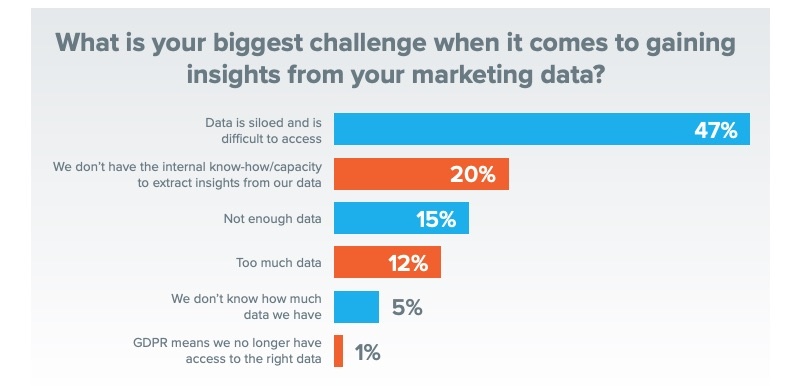
A further 20% reveal they don’t even have the knowledge or capacity to extract insights from their data. Both of these issues can be solved by prioritizing effective data management to break silos down and expose valuable insights. Here’s everything you need to know about what data silos are, how they come to be, their impact on marketing, and how to get rid of them.
A data silo is a group of organizational data available to one person or internal team that exists in isolation. While data silos typically create problems for IT, administration, HR, sales, and other departments, nobody is more acutely affected than those in marketing. Data silos make it impossible to have a transparent view of performance and will inevitably create efficiency issues, make collaboration increasingly difficult, and prevent key insights from surfacing that could inform revenue generation opportunities.
Marketing teams are facing a new, very modern challenge as siloed data begins to seriously hinder their capacity to execute effective analyses. That’s because key developments in the field over the past few years have made silos more prominent and destructive than ever before. Here’s why:
More marketing channels and platforms
Today, marketing channels aren’t as simple as online and offline. Now there’s television, radio, mail, and newspapers, all paired with a growing number of digital channels including search, social media, email, messaging, apps, display, and more.
There are also more platforms that allow marketers to reach niche audiences, such as emerging social media giants like Snapchat and TikTok. YouTube has also evolved into a relevant search engine for marketers to target. Each of these platforms offers its own analytics capabilities, siloing marketing performance data more voluminously.
More relevant data
With more platforms comes more relevant audience data marketers can use to improve targeting and campaign optimization. Audience demographics, behavioral insights, and interests from social media and search can inform campaign targeting across disparate channels. Marketers can get a broader picture of audience demographics and habits from third-party data platforms. There’s also a new stream of location data derived from mobile and wearable devices. These new data sources are creating costly silos that didn’t exist even a decade ago.
More tools to manage all of the above
According to Scott Brinker’s MarTech Landscape Supergraphic, the number of marketing tools available has grown from 150 as of 2011 to 8,000 in 2020:
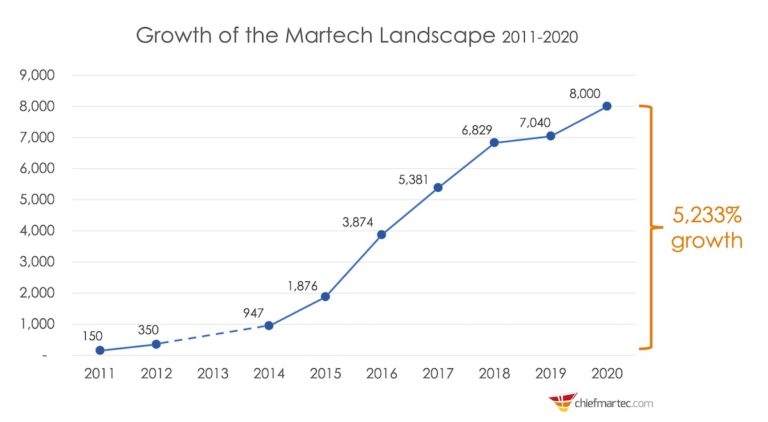
The growth in marketing channels has called for an increase in the number of tools needed to manage them and monitor performance. Rather than helping aggregate marketing data, more tools often just create more silos.
Many companies end up with siloed data by accident. However, few seem in a hurry to fix the issue. This is likely because they don’t fully understand the hugely negative impact data silos have.
1. Wasted time
Data silos don’t completely prevent employees from accessing different data sets, they just make it challenging to do so. Teams can waste countless hours analyzing data only to realize later they need additional information from another analytics source. Then they have to find where the data is located, request access to it, wait for it to arrive, then start analysis again. There’s also the unhappy and lengthy task of stitching different reports together. When siloed data sets need to be integrated, your team likely ends up spending the majority of their time on consolidation instead of tracking performance and optimizing strategy.
2. An incomplete view of performance data
With a multi-channel marketing strategy, you have numerous siloed analytics tools offering relevant performance insights, such as Facebook Analytics, Google Analytics, Bing Analytics, call tracking software, email marketing analytics, etc. This makes it near impossible to get a comprehensive view of how your campaigns work together to reach your marketing goals. Once you’re able to integrate all data and performance analytics, you become empowered to expose new opportunities to drive efficiency, growth, and revenue.
3. Lower data quality and confidence
It’s not uncommon for teams to use different tools and strategies to store and analyze data. The longer data is siloed this way, the more inconsistent and potentially inaccurate it will become. People working on independent marketing initiatives may miss important data streams or accidentally consolidate similar data categories that should remain separate. Some may also end up working with older versions of the same data. Poor data quality can lead to very different analyses, which decreases everyone’s confidence in the accuracy of reporting.
4. Wasted resources
The growing amount of marketing channels and relevant audience data has caused most marketers to expand their MarTech stack to manage data streams, analyze them, and implement their marketing strategies. This means spending more money, time, and resources on different technologies. Storing all your marketing data in a centralized location and analyzing it from there saves significant resources that were necessary when data was siloed.
5. Limited cross-team collaboration
Data silos create difficulties for teams needing to collaborate. Each internal organization is forced to work with their own data to derive their own insights to make decisions. This makes it tough for individuals to share their vision and goals. Rather than working together, teams often miscommunicate and can end up working in competition to reach business goals.
Once you understand the negative impact data silos have on your business, you’re ready to investigate different approaches to fix the problem. Here are some strategies you can use to start integrating your data.
1. Change your company culture
Breaking down silos isn’t just about having systems in place to aggregate data. You also need understanding and buy-in from people who use data at all levels of your business. Even if you use a data management platform, it’s easy for team members to create silos again if the company culture doesn’t change.
When addressing the issue, start by communicating why data silos are so damaging to your marketing initiatives. Make your goal to move marketing data to a single source of truth clear to employees. Leaders can also take steps to encourage the kind of cross-platform performance analyses that are only possible with consolidated data.
2. Invest in a holistic third-party platform
As opposed to looking for solutions to help you integrate data on your own servers, you can invest in a third-party platform to manage it all. Intelligent platforms like Basis can help to unify all your business data in one place, including from Facebook, Google, Bing, your call center platform, offline data sources, and other channels.
What sets our software apart from other data management solutions is that it also has native analysis features. So not only can users access marketing data from a centralized location, they can use the same tool to uncover insights, create visuals and reports, and share these with internal teams. When everyone uses the same platform to store data and create reports, it’s easy to update analyses based on the latest insights, add in new relevant streams of data when necessary, and collaborate effectively.
3. Set data governance standards
Once you centralize your data, it’s a good time to set governance standards to ensure it’s used properly to avoid creating new silos. This is easy enough to do. Employees may use some data and analysis features but don’t necessarily need access to all your marketing data. You can use your software to set up account levels and permissions to grant levels of access to different employees. It’s also possible to put rules in place for how employees can use and analyze data. Otherwise, you’re likely to get instances of employees exporting data to spreadsheets for analysis, creating new silos again.
The customer journey is becoming more complex year after year, with new touchpoints online and offline that influence decision-making. This provides a wealth of marketing data to go along with relevant operational and sales data you can use to optimize all sorts of processes. Harnessing a wide variety of data types from different sources means that database management is now a top priority for businesses small and large. The negative impact of data silos will only grow if leaders continue to ignore this need.
Many marketing experts predict the retail industry will be forever transformed by the Coronavirus pandemic. While some retailers have struggled to survive and store closures are on record pace, others have embraced new business models designed to cater to consumer demand for convenient shopping, shipping, and return methods.
eCommerce sales, for example, are expected to jump more than 35% this year, according to eMarketer. This shift in fulfillment has forced many retailers to get creative in order to keep revenue coming in because of the differences in building awareness for new products online, pressure on supply lines to meet demand, and increased costs associated with processing online orders.
In order to source sales in new ways and meet consumers where they are spending their time, retail marketers are turning to an array of digital advertising programs. By following these digital strategy tips, retailers can build brand awareness, create long-term customer value, and drive immediate sales.
Share of voice is crucial in retail marketing. It’s important to ensure you’re reaching your target customers with enough touchpoints to influence purchase consideration and sales. For maximum impact, consider a well-rounded digital media mix that takes advantage of programmatic mobile and display, high-impact units, paid search and paid social.
This level of omnichannel marketing will ensure an optimum amount of frequency to encourage purchases. Build out well-rounded, full-funnel programs that are optimized to guide the purchase journey with cross-device and cross-channel targeting.
The most powerful tool any retail marketer has available to them is their own first-party data. Knowing what your core, high-value customer looks like, and using that data to nurture sales can create incredible impact. For example, you could target a specific set of previous buyers who have not visited your store or website recently and show them a special offer based on their past purchase habits.
You can also use that data to build a new prospecting audience modeled off of those who have purchased specific items in the past. When combined with additional data points (such as Facebook data showing what products people are likely to be interested in, or third-party data that captures people who have recently visited a competitive store or website), you can effectively reach new audiences with your message.
One challenge retail marketers sometimes face is tying ad engagements and performance to product sales—especially when products are sold offline. Often, the data needed to connect those dots is siloed or disparate. Ecommerce marketplaces like Walmart, Amazon, and Instacart help facilitate closed-loop sales measurement because the same company is running the ad and selling the product advertised.
Retailers who operate their own brick and mortar shops must also look for ways to integrate web and mobile campaign analytics with online and offline sales data. If a significant amount of your digital media is run across Facebook, for example, you can look to integrate in-store POS data into their Attribution tool to credit sales based on media exposure touchpoints.
Today’s retail consumer expects relevant, personalized product recommendations. In order to provide that, focus on opportunities that are designed to know what product a person is interested in, and immediately direct them into a frictionless, mobile shopping experience that makes it convenient to buy.
Shoppable ads, for example, bring together a catalog of product information and user data in order to dynamically show an individual items they are likely to be in the market for, based on which products they have been browsing online.
These types of ad programs are commonly found on social platforms like Facebook or Snapchat but can also be implemented programmatically on display and mobile devices, or on the Google Search Network.
Alternatively, if your brand or product needs additional awareness, consider interactive, high-impact, or video ad units that will leave lasting impressions for potential customers—but be sure to align the format and messaging with the audience you are targeting.
Ultimately, it’s important to remember that retail consumers have a lot of product and shopping options available to them today. Whether your products are sold in-store on online, keep the customer experience in mind in order to build better media plans and shopping experiences.
Connect with us to learn more about retail marketing with Centro.
The secret is out! Social media advertising is a highly effective digital media partner for top-performing brands across the globe. EMarketer shares that 43% of small businesses report social media advertising as the channel that helps them achieve their marketing goals over other digital and traditional means of advertising.
That said there isn’t a “one size fits all” strategy that leads to an effective social media campaign. Rather, here are three of the top considerations we use at Centro to create effective and efficient media strategies for our clients:
“There is no significant correlation between click-through rate and any Nielsen Brand Effect metrics” according to a study led by Facebook and Nielsen.
As media has evolved in the past decade, so have the ways we are able to measure performance. What was once only trackable through impressions and clicks can now be connected back to deeper signals like conversions or brand lift—allowing advertisers to understand more about the quality of audiences they are reaching with their ads.
The most successful campaigns are those that consider a business’ core objectives to guide the choice of their key performance indicator instead of prioritizing site traffic and impression delivery as those signals. Rather than optimize to a click—brand awareness, messenger engagement, lead generation, and conversion campaigns pulling in signals from your website, your app, and even offline data can paint a much more complete picture of success.
Many of these goals can be met across one of all social media platforms, including Facebook, Instagram, Twitter, Snapchat, Pinterest, LinkedIn, Reddit or TikTok. The right platform for the job depends on the audience you are trying to reach.
You should know that when investing in these strategies on certain platforms, you may see a high cost per click and cost per impression result. The reason is the media buy is focused on generating an efficient cost per “action” – and you could end up paying more per click or impression in order to get an ad in front of the highest quality audiences that are going to drive that deeper impact to business objectives.
Audience data is a major conversation in the digital space as consumers and platforms prioritize privacy and control of personal information. Over the years we’ve seen these trends transpire in the form of government-led policy (like GDPR or CCPA) or platform capability updates (Chrome’s cookie updates, or Facebook’s limit of targeting options for housing, employment, and credit advertisers).
While it’s necessary to communicate how you are collecting your audience’s data, and to give them the option to have a say in how it is used—advertisers should also look to use as many sources of data as possible to help identify the most relevant audiences and personalize ad messaging to them.
Here are some tips to get started:
Advertisers can no longer expect one good commercial blasted across TV, programmatic video, and paid social to create a decent return on investment. The market is cluttered, and audiences are being inundated with more ads than ever before. In this environment, ads need to stop the scroll and command the audience’s attention.
On social, most active users browse the platforms via a mobile device as opposed to on desktop/other devices (with the exception of LinkedIn). This means that the following mobile best practices will get you ahead:
Use these core principles to lay the framework upon which you’ll build your own effective paid social advertising strategy. Remember: there is no cookie-cutter approach!
To learn more about social media advertising with Centro, check out our managed service solutions.
It’s safe to say that 2020 has been a year like no other in modern times. Every industry has been affected by the events that have unfolded, and search engine marketers have had to be more nimble than ever before in adapting their strategies. While it looks like returning to some degree of normality might be a possibility in the months ahead, there’s no reason to assume SEM will ever go back to business as usual.
Here are nine SEM trends you need to know when planning your program for 2021.
2020 saw a massive decrease in advertising investment as businesses in different industries faced shutdowns and even financial crises due to a lack of customers. Since advertising investment overall has been on an upward trend for years, most people working with Google Ads expect the spending levels to simply bounce back in 2021.
That said, as the pandemic continues and the economic fallout of it is likely to extend for years, it’s hard to really say how ad spend will change in 2021. According to IAB’s latest survey of media buyers, only 9% feel very clear about their ad budget outlook for 2021, while 70% either have ballpark estimates or no clarity at all:
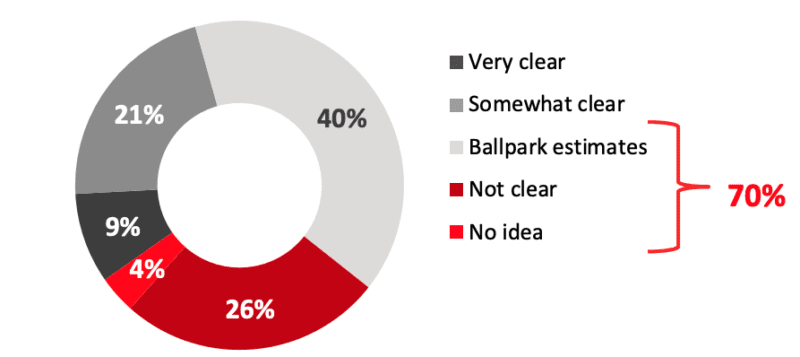
Marketers preparing for 2021 should have their budgets ready, and if investments don’t evolve as expected, then rest easy knowing it will be cheaper and easier to bid for top ad spots in search results.
There have been many changes to YouTube’s advertising options that will make it more valuable to search engine marketers in 2021. Google Ads has recently introduced new metrics to improve ad optimization on YouTube, including engaged-view conversions (EVCs) and view-through conversions (VTCs). They also brought in audio ads for YouTube, designed to connect brands with audiences that listen to music on YouTube.
Advanced contextual targeting is another feature they’re now using to drive mass reach for advertisers in specific contexts. Large brands are already starting to make the most out of YouTube’s reach and relevant content to meet their business goals. New targeting, ad types, and optimization features like these are sure to make YouTube particularly appealing for advertisers in 2021.
Google’s efforts to minimize how much advertisers can access and analyze data through the platform have been trending for a while now, and 2021 is expected to be no different. Google Ads regularly introduces new machine learning-powered features designed to automate insights, which typically presents challenges for advanced advertisers who want to construct their own analyses.
Since the majority of Google advertisers don’t have the experience or expertise to do this, it’s likely the trend towards automating insights will continue as Google rolls out more features. The important thing to remember in 2021 is that machine learning is helpful, and there’s still a lot you can do to customize and guide automated bidding. With so many relevant data points available that can influence bidding decisions, some degree of automation is necessary in order to keep up with it all.
The plethora of challenges advertisers now face managing their campaigns on Google Ads could encourage many to invest more in non-Google SEM options to deliver the results they want. While Google still remains the biggest search engine in the market by a considerable distance, using other options will become more appealing as it continues to control what advertisers can or can’t do on the platform.
This is especially true as other search engines like Bing have made it very easy to import campaigns from Google Ads so marketers don’t need to start from scratch. Investing in non-Google SEM can be extremely worthwhile and empower advertisers with the control they need to reach the right audiences and drive more conversions at a better cost-per-click.
Google recently introduced a new, more intelligent Google Analytics using artificial intelligence, machine learning, and better cross-platform integrations to help brands surface more critical insights into marketing performance. GA can detect data trends like an increase in demand for certain products or even future actions your customers may make. Here’s what a churn probability report looks like in the new GA:
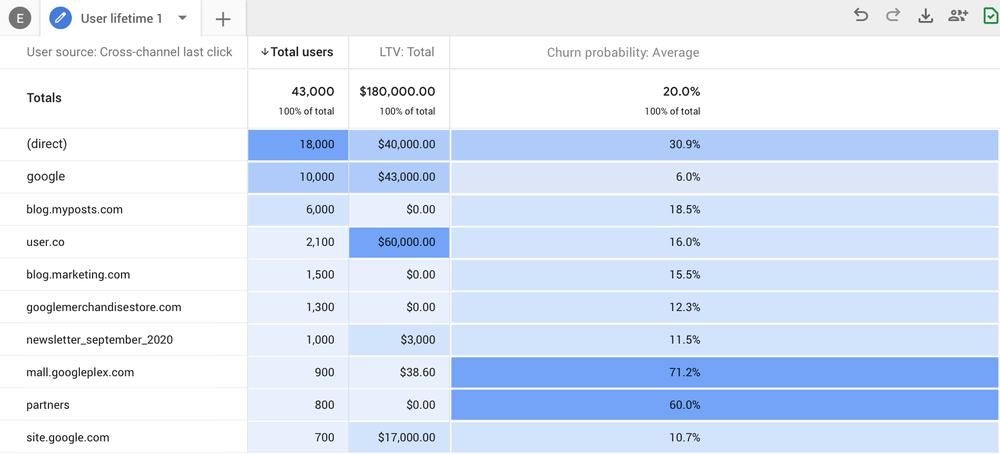
These insights are incredibly useful for optimizing campaigns and bid adjustments to maximize PPC revenue. Smart marketers will use GA to their full advantage to improve SEM in 2021.
Google Shopping Ads are a powerful solution to bring in new customers to your business. According to Smart Insights, Shopping Ads make up 76.4% of retail search ad spend. The massive increase in online shopping in 2020 means Shopping Ads now represent an even bigger opportunity for retailers to drive breakthrough ROI.
This alone is reason enough for the competition to surge as more marketing organizations start investing in this ad type. However, that’s just the first half of the story. In April 2020, Google officially opened up Shopping Ads to all businesses for free. Before this, you had to pay to display this kind of ad. Now, Google is allowing businesses to compete for Shopping Ad space just like they do with other ad campaigns. It’s safe to say, then, that we can expect an intensification of competition for Shopping Ads in 2021.
In recent years, platforms like Google and Facebook have made massive walled gardens of data, making it difficult for marketers to access and utilize the audience data they need. This has led to an increased interest in gathering and managing data independently. While this wasn’t easy to do before, it’s become even more complicated now that global privacy policies are restricting third-party cookies across browsers.
There are no longer any easy solutions to help businesses capture and manage their own audience data. Forward-thinking marketers that focus on developing their own data strategy will be setting themselves up for success in 2021 and beyond. While the cookie is dead, there are other ways to monitor how your audience interacts with your business online, such as device fingerprinting.
In today’s advertising world, it’s not just targeting and bidding that you can optimize using artificial intelligence, but also your ads themselves. Responsive search ads (RSAs) are a type of ad that allows Google AI to optimize your headlines, ad description, and call-to-action to make them more relevant to the search query and audience. While this feature has been around since 2019, enough businesses have now tried RSAs to confirm they work very well at improving cost per click, cost per conversion, and conversion rates across the board.
Google Ads has introduced many automation features that the majority of marketers dislike, but RSAs are certainly not one of them. Their ability to craft and deliver effective messaging to searchers at exactly the right time will make them a staple ad-type for campaigns in 2021 and beyond.
It has long been an important strategy in PPC advertising to choose keywords and create ads that speak to the original intent of your audience. People interested in different products or services, or who are at different stages of the sales funnel, shouldn’t be targeted with the same message. While smart marketers are constantly working on segmenting to achieve this goal, it’s about to get much easier in 2021.
That’s because Google recently launched a new custom audiences solution. This brings custom affinity and custom intent audiences together for better segmentation and targeting. When creating custom audiences, you can now easily set targeting to:
This makes it much easier to target and optimize your ads for people in the awareness, interest, decision, and action stages of the sales funnel.
It’s difficult to know for sure what’s going to happen in 2021, especially after such a strange year in 2020. Businesses investing in SEM need to pay close attention to how changes in the economy, their communities, and industries can impact their success. That said, there are some trends in new technologies and marketing strategies that businesses can expect to be important moving forward. Be sure to take advantage of the things you know for certain and keep an eye out for new changes in a year that’s bound to be much better than the last.